
Showing posts with label hobby. Show all posts
Showing posts with label hobby. Show all posts
Thursday, August 24, 2023
Thanks for your comments, friends!

Tuesday, July 25, 2023
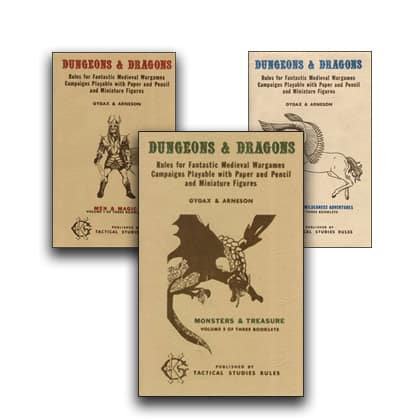
Then I remembered what it was derived from: Dungeons & Dragons. Then I went down
an internet rabbit hole of research. Back in 2013, the OSR was not quite over. I
would say, it was just on the other side of its hey-day. I was swept up, and,
because of the kind of person I am and because of waht fascinates me, I
discovered the original game. I have now enjoyed hours of joy, terror, fun,
play, entertainment as a player, and service to others as a referee.
I have
something I share with my children, young in 2013, now almost out of the house.
We "speak" D&D and we have grown formed in its culture.
Sunday, July 4, 2021
Chaos in the Perilous Realms
This is the second in a series of web log posts where I describe what “alignment” must mean in the Perilous Realms, based upon our group’s tone and play-style, and its cumulative rulings so far. The first was on the Law of the Perilous Realms.

Chaos in the Perilous Realms
Okay, so a character is on the side of CHAOS. But what does that mean?
It means you defend moral sentiment and basic instincts as all that is necessary to guide behavior. It means you believe that human culture, customs, and traditions often subvert basic human sentiment and instinct and should thus be shunned and overturned.
The above sounds rather noble. And the highest philosophers of Chaos indeed hold the above in very high esteem and may wax rhapsodic about it from time to time. But mainly folks who choose Chaos just choose it because they don’t want to obey law, or perhaps just anyone at all, so Chaos suites them just fine, whatever its philosophers may or may not say. What are the basic sentiments?
The Seven Sentiments of Chaos
1. Honor
2. Loyalty
3. Reciprocity
4. Affection
5. Purity
6. Pity
7. Liberty
Honor may well be honorable, but it can also turn into a shame-based culture and an almost gang-like vibe of constantly worrying about and accusing others that they have “dissed” them. Think gangsters or the 47 Ronan story.
Loyalty can be honorable, but it can also turn to cruelty when the demands of the superior are not fair to the inferior, but the threat of accusations of disloyalty forces obedience.
NOTE: the combination of honor and loyalty means that, in the main, Chaotic parties, and even Chaotic members of a mixed party, may, generally, be expected to be helpful rather than harmful to the party. In other words, having your character behave poorly towards other members of the party because the player claims to be playing “in character,” as someone on the side of Chaos simply will not fly. So, no Trolls, no Griefers, no doing it “Just for the Evulz.” In the main, this includes even non-player characters, at least towards their own companions.
Reciprocity means fairness and justice, but it can just as well turn into a zero-sum game of retribution. Seeking one’s self-interest can always be justified as demanding justice in the form of mere retribution in the style of a moral “tit for tat.”
So, obsessive concern for the above can turn to their opposite. A sensitivity to dishonor and betrayal, together with a strong commitment to the demands of reciprocity (render as rendered) may lead to retribution and vengeance. This is especially intense as Chaos shuns courts of law as a merely human custom that gets in the way between two parties having the “freedom,” to “resolve” the dispute on their “own terms.” So, duels, feuds, assassination, and lynching are de rigueur for Chaos.
Affection can be a beautiful thing, like a mother’s love of a child or two fast friends. It can also be the affection a master has towards his slave, or, in turn, the “Stockholm Syndrome” generated in the hearts of the kidnapped towards their captives.
Purity is an honorable sentiment, leading to the shunning of things that might degrade human dignity. It can also lead to self-righteousness, a sense of superiority, sexism, racism, bigotry –looking at another member of a free race – or even a free race as a whole – as if they were less-then. Cruelty can always be justified as simply following the human sentiment of “moral disgust” towards the “inferior,” or “vermin.”
Pity can lead to mercy, kindness and even defense of the helpless. Pity can also be condescending and humiliating. Pity is not necessarily compassion or empathy. Conan often shows pity and provides kindness and defense. He would not even know what “compassion” means, and “empathy,” would simply be meaningless to him.
Liberty cannot stand that free races should suffer any compulsion, but it can also just be a freewheeling, “don’t fence me in,” “get of my lawn,” attitude that justifies flouting any law that seems inconvenient in the moment. Liberty is often cited by the chaotic as the very reason why universal Law must be rejected. Universal Law is seen by the chaotic as a trick by which the “weak,” have figured out a way to limit the power of the strong and worthy (think Nietzsche here). (Lawful, on the other hand, sees the Law as the means to freedom. Lawlessness is dangerous and oppressive, not only to the weak but the strong as well. Law guides creativity and reasonable action, and thus true freedom.)
A note about the relationship of Chaos to being a “good” character:
You can certainly have a fundamentally “good” Chaotic character. But there are simply more evil Chaotic characters because evil folks will almost always choose Chaos as it can easily be manipulated to justify their lawless behavior.
Up next: Lawful Clerics and Alignment.
Thursday, August 6, 2020
Dungeon, exploration and the title: "Dungeons & Dragons"

This is the second post in a two-part series of posts on the title of Dungeons & Dragons as a means to empower hobbyists to start their own medieval fantasy wargames campaigns.
The last post was on level of scale and the incorporation of role play. This post is on how the one-to-one level of scale empowered character exploration -- giving birth to the supertitle, "Dungeons & Dragons."
Dave Arneson’s Blackmoor
Before the publication of Dungeons & Dragons, its co-author, Dave Arneson, was already a wargamer involved with his group of friends in running wargames campaigns. He and came up with a wargames campaign for his friends that was a full-blown medieval fantasy wargames campaign that came to be called Blackmoor. Arneson had already encouraged his players to look at their relationship to the wargame in a different way. Inspired by things like Diplomacy, and by Baunstein and other such campaigns before, Arneson encouraged wargames-style role-playing as a significant aspect of the birth of Dungeons and Dragons.
The First Dungeon
Dave Arneson stumbled upon a scenario over the course of his Blackmoor campaign where his players’ characters, while laying siege to the castle of one of their enemies, decided that they would mine, that is to say, dig under the walls to try to break the siege.
This gave Dave Arneson an idea. And what he decided to do has made history. He set up a situation where once the players’ characters had successfully dug under the walls of the castle, they would suddenly find themselves tunneled right into the crazy labyrinthine dungeons underneath the tyrannical lord's castle.
Instead of just coming up in the castle yard, they found themselves down in the dungeons. And instead of the normal dungeons of history that just had normal prisoners, Dave Arneson populated this dungeon with the fantasy denizens of the underworld: monsters and creatures that the characters had to steer clear from so that they could come up, find the bad guy, take him out, and win the day.
Exploring the Unknown
Arneson conducted this scenario such that the players’ characters did not know exactly where they were until they had explored the dungeon and created their own map of the dungeon. They could keep track of where they'd been, where monsters were to avoid. They were playing in such a way that they were not simply laying out a battlefield and playing a pitched battle with miniature figures on a one to one scale, but instead they were imagining exploring down in the darkness of a deep dungeon and they had to create a map of what they'd discovered as they were going along.
This is not unlike other games that were popular at the time and still are, such as Battleship and Stratego. Both Battleship and Stratego are simple games where something is concealed from the player, and through play you slowly begin to reveal what's concealed, and those revelations and guesses made on those revelations help lead the player to victory. So this was already a concept that existed in gaming, and Arneson was able to grab it and use it at a much more complex level of scale where instead of it simply discovering whether you've sunk someone's battleship, or whether you've found someone's flag in a battlefield, now you got a whole labyrinthine dungeon underneath an evil tyrannical castle.
Dave Arneson's players found this so exciting and fun that they said, "Hey, we've really got to do this again sometime." We now see the birth of the first dungeon for what would come to be called Dungeons and Dragons.
Everything in place for the Title: Dungeons & Dragons
Arneson had stumbled upon the joys of dungeon exploration with his players. Dragons are the quintessential monster of medieval fantasy. At the time in the wargaming hobby community, there were a lot of “something & something” titles. Fill-in-the-blank and fill-in-the-blank titles were popular at this time of hobby wargaming. So there is a story that says that Gygax as sitting at his kitchen table with his daughter and a list of words. He would go through the list, adding two words together with an “and” in between. When the combo “Dungeons & Dragons” finally came up, his daughter said, “that’s it, that is the one.” And it has stuck ever since. At least that is the story!
So now with this post in this series, and with the posts of the previous series on the subtitle, we have in place what a wargame is. We have in place the tradition of Free Kriegspiel. We have in place what a wargames campaign is. We've talked about how things move down to the skirmish level or one to one scale of play. We've talked about role playing in early war gaming, such as the game of Diplomacy. We've talked about how Arneson added the discovery of hidden things through careful play, such as we find in games like Battleship and Stratego. When all of these things come together, then Dave Arneson together with Gary Gygax were able to put together the first published rules for setting up and conducting a medieval fantasy wargames campaign: Dungeons and Dragons.
Summary so-far
So to sum things up, Dungeons & Dragons arises when we have a referee (Free Kriegsspiel) with an extensive knowledge of both wargaming (hobby) and medieval fantasy literature (fidelity to outside source) who moderates a generally skirmish scale (level of scale) medieval fantasy wargames (wargaming) campaign (campaign-play) that connects wargame sessions involving exploration of unknown spaces and areas (exploration) through skillful role-play (role-play). I would add, anyone playing a game with these elements in place, because they are playing a fantastic medieval wargames campaign, they are therefore playing "Dungeons & Dragons," as originally presented by the authors, whatever that particular group happen to call it, and whatever is currently being published with that name printed on the cover!
Fight on!
These two series of posts are now tied up. Now I can launch a follow-up series of posts where I will look at a couple of miscellaneous things that haven't quite fit into a previous post but that now begin to make sense in light of what we have discussed so far: things like Experience Points and gold, etc.
Tuesday, July 28, 2020
Scale, Role-play, and Dungeons & Dragons

I recently published a four post series reflecting on the subtitle of Dungeons & Dragons to help make sense of the original publication. Here are those links:
Wargames and Dungeons & Dragons
Medieval Fantasy and Dungeons & Dragons
Campaigns and Dungeons & Dragons
With those reflections in place, I can now move on to reflect on the development of the supertitle itself: "Dungeons & Dragons"! In doing so I hope to empower hobbyists to start their own medieval fantasy wargames campaigns.
This will be the first post in a short two-part series of posts. This post will be on level of scale and how the move to one-to-one scale empowered things such as the abstraction of hit-points and the ability to role-play.
Scale
Wargaming allows for play at different levels of scale. So on a given war gaming table, an inch might represent 10 feet, 10 yards, 100 yards, etc. One miniature soldier might represent as many as, say, 10 soldiers, 20 soldiers, 100 soldiers, depending on the level of scale that you'd set up in the beginning. For most historical miniature wargaming, the level of scale is what is called tactical. So tactical warfare is one given battle between two armies where two generals or colonels can direct the activity fairly obviously over the course of about one battle day.
This makes a lot of sense in, say, Napoleonic warfare, which is again, one of the reasons why Napoleonic warfare is so attractive to historical wargamers. But there are other levels of scale. If you jump up to a higher level of scale, you can have strategic wargaming. This is where you might start getting into what you call hex and counter wargaming, where you've got a map divided into many different hexagons, and those hexes might represent 5 miles, 6 miles, 25 miles of distance across. Instead of miniatures representing soldiers, or 10 soldiers, or 100 soldiers, you have a more abstract piece that represents an entire legion, battalion, or perhaps even an entire army.
At the highest level of abstraction you have board games like Axis and Allies, or Risk. Some miniature wargamers question whether those should count as wargames, because they're at such a high level of abstraction that they're not very far away from a game like chess or checkers. But the typical scale of war gaming for miniature wargamers is tactical. You can abstract it to a higher level like strategic. But you can also move down to a tighter level of scale.
Skirmish
You can go down to a level of scale called skirmish warfare. This is where you're really talking about individual soldiers, head to head with each other. In this case, each one of your miniature figures actually represents one soldier. So the ratio or the scale becomes one to one. Every miniature figure is exactly one soldier.
Chainmail, for example, has a section dedicated to skirmish or man to man combat for the resolution of this level of medieval wargaming. So its fantasy supplement had to address this level of scale as well: how would fantastical creatures and armies match up in not just tactical, but also skirmish level warfare.
Hit points as abstract
One-to-one level of scale helps make sense of the roots of some of Dungeons & Dragons core mechanics, such as, for example, Hit Points. The rules of combat resolution have to be different at such a tight level of scale. The statistics, the way that you match results of combat up to dice, the things that a referee would need to judge all change when you get to that smaller, tighter level of scale.
In a tactical level wargame, when two enemy troops come in contact with each other, generally, if one side is successful and the other fails, the side that fails is removed. If you have those rules exactly at a skirmish level, playing only one character, then every time you went into combat, your character might die the first time he or she was hit. This hit-equals-removal way of playing that works at a tactical level doesn’t directly map to a skirmish, one-character-per-player level of scale. So instead Gygax and Arneson developed hit points. Hit points are the number of points your character can take from successful hits before the character is finally removed. Hit points are an abstraction for the relative resilience of your character and so, in general, as your character increases in level, your character is going to increase in this resilience, represented by hit points.
Role-play
One-to-one level of scale also helps us make sense of what the original players understood "role play" to be. Role-play existed before Dungeons and Dragons. Role playing is something that's done for example, at professional development training sessions, in training for therapists and counselors, or in other contexts where a mentor is trying to teach a student. A concrete situation with a client, or a patient, or even a more dangerous scenario, where you would say, "here is the situation. We're going to pretend that this situation is real, and we want you to role play what you think you would do in this situation."
One of the chief examples of role-play in wargaming would be the famous game, Diplomacy. Diplomacy is a wargame at the highest possible level of abstraction that could still really count as a wargame. You have a map of Europe, right on the edge of World War I, and you represent one of the major European powers at that time, such as Italy, Germany, Great Britain, Russia and the like. You are going to play the military forces of this particular national power. And in each turn, you can move your armies or navies, and you can attempt to take over other regions. But the most important part of this game is in its very name itself, which is Diplomacy. In Diplomacy, in every game turn, there's a phase at which you are allowed to enter into diplomatic negotiations and form diplomatic relationships with other players. You might form alliances against other players such that it is almost impossible to win the game of Diplomacy if you are not talking to other players, forming alliances, breaking alliances, and the like.
In Diplomacy, you as the player would ask yourself, “given this situation, and given the capacities that this nation has to achieve victory in this war game, how would I, as its leader or ambassador act? I want to play out what I would do to survive and achieve victory in this role within this situation.” Thoughtful role-play becomes a way to invest in the success of the game. Role-play in Diplomacy is a skillful means of engaging the game.
Role-play can work at any level of wargames scale, but it seems to draw-out at the more extreme levels of scale: strategic on the one end, with games like Diplomacy, and skirmish at the other end, with what is going to become Dungeons and Dragons. When you're playing a skirmish scale wargame, and where, instead of playing an officer over a squad you are playing only one figure on a wargames table, then you have an opportunity to role play that figure.
Understanding the wargaming roots of Dungeons & Dragons helps to make sense of the kind of confusion about what is going on in play between what is sometimes called "old school" styles of play and more recent Role-playing Games that emphasize the building of a story. What is clear is that role-play meant discerning what you would do in a given wargames situation if you were actually in this war and you actually had the capacities granted you by the game. Role-play meant playing the role of a leader in a war campaign. It did not, at the time, mean something like playing a part in a play or story - although plenty of players loved to ham it up, even from the beginning, if what I have heard is correct.
Next in this short series: Dungeon, exploration, and the title: "Dungeons & Dragons"!
Sunday, July 12, 2020
Campaigns and Dungeons & Dragons

The previous post was on "Rules," this post is on "Campaigns," or, wargames campaigns.
Wargames Campaigns
Napoleon didn't just fight one battle. The Napoleonic wars were not won by one battle. In actual warfare, often, many battles are pitched as part of an overarching war to attain victory. And not until many battles are fought does a victor emerge. A general, or a king, goes on a war campaign. And this campaign consists of a series of battles that are strategically designed and carefully operated in order to gain victory.
This series of connected battles, towards the end of winning the war, is called a campaign or a war campaign. Likewise, wargamers who are interested in playing out historical wars also become interested not just in playing-out one given battle but in putting a series of related, connected battles together where the outcome of one battle affects the setup of the next battle. They're going to string these battles into a campaign. And this is what is called a wargames campaign.
The key feature of a wargames campaign is that more than one battle is set up and run as a game. But these separate games are connected to each other and the conclusion of one wargame has an affect on the setup of the next wargame much like how, in a real war, multiple battles are pitched before victory is clear.
Wargames campaigns can be done at very high levels of abstraction or at a very detailed level depending on the interest, time and energy of the wargaming group. But wargames campaigns require a different set of rules than those needed to resolve battles with miniatures on a table. You need one set of rules for how to determine the outcome of one given battle on a table of miniatures. But in order to connect the outcome of that battle with the next battle you need an overarching set of rules that logically and coherently connects disparate battles together. You need a set of campaign rules.
Map Campaign
There are many different ways to set up a campaign but I'm going to explain one particular kind called a "map campaign." Map campaigns are one of the first and earliest forms of wargames campaigns. In this kind of campaign you take your wargaming table and let's say that it is four feet wide and eight feet long. And you use it on, say, a scale of one inch for 10 or even 100 yards. Then you get out a very large sheet of paper, and a ruler, and you divide along the top every four inches. Then you divide along the side, every eight inches. So you’ve divided this very large piece of paper into separate rectangles, four inches by eight inches. Then each four by eight-inch rectangle represents one battle ground on which you could set up a wargame.
Now you take this sheet of paper, that has been divided into four by eight rectangles and you either overlap that on top of an actual historical map, to scale, or you invent your own situation and imagine an area and some terrain.
You might start one army in one town, and the other army in another town, and then the referee would ask the players for their orders. The players give very detailed written orders to the referee. This is a complex situation where ideally a given player is unaware of the other players’ orders until executed. This is a case where it not only helps but might possibly be necessary to have a referee. The referee reads the orders and determines for example, whether any two armies have sighted each other.
If two opposing forces have met, then you set up your game table for a miniature wargames battle and resolve the conflict using the rules for a wargame that your group had already been using. Upon the conclusion of the conflict you note the outcome of the battle and decide what that means going forward as the campaign continues. This map, then, becomes the means for piecing together all of these different possible battles that could be pitched on your gaming table.
Dungeons & Dragons as a Map Campaign
In Dungeons & Dragons, in the third Little Brown Book, “The Underworld and Wilderness Adventures,” Gary Gygax and Dave Arneson suggest that you need a map of the immediate terrain surrounding the entrance to the underworld. That map of the overall area would have suggested to fellow wargamers something like a map campaign.
Keeping this in mind helps us to remember what the subtitle meant when it said that these were rules for a wargames campaign. The word "campaign," has taken on new connotations in the on-going growth of Role Playing Games (RPGs). But the original sense of the word was that of logically connecting wargame battles into a single campaign. The rules for the resolution of combat were one game. The rules for connecting the wargames together and including things like supply chain, economics, population, recruitment, leadership, political powers, espionage, diplomacy, and the like, were a different game or even set of games. Remembering this clears up some confusion for folks that come to the original rules only familiar with RPGs that see themselves as a single unified rule-set.
The rules for resolving an individual battle are different from the rules that connect particular battles to one another in a coherent campaign. If your group were conducting a wargames campaign, just as your group over time may have developed its own rules for resolving individual battles, so too over time your club might have developed rules for a campaign so clear and coherent and so seemingly realistic to the historical period you were trying to game, that you might think, "Hey, this is shareable too."
So sometimes wargamers would publish not just rules for resolving battles but they would also publish rules for how to set up a war games campaign. One of the most famous of these is by Donald Featherstone. Another good example is C. S. Grant’s Wargames Campaigns. One really famous set of rules for wargames campaigns relevant to the topic of Dungeons and Dragons is Tony Bath’s, "Setting Up Wargames Campaign." Tony Bath deliberately chose a fantastical medieval wargames setting for his campaigns for the simple reason of not having to worry about getting the history perfectly correct. Wargamers were used to these two aspects of their hobby, battle resolution and campaign organization, being published separately from one another.
Rules complete as rules for campaigning
This is what Gygax and Arneson were doing when they first published Dungeons & Dragons. They were not publishing a comprehensive rule-set that included both campaign rules and combat resolution rules. They were publishing what it would take to coordinate other rules together into a campaign.
The booklets themselves often refer the reader to other rules, like Chainmail, or the boardgame Outdoor Survival. Gary Gygax and Dave Arneson understood that any rule-set for resolving medieval warfare would do the trick. What Gygax and Arneson were offering were not so much the rules for running individual wargames battles, although some outlines of how to do so were suggested. They assumed that your local group had rule-sets available for resolving given wargames, so, instead, they were offering rules for how to string together a series of wargames into a campaign. The rules are not incomplete for a wargames hobbyist. They give everything needed to start one's own medieval fantasy wargames campaign as an amateur hobbyist.
We now have everything in place to make sense of the subtitle: "Rules for Fantastic Medieval Wargames Campaigns." I hope I have shown how helpful understanding the subtitle is to understanding what Gygax and Arneson were up to, and towards understanding what the original publication called "Dungeons & Dragons" has to offer -- and what it does not. I my posts inspire some readers to use the guidelines suggested in Dungeons & Dragons to launch their own, unique, medieval fantasy wargames campaign.
Now that I have concluder this reflection on the subtitle, I am set for a two part series on how we have come by the supertitle itself: Why "Dungeons & Dragons"? Once we have this in place even more will start to make senes about the original published rules for medieval fantasy wargames campaigns.
Fight on!
Sunday, June 28, 2020
Medieval Fantasy and Dungeons & Dragons

Last post, I wrote about "Wargames." In this post I will talk about the phrase, "Fantastic Medieval," in the subtitle, or, as we would say it now, "Medieval Fantasy." "Fantastic Medieval" sounds like something medieval that we thing is just awesome: that is fantastic! But that is not what the phrase meant at the time of its publication. For contemporary ears to hear the subtitle, correctly, it should be changed to something like "Rules for Medieval Fantasy Wargames Campaigns."
Medieval Fantasy
Wargaming was and is a hobby for folks that dig the study of history. History includes the middle ages and ancient civilizations. So another area of interest that quickly developed for wargamers was medieval and ancient wargaming. It would not be long before wargamers were willing to move beyond the walls of the historical and engage the literature of fantasy.
At the time that Jeff Perren and Gary Gygax published Chainmail as a set of rules for resolving medieval wargames, Gary Gygax had already developed an interest not only in the historical western middle ages, but also medieval fantasy literature. Gygax added a fantasy supplement, to the end of the Chainmail rules for folks that were interested in adding to their wargaming hobby medieval fantasy troops like elves and hobbits, dwarves and gnomes, orcs and goblins, and monsters like giants, dragons and the like.
Gygax added to what was already the base rules of a fairly realistic historical medieval wargame, ways of resolving the possibility of a dragon showing up at one of those battles. He did this for the same reason that historical wargamers would play-out battles that already existed. Just as the historical wargamer would study actual battles from history in order to understand how to set up rules and judge games as a referee so too if you were interested in medieval fantasy literature, you might want to completely redo a battle from one of your favorite pieces of medieval fantasy literature.
The Chainmail Fantasy Supplement list, for example, the Battle of the Five Armies at the conclusion of The Hobbit by J.R.R Tolkien. So Gygax suggests that if you take the Chainmail set of rules and add to it this supplement for medieval fantasy, you can engage an actual fantasy battle as described in the relevant authoritative literature. When you feel like you'd developed enough knowledge of how fantastical battles worked out you might then try your hand at your own hypothetical medieval fantasy war game battles.
Fidelity to the literature
Just as historical wargamers worked to make sure their game was as faithful to what might have happened on an historic battlefield, so too, fidelity to medieval fantasy literature in general and Sword and Sorcery in particular, formed a significant part of this new aspect of the wargaming hobby that Dungeons & Dragons introduced.
A referee would know how to judge whether something was possible, in this medieval fantasy world because they were so familiar with the medieval fantasy literature they were gaming. A key part of Dungeons & Dragons is the love of becoming an amateur expert in medieval fantasy literature. High fantasy, low fantasy, especially sword and sorcery, urban legend, classical mythology, Arthurian legend, Carolinian cycles, Nordic sagas, all form part of the expertise needed to set up and play in a medieval fantasy role playing game.
But, in the main, the particular style of medieval fantasy literature that influenced Dungeons & Dragons was what Fritz Leiber named "Sword and Sorcery." This is important to know because Dungeons & Dragons is built better to play in this kind of fantasy world than in others. Later editions of games called "Dungeons & Dragons," have shifted from this original base towards more heroic and high fantasy. So sometimes the original game is confusing to folks coming from newer RPGs. Learning about Sword & Sorcery and reading some of its core texts helps in understanding Dungeons & Dragons and helps the amateur hobbyists to build his or her own campaign.
"The general line-up”
What I've written about so far helps us to understand certain aspects of the game. For example, the taking of sides, or what would come to be called "alignment."
When you are playing a wargame, you need to know the sides of your battle and that's exactly what's going on in the Chainmail fantasy supplement with its “General Line-up.” This gets reiterated in Dungeons & Dragons’ Men and Magic. You have the alignment table to give you sides. The big battle is between law and chaos. Some creatures are on the law side and some creatures are on the chaos side and some can go either way. Then there are some creatures that just opt out of it altogether. They're not on the side of law or chaos, they're just for themselves and these because they don't really want to wage the war between law and chaos are called neutral, like Switzerland and its diplomatic neutrality. So if you're setting up a war game table, one side is chaos and one side is law, in this medieval fantasy war game context.
These categories are derived from medieval fantasy. For example, they are implied in Tolkien's Middle Earth around the War of the Ring. But these terms, "law," and "chaos," are explicit in Sword and Sorcery literature, especially that of Poul Anderson and Michael Moorcock. So, again, we have a fidelity to the literature they were trying to game.
Race
Finally, briefly, we can understand where the use of the term "race," came from. Race was a term already used in medieval fantasy literature to distinguish human characters from other intelligent beings that were not gods or spirits. Especially there would be the fay races, such as elves and dwarves, and the fell races such as orcs, goblins and trolls.
This is not how we use the term "race" in contemporary parlance, so it can throw people off. This is not about supposed differences in human groups. If the fantasy rules were put together today, someone might have chosen "species." Although, even that is misleading in a fantasy context, where a word like "species" would sound to empirical and scientific. So this terminology has stuck and is a part of the shape of medieval fantasy wargame campaigning.
Next in the series: "Rules," free kriegspiel and refereeing.
Sunday, June 21, 2020
Wargames and Dungeons & Dragons
This is my first post in what will become a series of posts that I hope will be helpful for folks trying to understand Dungeons & Dragons as a hobby and especially the original published rules that empowered hobbyists to launch their own campaigns.
Introduction to the series
The subtitle of a published work is always the real title. Studying a subtitle, when provided, will often tell you more about what the author understands the work to be about than the main title.
The original subtitle for the first published edition of Dungeons & Dragons is:
Rules for Fantastic Medieval Wargames Campaigns.
The real title, therefore, is "Rules for Fantastic Medieval Wargames Campaigns." A lot of the misunderstandings or confusions about Dungeons and Dragons* comes from not understanding what the publication really is. In order to understand what the first "little brown books," or, LLBS were really offering, one needs to know what a wargame is, and, better, have some contact our hours of actual play. One needs to know what a wargames campaign is, which means one needs to understand war enough to understand that it is a campaign comprising a series of battles, not one battle. One needs to understand what was considered "fantastic medieval" at the time of its publication. Finally, one needs to understand how hobby wargammers understood "rules" to work and what they meant and how they used them.
Once these things fall into place, Dungeons and Dragons suddenly starts to make a lot more sense and to become much more accessible as the launch point for one's own hobby. So let's start with the central word of the true title, the word that all the others build-off of or modify, the word "wargames."

Wargaming
At the time that Dungeons & Dragons first appeared, the hobby called wargaming had gained fair popularity. The hobby consisted of casting or collecting miniature figures of soldiers of different military eras, painting miniatures, preparing large tables with scenery and terrain, etc. You would then conduct a wargame where you would, perhaps, relive an historical battle or maybe even perform a hypothetical battle, a battle that could have taken place but that actually did not.
So what is a wargame? Well, it is first of all, a game. Like most games, you have players, you have goals and victory conditions, you have pieces, you have a setup, and you have rules to the game. Wargaming is about war. So it's a game that's particularly focused on trying to play-out, to varying degrees, combat or warfare of an historical period.
Wargaming as History hobby
One of the things that wargamers really love is history. To be a good wargamer you had to know war, and the history of war. To know the history of war meant you had to research and study. One of the major parts of the hobby of wargaming is historical research. It is the research of historical facts, knowledge, information, that is part of what's fun about the hobby to historical wargamers.
Hypothetical possiblities
Now, in some historical wargaming, what you're really trying to do is set up all the conditions of an historical battle that actually happened and that you knew existed. Then a group might decide, "Well, what if other battles were fought that were never recorded in history? Or what if we just made up a battle that would be fun to pitch and see what that was like? We're going to use the same soldiers, the same groupings of soldiers and the same statistics matched to dice rolling. We'll play out what would happen in this hypothetical situation."
For example, one particular historical period that a lot of wargamers like to focus on, among many, is the Napoleonic era of warfare. There's something very attractive about Napoleonic warfare for various reasons. One is that the troop structure was quite organized. It was one of the first set of wars where lots of records still exist that were kept meticulously and mathematically. Someone can do mathematical analysis on Napoleonic battles and learn the probabilities of one army defeating another army.
Dice Mechanics
This meticulous information is really fantastic for wargamers, because what wargamers figured out pretty early on in the hobby was that the chances and vagaries of warfare could roughly be emulated by rolling dice. A single die will turn up random chances. But when you start rolling combinations of dice they roll up in probability curves. If you can find a probability curve in a combat situation, you can find a matching way of rolling dice to simulate that probability. So with all of the data that existed from Napoleonic warfare, wargames hobbyists can, fairly well, emulate the outcomes of an actual battle.
What we have discussed so far can already help us to understand some of the terminology and approaches of Dungeons & Dragons.
Alignment Table
Having some understanding of Dungeons & Dragons wargaming context helps make sense of some of the presentation of the rules that might otherwise seem confusing. For example, I used to wonder why there was an alignment table in Men and Magic separate from the monster table and stats in Monsters and Treasure. If you're playing Napoleonic wargame, you need to know which side of the table to place Napoleon and which side to place Wellington and then set-up those armies. If you're doing a map campaign, you need to know where is France and the central cities that grant resources to the French army and where is England and where are the central cities that grant resources to the English army and navy.
You need to know the sides of your battle and that's exactly what's going on in the Chainmail fantasy supplement with its “General Line-up.” This gets reiterated in Dungeons and Dragons’ Men and Magic. You have the alignment table to give you sides. The big battle is between law and chaos. Some creatures are on the law side and some creatures are on the chaos side and some can go either way. Then there are some creatures that just opt out of it altogether, like Switzerland. If you're setting up a wargame table, one side is chaos and one side is law, in this medieval fantasy war game context. So right up front, in the first book, you've got a list of the sides and who might not take a side.
Classes
Dungeons & Dragons has fairly strictly defined classes for characters because Gygax and Arneson applied this notion of classes of troop-types from their hobby of historical war gaming.
Let's look at Napoleonic warfare again. You're going to have classes of troops, types of troops, so in the classical Napoleonic context you are going to have infantry, cavalry and artillery. If you want to make it even more complex level of detail in order to try to snatch a little added realism, then you're also going to have dragoons, light infantry, heavy infantry, light cavalry, and heavy cavalry, heavy artillery, and light artillery for a greater level of scale of detail. But each of these types of troops are different classes. You know exactly what artillery can and can't do, you know exactly what infantry can and can't do, you know exactly what cavalry can and can't do. You know what their attacks are like, you know what their defenses are like, and you know what their movement rates and capacities are like. This enables you to develop your strategy by having clearly defined classes on your battle table.
Gygax and Arneson were used to this approach to things. They developed the fighting-man, the magic-user, and eventually the cleric. And these became character classes. As in Napoleonic game you would have artillery, cavalry and infantry where each of those classes of troops have clearly defined the capacities of movement, attack, and defense, so too then the fighting-man, the magic-user, and the cleric have different capacities, abilities and liabilities that define the way that they will be played and will influence the way in which they can come together as an adventuring party to be successful together.
Wargaming didn't have to just be Napoleonic, for hobbyists interested in war history. So wargamers would also try to set up situations where they could emulate, historical or hypothetical, increasingly more modern warfare like World War I or World War II era warfare. Eventually, wargamers would get interested in ancient and medieval warfare. And from there, to "fantastic medieval" warfare!
Next in the series: "Fantastic Medieval"
Fight on!
*A note about "Dungeons & Dragons": There have been many products professionally published bearing the name “Dungeons and Dragons.” At the time of the release of this post, we have what Wizards of the Coast call the Fifth Edition. In this blog series, I will not refer to an edition number when I say, “Dungeons & Dragons.” Rather, when I say, “Dungeons & Dragons,” I will be talking about Gary Gygax and Dave Arneson’s rules for how to put together medieval fantasy wargames campaigns that were first published in 1974 by TSR. This is what some people call the original rules. Sometimes these rules are referred to as, “Original Edition Dungeons & Dragons,” "Original Dungeons & Dragons," or, "OD&D." Sometimes people will abbreviate it as, "Oe", meaning, "Original Edition." Or even "Zero-e," meaning, "Zero Edition."
Bibliographical Note: Much of this post and any posts I share about the history and historical context of D&D is based upon the book Playing at the World by Jon Peterson.
Friday, August 9, 2019
Few have the inclination or patience to fight under rules they did not compile
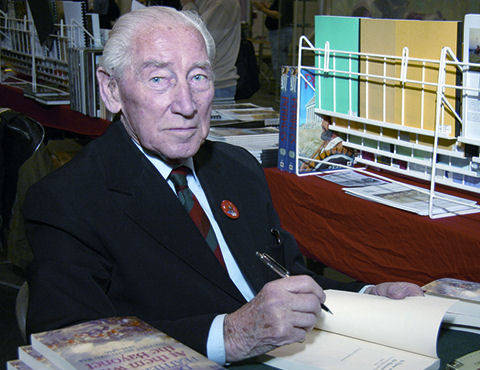
. . . little attempt has been made in this book to lay down rules for specific periods of military history, assuming that the wargammer will have obtained or formulated rules for the type of warfare in which he is most interested. To this must be added the well-established and acknowledged fact that few wargamers have the inclination or patience to fight under rules that they did not compile themselves.--Donald Featherstone, Solo Wargaming (emphasis mine)
This really incapsulates what differentiates the (original) Dungeons & Dragons category of play from the larger category, "old school," in which if falls.
Are you playing a wargames campaign that happens to be set in sword and sorcery? Or are you playing a role-playing game and following its published rules.
Fight on!
Subscribe to:
Posts (Atom)