Showing posts with label medieval. Show all posts

Thursday, August 6, 2020

Dungeon, exploration and the title: "Dungeons & Dragons"


This is the second post in a two-part series of posts on the title of Dungeons & Dragons as a means to empower hobbyists to start their own medieval fantasy wargames campaigns.


The last post was on level of scale and the incorporation of role play. This post is on how the one-to-one level of scale empowered character exploration -- giving birth to the supertitle, "Dungeons & Dragons."


Dave Arneson’s Blackmoor


Before the publication of Dungeons & Dragons, its co-author, Dave Arneson, was already a wargamer involved with his group of friends in running wargames campaigns. He and came up with a wargames campaign for his friends that was a full-blown medieval fantasy wargames campaign that came to be called Blackmoor. Arneson had already encouraged his players to look at their relationship to the wargame in a different way. Inspired by things like Diplomacy, and by Baunstein and other such campaigns before, Arneson encouraged wargames-style role-playing as a significant aspect of the birth of Dungeons and Dragons.


The First Dungeon


Dave Arneson stumbled upon a scenario over the course of his Blackmoor campaign where his players’ characters, while laying siege to the castle of one of their enemies, decided that they would mine, that is to say, dig under the walls to try to break the siege. When Arneson moved the scale down to the level of skirmish so that each figure on the table was one to one in scale, then you have not just a soldier in front of you, but you have what is going to be called a character, and you're going to be playing not as the general of an army, but as that one character in a medieval fantasy setting.


This gave Dave Arneson an idea. And what he decided to do has made history. He set up a situation where once the players’ characters had successfully dug under the walls of the castle, they would suddenly find themselves tunneled right into the crazy labyrinthine dungeons underneath the tyrannical lord's castle. 

Instead of just coming up in the castle yard, they found themselves down in the dungeons. And instead of the normal dungeons of history that just had normal prisoners, Dave Arneson populated this dungeon with the fantasy denizens of the underworld: monsters and creatures that the characters had to steer clear from so that they could come up, find the bad guy, take him out, and win the day.


Exploring the Unknown


Arneson conducted this scenario such that the players’ characters did not know exactly where they were until they had explored the dungeon and created their own map of the dungeon. They could keep track of where they'd been, where monsters were to avoid. They were playing in such a way that they were not simply laying out a battlefield and playing a pitched battle with miniature figures on a one to one scale, but instead they were imagining exploring down in the darkness of a deep dungeon and they had to create a map of what they'd discovered as they were going along.


This is not unlike other games that were popular at the time and still are, such as Battleship and Stratego. Both Battleship and Stratego are simple games where something is concealed from the player, and through play you slowly begin to reveal what's concealed, and those revelations and guesses made on those revelations help lead the player to victory. So this was already a concept that existed in gaming, and Arneson was able to grab it and use it at a much more complex level of scale where instead of it simply discovering whether you've sunk someone's battleship, or whether you've found someone's flag in a battlefield, now you got a whole labyrinthine dungeon underneath an evil tyrannical castle.


Dave Arneson's players found this so exciting and fun that they said, "Hey, we've really got to do this again sometime." We now see the birth of the first dungeon for what would come to be called Dungeons and Dragons.


Everything in place for the Title: Dungeons & Dragons


Arneson had stumbled upon the joys of dungeon exploration with his players. Dragons are the quintessential monster of medieval fantasy. At the time in the wargaming hobby community, there were a lot of “something & something” titles. Fill-in-the-blank and fill-in-the-blank titles were popular at this time of hobby wargaming. So there is a story that says that Gygax as sitting at his kitchen table with his daughter and a list of words. He would go through the list, adding two words together with an “and” in between. When the combo “Dungeons & Dragons” finally came up, his daughter said, “that’s it, that is the one.” And it has stuck ever since. At least that is the story!


So now with this post in this series, and with the posts of the previous series on the subtitle, we have in place what a wargame is. We have in place the tradition of Free Kriegspiel. We have in place what a wargames campaign is. We've talked about how things move down to the skirmish level or one to one scale of play. We've talked about role playing in early war gaming, such as the game of Diplomacy. We've talked about how Arneson added the discovery of hidden things through careful play, such as we find in games like Battleship and Stratego. When all of these things come together, then Dave Arneson together with Gary Gygax were able to put together the first published rules for setting up and conducting a medieval fantasy wargames campaign: Dungeons and Dragons.


Summary so-far


So to sum things up, Dungeons & Dragons arises when we have a referee (Free Kriegsspiel) with an extensive knowledge of both wargaming (hobby) and medieval fantasy literature (fidelity to outside source) who moderates a generally skirmish scale (level of scale) medieval fantasy wargames (wargaming) campaign (campaign-play) that connects wargame sessions involving exploration of unknown spaces and areas (exploration) through skillful role-play (role-play). I would add, anyone playing a game with these elements in place, because they are playing a fantastic medieval wargames campaign, they are therefore playing "Dungeons & Dragons," as originally presented by the authors, whatever that particular group happen to call it, and whatever is currently being published with that name printed on the cover!


Fight on!


These two series of posts are now tied up. Now I can launch a follow-up series of posts where I will look at a couple of miscellaneous things that haven't quite fit into a previous post but that now begin to make sense in light of what we have discussed so far: things like Experience Points and gold, etc.

Sunday, June 28, 2020

Medieval Fantasy and Dungeons & Dragons


This is my next post in a series of posts that looks at the subtitle of Dungeons & Dragons in order more readily to launch our own hobby campaigning from the original publication.

Last post, I wrote about "Wargames." In this post I will talk about the phrase, "Fantastic Medieval," in the subtitle, or, as we would say it now, "Medieval Fantasy." "Fantastic Medieval" sounds like something medieval that we thing is just awesome: that is fantastic! But that is not what the phrase meant at the time of its publication. For contemporary ears to hear the subtitle, correctly, it should be changed to something like "Rules for Medieval Fantasy Wargames Campaigns."

Medieval Fantasy


Wargaming was and is a hobby for folks that dig the study of history. History includes the middle ages and ancient civilizations. So another area of interest that quickly developed for wargamers was medieval and ancient wargaming. It would not be long before wargamers were willing to move beyond the walls of the historical and engage the literature of fantasy.


At the time that Jeff Perren and Gary Gygax published Chainmail as a set of rules for resolving medieval wargames, Gary Gygax had already developed an interest not only in the historical western middle ages, but also medieval fantasy literature. Gygax added a fantasy supplement, to the end of the Chainmail rules for folks that were interested in adding to their wargaming hobby medieval fantasy troops like elves and hobbits, dwarves and gnomes, orcs and goblins, and monsters like giants, dragons and the like.


Gygax added to what was already the base rules of a fairly realistic historical medieval wargame, ways of resolving the possibility of a dragon showing up at one of those battles. He did this for the same reason that historical wargamers would play-out battles that already existed. Just as the historical wargamer would study actual battles from history in order to understand how to set up rules and judge games as a referee so too if you were interested in medieval fantasy literature, you might want to completely redo a battle from one of your favorite pieces of medieval fantasy literature.


The Chainmail Fantasy Supplement list, for example, the Battle of the Five Armies at the conclusion of The Hobbit by J.R.R Tolkien. So Gygax suggests that if you take the Chainmail set of rules and add to it this supplement for medieval fantasy, you can engage an actual fantasy battle as described in the relevant authoritative literature. When you feel like you'd developed enough knowledge of how fantastical battles worked out you might then try your hand at your own hypothetical medieval fantasy war game battles.


Fidelity to the literature


Just as historical wargamers worked to make sure their game was as faithful to what might have happened on an historic battlefield, so too, fidelity to medieval fantasy literature in general and Sword and Sorcery in particular, formed a significant part of this new aspect of the wargaming hobby that Dungeons & Dragons introduced.


A referee would know how to judge whether something was possible, in this medieval fantasy world because they were so familiar with the medieval fantasy literature they were gaming. A key part of Dungeons & Dragons is the love of becoming an amateur expert in medieval fantasy literature. High fantasy, low fantasy, especially sword and sorcery, urban legend, classical mythology, Arthurian legend, Carolinian cycles, Nordic sagas, all form part of the expertise needed to set up and play in a medieval fantasy role playing game.


But, in the main, the particular style of medieval fantasy literature that influenced Dungeons & Dragons was what Fritz Leiber named "Sword and Sorcery." This is important to know because Dungeons & Dragons is built better to play in this kind of fantasy world than in others. Later editions of games called "Dungeons & Dragons," have shifted from this original base towards more heroic and high fantasy. So sometimes the original game is confusing to folks coming from newer RPGs. Learning about Sword & Sorcery and reading some of its core texts helps in understanding Dungeons & Dragons and helps the amateur hobbyists to build his or her own campaign.


"The general line-up”


What I've written about so far helps us to understand certain aspects of the game. For example, the taking of sides, or what would come to be called "alignment."


When you are playing a wargame, you need to know the sides of your battle and that's exactly what's going on in the Chainmail fantasy supplement with its “General Line-up.” This gets reiterated in Dungeons & Dragons’ Men and Magic. You have the alignment table to give you sides. The big battle is between law and chaos. Some creatures are on the law side and some creatures are on the chaos side and some can go either way. Then there are some creatures that just opt out of it altogether. They're not on the side of law or chaos, they're just for themselves and these because they don't really want to wage the war between law and chaos are called neutral, like Switzerland and its diplomatic neutrality. So if you're setting up a war game table, one side is chaos and one side is law, in this medieval fantasy war game context.


These categories are derived from medieval fantasy. For example, they are implied in Tolkien's Middle Earth around the War of the Ring. But these terms, "law," and "chaos," are explicit in Sword and Sorcery literature, especially that of Poul Anderson and Michael Moorcock. So, again, we have a fidelity to the literature they were trying to game.


Race


Finally, briefly, we can understand where the use of the term "race," came from. Race was a term already used in medieval fantasy literature to distinguish human characters from other intelligent beings that were not gods or spirits. Especially there would be the fay races, such as elves and dwarves, and the fell races such as orcs, goblins and trolls.


This is not how we use the term "race" in contemporary parlance, so it can throw people off. This is not about supposed differences in human groups. If the fantasy rules were put together today, someone might have chosen "species." Although, even that is misleading in a fantasy context, where a word like "species" would sound to empirical and scientific. So this terminology has stuck and is a part of the shape of medieval fantasy wargame campaigning.


Next in the series: "Rules," free kriegspiel and refereeing.

Sunday, June 21, 2020

Wargames and Dungeons & Dragons


This is my first post in what will become a series of posts that I hope will be helpful for folks trying to understand Dungeons & Dragons as a hobby and especially the original published rules that empowered hobbyists to launch their own campaigns.

Introduction to the series

The subtitle of a published work is always the real title. Studying a subtitle, when provided, will often tell you more about what the author understands the work to be about than the main title.

The original subtitle for the first published edition of Dungeons & Dragons is:
Rules for Fantastic Medieval Wargames Campaigns.

The real title, therefore, is "Rules for Fantastic Medieval Wargames Campaigns." A lot of the misunderstandings or confusions about Dungeons and Dragons* comes from not understanding what the publication really is. In order to understand what the first "little brown books," or, LLBS were really offering, one needs to know what a wargame is, and, better, have some contact our hours of actual play. One needs to know what a wargames campaign is, which means one needs to understand war enough to understand that it is a campaign comprising a series of battles, not one battle. One needs to understand what was considered "fantastic medieval" at the time of its publication. Finally, one needs to understand how hobby wargammers understood "rules" to work and what they meant and how they used them.

Once these things fall into place, Dungeons and Dragons suddenly starts to make a lot more sense and to become much more accessible as the launch point for one's own hobby. So let's start with the central word of the true title, the word that all the others build-off of or modify, the word "wargames."


Wargaming


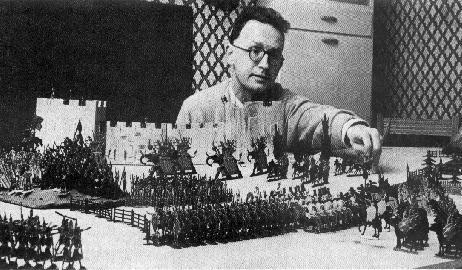
At the time that Dungeons & Dragons first appeared, the hobby called wargaming had gained fair popularity. The hobby consisted of casting or collecting miniature figures of soldiers of different military eras, painting miniatures, preparing large tables with scenery and terrain, etc. You would then conduct a wargame where you would, perhaps, relive an historical battle or maybe even perform a hypothetical battle, a battle that could have taken place but that actually did not.


So what is a wargame? Well, it is first of all, a game. Like most games, you have players, you have goals and victory conditions, you have pieces, you have a setup, and you have rules to the game. Wargaming is about war. So it's a game that's particularly focused on trying to play-out, to varying degrees, combat or warfare of an historical period.


Wargaming as History hobby


One of the things that wargamers really love is history. To be a good wargamer you had to know war, and the history of war. To know the history of war meant you had to research and study. One of the major parts of the hobby of wargaming is historical research. It is the research of historical facts, knowledge, information, that is part of what's fun about the hobby to historical wargamers.


Hypothetical possiblities


Now, in some historical wargaming, what you're really trying to do is set up all the conditions of an historical battle that actually happened and that you knew existed. Then a group might decide, "Well, what if other battles were fought that were never recorded in history? Or what if we just made up a battle that would be fun to pitch and see what that was like? We're going to use the same soldiers, the same groupings of soldiers and the same statistics matched to dice rolling. We'll play out what would happen in this hypothetical situation."


For example, one particular historical period that a lot of wargamers like to focus on, among many, is the Napoleonic era of warfare. There's something very attractive about Napoleonic warfare for various reasons. One is that the troop structure was quite organized. It was one of the first set of wars where lots of records still exist that were kept meticulously and mathematically. Someone can do mathematical analysis on Napoleonic battles and learn the probabilities of one army defeating another army.


Dice Mechanics


This meticulous information is really fantastic for wargamers, because what wargamers figured out pretty early on in the hobby was that the chances and vagaries of warfare could roughly be emulated by rolling dice. A single die will turn up random chances. But when you start rolling combinations of dice they roll up in probability curves. If you can find a probability curve in a combat situation, you can find a matching way of rolling dice to simulate that probability. So with all of the data that existed from Napoleonic warfare, wargames hobbyists can, fairly well, emulate the outcomes of an actual battle.


What we have discussed so far can already help us to understand some of the terminology and approaches of Dungeons & Dragons.


Alignment Table


Having some understanding of Dungeons & Dragons wargaming context helps make sense of some of the presentation of the rules that might otherwise seem confusing. For example, I used to wonder why there was an alignment table in Men and Magic separate from the monster table and stats in Monsters and Treasure. If you're playing Napoleonic wargame, you need to know which side of the table to place Napoleon and which side to place Wellington and then set-up those armies. If you're doing a map campaign, you need to know where is France and the central cities that grant resources to the French army and where is England and where are the central cities that grant resources to the English army and navy.


You need to know the sides of your battle and that's exactly what's going on in the Chainmail fantasy supplement with its “General Line-up.” This gets reiterated in Dungeons and Dragons’ Men and Magic. You have the alignment table to give you sides. The big battle is between law and chaos. Some creatures are on the law side and some creatures are on the chaos side and some can go either way. Then there are some creatures that just opt out of it altogether, like Switzerland. If you're setting up a wargame table, one side is chaos and one side is law, in this medieval fantasy war game context. So right up front, in the first book, you've got a list of the sides and who might not take a side.


Classes


Dungeons & Dragons has fairly strictly defined classes for characters because Gygax and Arneson applied this notion of classes of troop-types from their hobby of historical war gaming.


Let's look at Napoleonic warfare again. You're going to have classes of troops, types of troops, so in the classical Napoleonic context you are going to have infantry, cavalry and artillery. If you want to make it even more complex level of detail in order to try to snatch a little added realism, then you're also going to have dragoons, light infantry, heavy infantry, light cavalry, and heavy cavalry, heavy artillery, and light artillery for a greater level of scale of detail. But each of these types of troops are different classes. You know exactly what artillery can and can't do, you know exactly what infantry can and can't do, you know exactly what cavalry can and can't do. You know what their attacks are like, you know what their defenses are like, and you know what their movement rates and capacities are like. This enables you to develop your strategy by having clearly defined classes on your battle table.


Gygax and Arneson were used to this approach to things. They developed the fighting-man, the magic-user, and eventually the cleric. And these became character classes. As in Napoleonic game you would have artillery, cavalry and infantry where each of those classes of troops have clearly defined the capacities of movement, attack, and defense, so too then the fighting-man, the magic-user, and the cleric have different capacities, abilities and liabilities that define the way that they will be played and will influence the way in which they can come together as an adventuring party to be successful together.


Wargaming didn't have to just be Napoleonic, for hobbyists interested in war history. So wargamers would also try to set up situations where they could emulate, historical or hypothetical, increasingly more modern warfare like World War I or World War II era warfare. Eventually, wargamers would get interested in ancient and medieval warfare. And from there, to "fantastic medieval" warfare!


Next in the series: "Fantastic Medieval"

Fight on!

*A note about "Dungeons & Dragons": There have been many products professionally published bearing the name “Dungeons and Dragons.” At the time of the release of this post, we have what Wizards of the  Coast call the Fifth Edition. In this blog series, I will not refer to an edition number when I say, “Dungeons & Dragons.” Rather, when I say, “Dungeons & Dragons,” I will be talking about Gary Gygax and Dave Arneson’s rules for how to put together medieval fantasy wargames campaigns that were first published in 1974 by TSR. This is what some people call the original rules. Sometimes these rules are referred to as, “Original Edition Dungeons & Dragons,” "Original Dungeons & Dragons," or, "OD&D." Sometimes people will abbreviate it as, "Oe", meaning, "Original Edition." Or even "Zero-e," meaning, "Zero Edition."

Bibliographical Note: Much of this post and any posts I share about the history and historical context of D&D is based upon the book Playing at the World by Jon Peterson.

Friday, July 5, 2019

Setting-up a Medieval Fantasy Wargames Campaign


In a previous post, I made the point that Dungeons & Dragons (original) is an approach to setting up medieval fantasy wargames campaigns. Back in the day, folks within the miniature war-gaming hobby would share their rules for how to resolve individual combats. In addition to that, they would also sometimes share rules for how to string together a series of table sessions into a coherent war campaign. In these documents, they would not focus on rules for the wargames themselves -- they assumed they were writing to wargamers who already knew such rules and probably already had their own house rules as a local, hobby, gaming group. Instead, the focus was on how to make the games link to each other, reasonably, in order to game a "realistic" war campaign, and not just individual, disparate battles.

As I thought about these things while writing that post, I began to imagine what their pamphlets might have read like if Gygax and Arneson had written them in a more colloquial style that showed very clearly that they were talking to other wargamers about what had worked for them, what they had found to be fun. Because that was in fact what they were doing. It is just that it can be lost on many of us when we come backwards to the pamphlets from complete-rules-style RPG books rather than forward from their actual wargame hobby context. I offer my imaginings, below. The actual work would be a bit more detailed, but still short enough. I leave a lot that would be fleshed out as parenthetical summaries of what I imagine they would include in the actual text. Who knows, maybe someday I'll write this whole thought experiment up?

________

Dungeons & Dragons, or
How to Set-up a Medieval Fantasy Wargames Campaign

These booklets are a set of ideas for how to turn an ordinary wargames campaign into a Sword and Sorcery wargames campaign! As with any suggestions for setting up a wargames campaign, these brief booklets give some ideas and descriptions of what has worked for us in our own campaigns. Experiment with it and have fun. Always make it work for your local group.

As with any wargames campaign, you will need to assign sides. In simple fantasy, it is usually good enough just to have "good guys" and "bad guys." But, following Anderson and Moorcock, and hints at such in Tolkien, we have named our major sides "Law" and "Chaos." Monsters, fantasy figures and characters in general fall along such lines. Of course, brute beasts don't fall along any particular line and characters may choose to "opt out" and remain neutral. (Here would follow the list of fantasy creatures by line up, or what would come to be called "alignment.")

Choose rules for resolving combat and figure out a way to factor in the fantastic. We recommend Chainmail, especially with its fantasy supplement and man-to-man rules. We tried to make combat rules and fantasy creatures match up by having monsters and characters act equivalent to a certain number of figures in a typical wargame battle. We talk in terms of "hit dice," to make sense of this. Since we assume that you are already an experienced wargammer (since you are interested in reading pamphlets about setting up an entire campaign), we trust that you are familiar with this way of thinking of these things, so you get the point. But, real quick, here is an Alternative Combat resolution to consider (here they present the "Target-20" method they introduce by means of the "Alternative Combat" tables and the concept of "Armor Class" borrowed from naval wargaming).

Okay, now here is a fun new idea: what if players not only played as "generals" over armies, but actually played individual characters within the game-world? Characters can fall into different "classes," much like then different classes of troops in a typical wargame. Make sure they are different from each other, with clear cooperative properties, so that they can work well together as a Sword and Sorcery style adventuring party.

Here are some ideas for character classes: Start with the proverbial fighting-man. Next would be magic-users. Gygax doesn't much like the idea of magic-users being playing characters, since they are usually the bad-guy in Sword and Sorcery. However, some players may want to play chaos. And you could have "good" magic-users in your campaign. So you may want them to be a character class as well. Also, we had someone who wanted to play a "Van Helsing" type character, so we introduced the "cleric." They are kind of like a crusader. They can force undead to check morale (usually, as they are "undead," they would not check morale). We call this "turning." Clerics also have some of their own kind of spells that are a bit more religiously miraculous, like healing.

Don't forget standard fantasy races such as elves, dwarves and hobbits. Give them descriptions that match what you like from fantasy you have read and that you would like to incorporate into your campaign. Here is what we've done. (Here would follow race descriptions.)

Here is another cool idea: when you play as a general of armies, you usually start with a point-buy system for hiring your starting armies. Then, through play, you can gain more points to buy more troops, thus increasing your army, etc. Well, we thought of a cool way to make this work with players playing characters at a one-to-one scale. We call it "experience" and we measure it in "experience points." Just as armies have tactical goals, Sword and Sorcery characters have the goal of treasure extraction and "looting." So we have developed a way of matching the value of a treasure safely extracted by a character to a character's "experience points." Successful victories also grant some experience. These experience points then accumulate and grant the character advancement in the game-world. We use the term "level" to describe this game-world advancement. Each time a character gains a level they gain in the respective capacities and advantages of their particular class, just like armies growing more powerful in a regular wargames campaign. Here are some ideas. (Here would follow the tables for advancement, XP, HD, spells, etc.)

Now here are some ideas about how to incorporate magic-users and their spell-casting abilities into a wargame context that keeps things fair but still "wonderful." You will find your own way to work this stuff out for your campaign. (Here is where spell lists and descriptions would go.)

Oh, and to make sense of non-combat related eventualities, Arneson borrowed from Naval Wargaming the mechanic of "saving throws." Much like determining how much hull-damage a ship has taken from, say, an underwater mine, you can use saving throws for resolving how much damage a character takes from, say, falling down, drinking poison, or being hit by a magic-user's fireball! We have also found it useful for determining if a character or creature has been affected by a spell or not. As characters advance in level, eventually their chance to save increases as well.

Another thing that we discovered to be really fun is what came to be an emphasis on the more exploratory aspect of the game. Since we have allowed a 1:1 correspondence between player and in-game character, we can set up scenarios where characters explore an unknown, usually interior and often underworld environment. Think of this in terms of Stratego or Battleship, but even more complex and fascinating as the players will need to map a potentially elaborate underworld setting. This could be maze-like or labyrinthine. Or you could have secret spaces only discovered when they have circumnavigated it.

There are a lot of possibilities here. You can set up standard things from Sword and Sorcery that often fall outside the purview of standard wargames. For example, you can have tricks and traps and puzzles that the players can solve by means of their characters interacting with the environment. Really the sky is the limit here.

We have found that the combination of the 1:1 scale and an emphasis on underworld exploration has been absolutely amazing in giving our campaigns a real Sword and Sorcery feel!

Here are some ideas for monsters. We take advantage of the use of Hit Dice to represent relative fighting power and ferocity. Other natural and magical capacities can then be factored in. We describe below what we have developed for ourselves. Again, look at our examples and then work out what would work best for you in your campaign. (Here would follow the monster list and descriptions.)

Here are some ideas for treasure. Look to our examples and work out things for your campaign. (Here would be the tables for deterring treasure, magic items and their descriptions.)

Many wargames campaigns are "map campaigns," and that is what we suggest here. The scope of the game is infinite, but just for starting out we recommend a map of a local area with several opportunities for treasure hunting in dangerous and "underworld" environs, perhaps with one big dungeon nearby. This dungeon would comprise many subterranean levels that the players can easily begin exploring before branching out into the wider world.

Start with at least three levels to this main dungeon (in case they decide to go pretty deep from the start). As they explore, you can continue to add more levels to the dungeon and expand your map to include wider kingdoms and wildernesses -- even a whole fantasy world, eventually, if you want to.

Oh, and if you find your players suddenly want to strike out into the wilderness for an off-hand adventure, Arneson has found it really fun and easy to use the Outdoor Survival board (Avalon Hill). Here are some ideas for random encounters and what to do with some of the symbols on the board in order to render them a bit more like exploring in a medieval fantasy wilderness. (Here follows the suggestions for castles, random encounters, jousting, etc.)

Be sure to keep things fresh. This is fantasy so go crazy! For example, players might think that they have "cleared" an area only to see that a bunch of orcs or goblins have made their home there -- perhaps, very thankful for their newly cleared-out digs!

Most importantly, keep it fun and make it your own. Let us know what you come up with! We always improve as referees by hearing about what other referees are doing with their local clubs.

Fight on!
_________

If you have a medieval fantasy wargames campaign that sounds like something inspired by the above -- no matter what mechanics you are using for resolving encounters -- you are playing "original" Dungeons & Dragons. So, again, I will say:

Fight on!

Thursday, July 4, 2019

Understanding Original Dungeons & Dragons


I've seen some posts on reddit and other fora asking questions like: what counts as (original) D&D, how do we know that it isn't (original) D&D anymore? What are the advantages of D&D to later editions using that name? Etc.

Here is my answer: (original) D&D is an approach, not a set of rules. It is an approach to a hobby, called "wargaming." It is an approach to a particular interest of that hobby: the wargames campaign. It is an approach to giving that hobby-interest a "Sword and Sorcery" feel.

It is not a product designed to be consumed. Repeat: not a product made by experts to be consumed by an unprofessional public. It is a set of suggestions for fellow hobby-ists, who have a rich amateur knowledge and interest in their avocation. And those suggestions were sold at a price to make the effort worth it for the fellow-hobby-ists who did the work to put it out there for you.

So, don't get me wrong, obviously, in one sense, it was a product -- Gygax and Arneson did publish and sell it. But what we need to remember is that back in that day the market for such pamphlets was small and highly specialized and understood to be a way to get ideas out and shared with some minimum compensation -- no one got into publishing about miniature wargaming so that they could quit their day job! (This is something so easily do-able because of the internet and part of the DIY vibe of some of the best "OSR" stuff that is out there. We can share today in a way that the hobby-ists of 1974 couldn't have dreamed.)

Later "editions" move more and more towards "product identity" and changing the very semantics of the name "Dungeons & Dragons" from referring to three little pamphlets that suggested how to set up a medieval fantasy wargames campaign, itself intended for an audience of other wargamers, towards more of a product making money for a particular company from a non-expert set of consumers.

Thus these companies become increasingly concerned about their rights over this "product" -- and taking ownership for its development out of the hands of the consumers. This really changed the nature and vibe of things. Remember, for quite some time Gygax simply could not understand why any fellow-hobby-ist would want to by a "Dungeon Masters Kit," or "module." Why borrow someone else's creativity? The point is to have an outlet for your own! (Then he saw the cash available in it! I do not blame him for this. It was a smart, and, probably, the right business and even hobby-supporting move. I'm just giving this as an example for the subtle shift in things.)

Why do I keep putting "original" in parentheses? Just exactly because of the above. The three little brown books are not an edition. They are suggestions from hobby-ists, to fellow hobby-ists about a particular area of interest: wargames campaigning in a medieval fantasy setting. This is not an "edition," of a "game," with a unified mechanic and defined setting.

To many of us who play (original) Dungeons & Dragons, the other "editions" of Role Playing Game rules with the title "Dungeons & Dragons" look to us like many various house-rule variants of these suggestions for medieval wargames campaigns. (But, in this case, it often feels like someone else is telling us that their house rules are now the RULES, period.)

So AD&D is Gygax' tournament house rules made official.
3.5, 4, and 5 are Wizards of the Coasts house rules made official.
All the retro-clones are cool house rule variants, shared for the rest of us.

And good for them! In fact, thanks for sharing! They are all, also, D&D! But we don't have to use their house rules, we can make up our own. And we certainly don't have to view them as "official."

So, Dungeons & Dragons (original) is an approach to setting up medieval fantasy wargames campaigns. Back in the day, giants of the miniature war-gaming hobby would share their rules for how to resolve individual combats. But sometimes they would share rules for how to string together a series of combats into a coherent war campaign. In these documents, they would not focus on rules for the wargames themselves -- they assumed they were writing to wargamers who already knew such rules and probably already had their own house rules as a local, hobby, gaming group.

So, for example, they were in no way interested in a "unified mechanic." They wanted mechanics that made sense for the type of thing they were trying to resolve, at the appropriate level of scale. (Not everything scales up and down well, like, say, a fractal. More like the cube law, sometimes things need to change to work well.) This alone explains a lot of misconception about what the original little brown books were trying to do and to offer. Folks would do better, and understand original D&D far more, if they compared the three little brown books to other books on setting up wargames campaigns, rather than to later books that came to be called "role playing games."

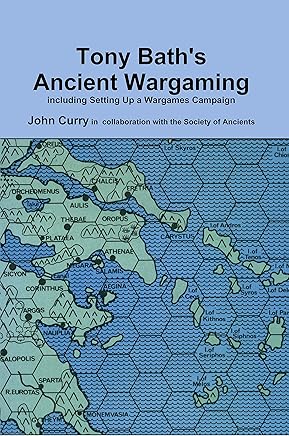
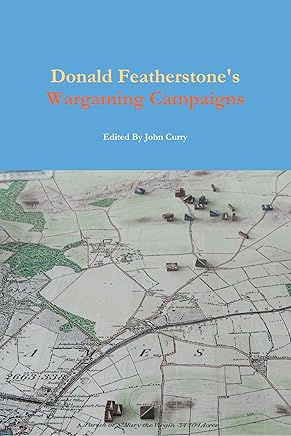
Here are the three I would suggest anyone interested in understanding (original) Dungeons & Dragons:

Tony Bath's Ancient Wargaming including Setting Up a Wargames Campaign:


Donald Featherstone's Wargaming Campaings:


And, finally, Grant's Wargames Campaigns.

But I would especially emphasize Tony Bath's book.

Another big difference in the slow transformation from a small, wargames hobby to a large, consumer role-playing game product is the vibe of play, and what the goal of play is. And this is, in many ways, far more important for understanding the difference between "original" and later "editions" of D&D -- but that is for another post.

Before I write that post, my next post will be a kind of imaginary example of what D&D might have been worded like if it had more of the form of some of the above classical examples of wargames campaigns books.

To conclude this post, I will say, if you are involved, as a fellow hobby-ist, in a local medieval fantasy wargames campaign that, through play, has developed its own vibe, feel and corresponding house-rules, then you are playing Dungeons & Dragons, whatever other name you call it.

Fight on!

Monday, April 22, 2019

Ages of the Perilous Realms


I am more a rules-imaginer than a setting-imaginer. But I'm getting more into exploring my campaign setting than ever before.

There are multiple overlapping ages of rise and collapse of mighty civilizations that define the Perilous Realms and the kinds of ruins, underworlds, treasures, magic items and artifacts that may be found. Here is the myth, or legend of the various apocalypses and dark ages that led to the current state of the Perilous Realms, my campaign setting.

The Diamond Aeon

In this age, the archetypal powers were young and playful children of the Most High.
They knew their place, and, although childishly mischievous at times, obeyed the will of their Father.
They reigned over the cosmos like living stars.
In the end, the archetypal powers come of age, and conflict ensues.
They rebel against their Father and are thrown into the chaos of war.

In terms of the way we think of things now, we are talking about billions of years ago. Thus this loosely corresponds to “big bang” through cooling down of the universe. In Tolkienesque terms, this is like the Valaquenta. The key to this fall narrative is REBELLION. So whenever we see rebellion in the campaign setting it links somehow to the Powers.

The Golden Age

Law and chaos draw their lines for the first time.
The Celestials seek to establish the joy of the Diamond Aeon through Law, and often fall into rigid legalism.
The Chthonic powers seek to empower the unbridled joy of the Diamond Aeon through following the passions of the underworld and often fall into the cruelty and whim.
Many powers opt out and hide as spirits of nature and life ("neutral" elemental powers).
The war shapes much of the terrain of the Perilous Realms.
Ultimately, the Celestials drive the Chthonics under earth and imprison them there, only to serve for fertility and virility.
The Celestials establish a Golden Era of light and genius upon the earth — with unparalleled cyclopean edifices and artifacts!
At this time, the fay races are born into the wonder of direct contact with their fascinated rulers.
But the Celestials become too confident in their victory, and their watches fall into indiscipline.
In the end, the earth cannot contain the chaos that errupts.
The final war leads to total apocalypse and a dark age ensues.
 
In terms of the way we think of things now, we are talking about millions of years ago. Thus this loosely corresponds to a kind of smashing together of the mesozoic and its great meteoric (heavenly) and volcanic (chthonic) apocalypse together with the monolithic stone age. This nicely gives us cavemen with dinosaurs! This era gives a chance to engage the Lovecraft Mythos. The key to this fall narrative is COMPLACENCY.

Interlude: The Age of Darkness

The fell races are born and run free but unorganized.

The Silver Age

Out of the shadows of the Age of Darkness, the Fay races form an alliance, consulting what Powers still remain in their weakness and sorrow.
With the advice of their cosmic elders, the fay together stem the tide of the spawning hoard.
The elves rise to power over all other fay.
They establish a Silver Era under the light of their matron, Mother Moon.
They enslave the fell races, especially the orcs, to do their bidding — and on their backs they build mighty cities, towers, and palaces unrivaled by any save the powers themselves.
But the orcs and their fellow fell never forget their enslavement.
At this time, Men arrive, the fay know not from where — nor do the men! They are in awe of the elves.
But the elves in their assumption of opulence grow fatuous, weak, superficial, degenerate — and their civilizations fall into decadence.
Thus they become easy targets for fell rebellion — if they are not dragged down by their own petty divisions and meaningless wars of trumped up honor.
The collapse of the elves is a slow and painful decline, leading, ultimately, to a second dark age.

In terms of how we think now, we are talking about several millennia ago. Thus this roughly corresponds to the great pre-historic civilizations of myth. This era allows me to smash together Tolkien's and Anderson's elves. The key to this fall narrative is DECADENCE.

Interlude: The Second Dark Age

Pacts with the chthonic power, Necros render the first Undead. Alchemical and medicinal warfare fabricate the disease of lycanthropy. Monsters proliferate.

The Bronze Age

The bronze age is the first age of Men.
In the memory of the elven empires of old, and in devotion to, and under the patronage of what remains of the mighty Powers, men erect fabulous temples. Around these temples, cities grow up — Ur, Babel, Byblos, Shangri-La, Hamunaptra, Aqaba, Thebes, Indus, Eddo, Techlan, Cyprus.
These temple-cities become the center of mighty and diverse empires in trade with one another of both goods and philosophies.
At some point, men cannot remember how or why these great empires all suddenly (with decades of one another) fell into complete collapse.
It is not likely that the collapse came about either because of internal disputes or because of external wars, although these played a part, but from the evidence it seems the “gods” (Powers) no longer favored them and removed their blessings of abundance.
This is the great Bronze Age Collapse.
The human population was decimated and the survivors fled to hills and mountains to survive.
The “Ancients” left behind powerful ruins, tombs, sepulchers and crypts — of frightful aspect to the fragile humans who remained.

In terms of how we think now this represents several centuries ago. Thus this is a fantasy version of the actual Bronze Age Collapse. This allows us to engage classical mythology and legend. The key to this fall narrative is divine ABANDONMENT.

Now: The Age of Adventure

Now is the age of adventure!
Now law and chaos reenter their struggle for vast civilizations of lawful glory or unbridled passions and dominion.
Now mighty fighting-men and Amazons rise up to pit their thews against the dying of the light!
Now over-confident users of magics seek their own through initiations into the mysteries of the arcane.
Now the church proclaims a gospel of universal order under a king of heaven and sends out crusaders (“clerics”) to establish Law: by word or by fist.
Now fearless — or foolish — adventurers commit to mighty peregrinations into forgotten wildernesses and yawning openings of the mythic underworld.

In terms of how we think now, this represents about the last millennium. The Perilous Realms campaign begins in an imaginary year 990. In a sense, this is a Third Dark Age. It roughly corresponds to a mash up of the Iron Age and both the Western and Eastern Middle Ages. This age engages Leiber's universe of Nehwon. The key narrative here, is, of course, WAR and ADVENTURE.

All of these previous beings remain: powers, fay, fell, lycanthropes, undead of the bronze age— each slightly weaker than before. Each remembers and grieves the loss of their once great status. But now they are lost in wildernesses and trapped in nightmares of the underworld.

Adventurers may stumble upon all of these different layers of civilization, languages and artifacts:
Powers: celestials, elementals, chthonicoi and their physical manifestation as giants and sylvan monsters
Fay: elves, dwarves, gnomes, and, after a fashion, even the hobbits
Fell: kobolds, goblins, orcs, hobgoblins, gnolls; and
Ancient men: Aegyptian, Anatolian, Levantine, Etruscan, Mycenean, Assyrian, Hittite, Wotan, Indus, Nod, Jomon, and more.
Their stories give clues to one another and nest within one another.

Fight on!

Sunday, September 18, 2016

Ringmail


Rules for Medieval Toy Soldiers

Introduction

"Ringmail" was an improbable historical construct. So too these rules are an improbable match to anything historical. But they sure are fun!

Scale

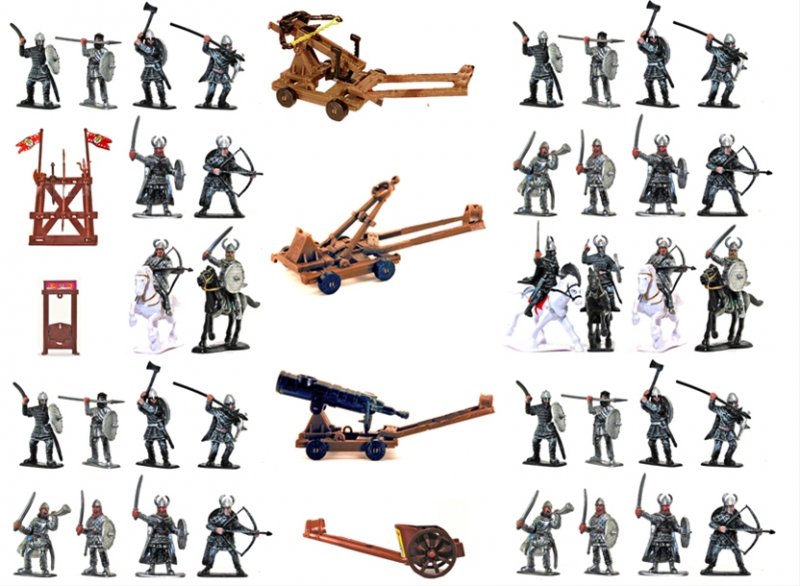
Toy soldiers are 1:32 scale; that is 2&¼" or 54mm.

Field of Battle

Arrange a field of battle anywhere from 6' to 24' in dimensions. Determine battle line between opposing sides in roughly the middle of the field. Each side has a starting line set back from the battle line equivalent to that of their opponent's and no less than 24." Main stronghold, camp or pavilion of each side no more than 12" back from respective start-lines. Scale of play is such that terrain types and penalties make little sense. Distribute interesting obstacles for tactical use. Recommended: felt battle mat marked with 2" hexes; model trees, blue ribbon for rivers, etc.

Composition of Forces

Each side has one or two engines of war. Arrange each side with troop types falling roughly within the following ratio:

1 Archer : 3 Cavalry : 5 Infantry

Turn Sequence

  1. Engine
  2. Range
  3. Melee
  4. Move

All actions simultaneous. Alternatively, players determine initiative for movement by opposing check. First turn: move only. Second turn: move and melee (if any). Third turn adds range. Fourth and all subsequent turns: all four phases.

Movement

  • Engine 3"
  • Archers 6"
  • Infantry 12"
  • Cavalry 24"

Range & Melee

Range fire and melee resolved with modified rock-paper-scissors:

  • Archer removes cavalry (24" range)
  • Cavalry removes infantry
  • Infantry removes archer

All other melee resolved on opposing check: loser removed; both remain on ties. Note the following exceptions:

  • Cavalry and archer opposing check in melee
  • Both archers remain when attacker losses opposing check against archer not returning fire
  • Flank (side) or surprise (rear) attack of lesser to greater allows opposing check
  • E.g., infantry flanking cavalry resolved by opposing check

Engine

  • Redo misfires
  • Remove any figure hit by projectile
  • Remove engines hit by opposing engine fire
  • Take engines with two or more troops of opposing side on successful opposing check

Morale

Check a force's morale at the top of every turn after reduced beyond half its original line-up: maintain morale on 2d6 = 7+ otherwise morale lost.

End

Battle ends when one or both sides:

  • Losses morale
  • Reduced to less than a third its original line-up
  • Surrenders

Victory

Victory goes to the side that:

  • Does not loose morale
  • Is not reduced to less than a third its original line-up
  • Does not surrender

Otherwise a draw. Alternatively, other end and victory conditions may be agreed upon; e.g., attaining some goal such as capturing an object or flag, etc.

Sieges

Make walls with gates and even some wall-portions that engine fire can topple. One additional engine to the defender but defender starts with one third the troops of the besieger. Imagine any foot soldier positions along a wall or upon a parapet as capable of range fire, whether depicted with range weapon or not.

Point Values

  • Engine 5
  • Cavalry 4
  • Archer 3
  • Infantry 2

Setting up a Medieval Toy Soldier Wargames Campaign

Each side starts with 50 points to acquire starting forces. Note guidelines to composition of force, above. After each battle, save for the return of removed troops on 2d6:

  • Engine 6+
  • Cavalry 6+
  • Archer 7+
  • Infantry 8+

Victor gets 20 points, looser 10. Capture of opposing "baggage" or some other such treasure, object or goal grants 5 points. Each side of a draw gets 15 points. Unused points accumulate. Use points to acquire new forces for subsequent battles.

Fantasy Supplement

For a fantasy scenario, use larger scales for large types (e.g., tall elves, trolls, ogres, etc.) and smaller scales for diminutive types (e.g., small elves, dwarves, hobbits, pixies, etc.).

For monsters, use appropriate toys (e.g., dragons, giants, animals). Most monsters move as cavalry. Flight grants 36" of movement. Monsters resolve melee with an opposing check: monster = 2d6 to normal figure = 1d6. Some monsters also have range or engine capacities, e.g., dragon fiery breath, giants hurling rocks, etc. Monsters cost 15 points; those removed in battle save for the next on 2d6: 9+.

Mark one or more figures per side to indicate special status as a hero, wizard, or knight (i.e., "Templar" or "cleric").

Hero = best of both cavalry and archer; removed by archery
Wizard = best of both archer and infantry; removed by infantry
Knight = best of both infantry and cavalry; removed by cavalry

Heroes melee and range monsters with equal opposing check; defeat monsters by flanking or surprise. Heroes and wizards range fire as archers (wizards by magic). In any given battle wizards may cast each of the following once per battle: fireball, lightning bolt, light (good wizard) or darkness (bad wizard) during the engine turn phase. Light spells cause fell and undead creatures to check morale with a penalty. Darkness spells cause normal troops to check morale with a penalty. Resolve fireball and lightning bolt as engine fire. Lobbing a colorful marble with the thumb usually does the trick. During the engine phase knights may do one of the following per battle: restore one removed figure upon a successful save (see above); cast light (Dark Knights cast darkness); dispel undead creature. Heroes, wizards and knights cost 10 points and those removed in battle save for the next on 2d6: 5+.

A Sort of Challenge

"How much better is the amiable miniature than the Real Thing! Here is a homeopathic remedy for the imaginative strategist. Here is the premeditation, the thrill, the strain of accumulating victory or disaster -- and no smashed nor sanguinary bodies, no shattered fine buildings nor devastated country sides, no petty cruelties, none of that awful universal boredom and embitterment, that tiresome delay or stoppage or embarrassment of every gracious, bold, sweet, charming thing, that we who . . . remember a real modern war know to be the reality of belligerence." H. G. Wells, Little Wars, 1913.

Fight on!

Thursday, September 1, 2016

Review: Icons of Power


I just had a chance to read Naomi Janowitz: Icons of Power: Ritual Practices in Late Antiquity: Pennsylvania State University Press: 2002.

This was a fun book! Ritual practices in Late Antiquity were full of cosmic secrets and divine names! Many hoped for alliances with superhuman powers. There was a crazy wide diversity of rituals. And many secular scholars today claim that “magic” just names the rituals your group finds suspect. Magic is, however, separable from mysticism, insofar as mysticism looks for union, rather than alliance.

The author explains that we ought to understand ritual efficacy more like a speech-act – and here inclusive of sign-events – which is not the same thing as the old sympathetic theory of magic.

The chapters work down a kind of continuum from the highest “magic” being purely “verbal” with the pronunciation of divine names, through letters and sounds with cosmic pragmatics through combined words and deeds such as the Angelic imprecations in the Book of Secrets finally to purely material, almost nonverbal “magic” in the form of metallurgical alchemy.

Now here is something crazy cool: Vowels were associated with the spheres of the heavens, consonants with the material. Every act of speech was an incarnation of a form into a body. Thus “nonsense” syllables could still have magical affect, with the emphasis on the pragmatics of the performative gesture over any semantics of words themselves. These even jives with our intuitive sense that "holier," "lawful" speech sounds "beautiful," light and full of vowels; while the "dark speech" sounds ugly, heavy and full of consonants. Fascinating, right?

The ancient ritual text known as the Book of Secrets has 6 “levels” of spells (I kid you not!), corresponding to the 6 levels of heaven. Because the 7th heaven is holy, reserved for God alone, and therefore there is no “imprecation” possible.

Now I just love the descending scale or continuum. Perhaps "clerical magic" is the purely vocal (without elements) invocation of divine names. Chaotic clerical magic invokes demons. Lawful magic invokes cosmic powers. Chaotic magic invokes the dead and the chthonic. Neutral magic builds from metallurgical and plant spygerical alchemy.

The term “alchemy” is medieval. In late antiquity the equivalent was known as the “Sacred,” or “Divine Art,” or “the Great Work.” Alchemy developed from a ritualized approach to metallurgical transformation, purification and use of metals. It is evident that they had developed some kind of means of changing the color of metals, with the goal being to color them “gold” such that they became gold. The alchemist moved through a ritual metallurgical process whereby the metal changed colors several times. Metal is not static because the cosmic system is dynamic. The metal is “cooked” to perfection, just like the material elements in man in order to become virtuous. Alchemy puts to rest any kind of Gnosticism or agnostic interpretation of Plato or the philosophia perennis, because in alchemy material is no longer contrasted with the spiritual. Rather, the material forms one pole along a continuum that includes the spiritual as its compliment. Therein and thereby, the material may undergo transformations that mediate and participate the spiritual.

Nothing like a little research into the medieval and ancient world to build campaign material!

Friday, June 24, 2016

The Discarded Image (Part IV.)


This series starts with a first post.

Ch. 5. The Heavens

B. Their Operations

"The statement that the medieval Church frowned upon this discipline [of astrology] is often taken in a sense that makes it untrue. Orthodox theologians could accept the theory that the planets had an effect on events and on psychology, and, much more, on plants and minerals." p. 103.

What, then, did the church fight against? To paraphrase: three things: a. lucrative but misleading "predictive" astrology, b. astrological determinism and c. anything that looked like the worship of heavenly bodies. He then goes into a wonderful description of the qualities possessed and, thereby, imparted, by each of the seven planets. He, unfortunately, does not do the same for the signs of the zodiac, etc., much to our loss!

Astrology was merely the acceptance that such great realities as the stars and the planets must have an influence on lesser bodies like our own. The lesser the reality the greater the influence, so, especially on minerals such as gems and the like (gold is the product of the sun "influencing" underground mineral deposits, etc.), then plants, the minds of unwise people and especially on mass societal events (guided, as usual, by the minds of many unwise people).

This influence creates a certain character that "harmonizes" with the character of the influencing planet. But it does not say what this character will produce or what choices in must make. Therefore, then as now, making predictions based upon astrology of particular concrete human decisions was and is frowned upon by the church as entirely misleading. The influence is obvious and "scientific." The power of prediction is a farce. This is in large part because the church ruled out determinism. And, of course, anything that smacked of idolatry.


Again, Lewis' way of reminding us our own western heritage about this stuff, especially the "influences" I think provides just excellent resources for imagining "magic" in fantasy settings. The central principle of alchemy, found on the Emerald Tablet, is "as above, so below." This could be used to truly interesting results with dungeon design. Imagine a dungeon of 9 levels, each deeper one corresponding to an ever higher heavenly sphere that "influenced" it. Going down, silver, quicksilver, copper, gold iron, tin, lead, gems, etc. Fun!