Showing posts with label DIY. Show all posts

Saturday, June 19, 2021

Saving F'dech Fo's Tomb

I've never been a collector. But this year at the NTRPGCon, I got really exciting about the Judges Guild. I bought a bunch of modules from a booth based, in the main, solely upon one criteria: the cover looked cool, or, even better, "totally metal." One of these purchases was F'dech Fo's Tomb. Note how totally metal the cover is:


I failed to read the Wikipedia article which states clearly that it received only bad reviews:

Pulsipher commented that "Even at [a lower price], this booklet is a waste of money."

I am sad for this, because most Judges Guild stuff is great. Before I discovered this, based solely upon the bad ass and totally metal cover, I decided to use the town of Dantell as one of the towns on the Outdoor Survival board I am running as a wilderness campaign for a group of mine. When I carefully read the module (assuming, since it was JG, that it was going to be filled with awesomeness) I was sorely disappointed. Perhaps I had made a mistake.

But then I realized that what I was encountering was a series of missed opportunities. And that what the module offered me was an opportunity of my own: I could save F'dech Fo's Tomb.

First, missed opportunity: the map of the Tomb itself sucks. Think of Bryce Lynch's criteria for review. Now think of a dungeon map with none of those things. That is F'dech Fo's Tomb, as presented. (Sigh.) I had to draw a new map of the Tomb itself. The tomb as drawn is a completely linear set of five rooms with no traps, no tricks, no secret doors, nothing.

Here is my map of the Tomb:


Another missed opportunity: how did F'dech Fo wind up a lich. the module just says that about a hundred years ago, pissed of that his once wandering nomadic tribe decided to settle down for the village life, got pissed off, went up on a hill outside of town, lifted up his hand, and green lightning totally burned him to a crispy black skeleton. That's it.

So I made up that in his anger he called on the shadow side of his jaguar god to curse him as a lich so that he could take revenge on his tribe. His god's shadow side willingly obliged. Then a team of associated shamans managed to pray and sacrifice enough to the light side of the jaguar god to trap him while, nevertheless, giving him an honorable burial, for, as the module says, "the people still loved him."

Next major missed opportunity: clues that help the players figure out the bad things to come. For example, the lich's inner crypt is guarded by a kind of "force field" that keeps him from unleashing his evil on the village. There is no reason given for this. It is no part of the legend anywhere else presented in the module, no NPC is said to know about any of this, the legend does not mention it nor even hint at it. No one in town knows about it. There are no clues. If they pass through the vaguely purplish veil, it comes down and he wakens and starts wreaking havoc. End of story. So I had to fix this.

The ancient society of shamans prayed to their god to protect them from the lich's wrath with much sacrifice. Their answer was to provide this magical barrier. The current town shaman knows nothing of this, but I placed various nonverbal and even written clues as to the existence of a barrier and the danger in taking it down. For example, only offering incense in the shrine room will open the secret door to the inner crypt itself. When this happens, a voice will boom out, warning not to break the seal.

I did not need half the descriptions of all the NPCs in Dantell. But I did need the chief and the shaman. But what about this dude, Ninax the Watchman of the Water, who lives just outside of this unwelcoming primitive town? So I decided, he had taken them on as a special project out of some kind of love for their simplicity. So I had him come out and greet the party as they arrived first of all. Through a series of bad reaction rolls, the relationship did not start off on a good foot. But they were warned of the villages troubles and general unfriendliness to strangers.

The chief and shaman then greeted them as they neared the town. They were warned not to enter the town and to camp only on the outside. Then the shaman promised to meet them by night (in common, so his chief would not hear). That night, he related as much of the legend of F'dech Fo as he could remember.

Another lost opportunity: F'dech Fo's medallion, is only a "golden holy symbol." Seriously? After defeating a freaking lich? No. So I made it a medallion of control lycanthropes. This will help with the were jaguar.

Another lost opportunity: the module explicitly says that although the people think that their jaguar god of the jungle, Utigetcho, has recently become incarnate, he has NOT. It is only a were jaguar. But why is there a were jaguar at all? Seriously? Dumb. So sometimes I had to just do the exact opposite of the modules explicitly stated things. Of course Utigetcho is incarnate now! He IS the were jaguar. Duh. So unless they defeat the jaguar with F'dech Fo's medallion of control, any other "defeat" will result in the manifestation of Utigetcho himself! That should be fun.

I know all this seems like a loss. Why use such a poor module? Why use a module I had to do so much work on to "fix"? Easy. A good module is like a Rorschach test. It provides contour lines and symmetry -- sources of imagined patterns. This allows my mind to free associate with some material already presented to me so that I don't have to produce from scratch but in dialogue with something in front of me. So, in the end, this bad module has turned out pretty good.

Fight on!

Tuesday, November 5, 2019

Pig Languages for Zany Fantasy Settings


I devised the following Pig Fantasy Languages for my Wildlands of Yawon Con Campaign I am developing. (Ran it at our Camp Allen Mini Con and will run it again at the NTRPGCon.)

In this sub-setting of the Perilous Realms there is common plus 8 other languages.

1. Ancient (human)
2. Barbarian (human)
3. Elvish
4. Dwarfish
5. Fell (orcs, goblins, etc.)
6. Chthonic
7. Elemental
8. Celestial

No “Alignment languages.” I've replaced them with Chthonic, Elemental and Celestial, respectively.

With regards to some of the instructions below, note that sometimes I move entire first syllables, and not just first letters, to the end, to make the word sound more like a real language or to avoid every word starting with a vowel.

I found Pig Elvish, first, with a google search. Can’t tell who first came up with it so I can’t give proper credit. Sorry! From Pig Elvish and good old Pig Latin I have imagined the rest.
Enjoy!

Pig Ancient (Human)
Igpay Atinlay

Pig Barbarian
Drop articles
Drop pronouns
No auxiliary verbs
Reduplicate first syllables of nouns
1 syllable words and verbs: append “um”
Orthography: ALL CAPS

Pig Elvish
1st letter to the end
3 letters or view: append “en”
4 letters or more: append random vowel
Change all Ks to Cs
Add umlauts to end and accent at will

Pig Dwarfish
1st letter to the end
3 letters or fewer: append “(z)ad”
4 letters or more: append “(‘)ka”
Change all Cs to Kh
Add apostrophes at will

Pig Orcish
As Pig Barbarian, above, and
appending and prefixing "(n)ash,” “(g)osh,” or “(g)ash” at will
Change all Cs to Ch, all Gs to Gh, Ks to Kh
Add apostrophes to separate excessive consonants

Pig Chthonic
1st letter to end
3 letters or fewer: prefix “(n)az”
4 letters or more: infix “(gh)ül”
Cs to Ch; Ks to Kh, Gs to Gh
Umlauts at will
Add apostrophes wherever necessary or fun

Pig Elemental
As Chthonic but
Prefix “(bo)ra”
Infix “rüm”
No other letter changes

Pig Celestial
As Chthonic but:
Prefix “La”
Infix “oo,” or “ü”
Use apostrophes to separate excessive vowels

Fight on!

(Image from link to: http://www.incidentalcomics.com/2012/08/pig-latin.html)

Friday, August 9, 2019

Few have the inclination or patience to fight under rules they did not compile


. . . little attempt has been made in this book to lay down rules for specific periods of military history, assuming that the wargammer will have obtained or formulated rules for the type of warfare in which he is most interested. To this must be added the well-established and acknowledged fact that few wargamers have the inclination or patience to fight under rules that they did not compile themselves.
--Donald Featherstone, Solo Wargaming (emphasis mine)

This really incapsulates what differentiates the (original) Dungeons & Dragons category of play from the larger category, "old school," in which if falls.

Are you playing a wargames campaign that happens to be set in sword and sorcery? Or are you playing a role-playing game and following its published rules.

Fight on!

Friday, July 5, 2019

Setting-up a Medieval Fantasy Wargames Campaign


In a previous post, I made the point that Dungeons & Dragons (original) is an approach to setting up medieval fantasy wargames campaigns. Back in the day, folks within the miniature war-gaming hobby would share their rules for how to resolve individual combats. In addition to that, they would also sometimes share rules for how to string together a series of table sessions into a coherent war campaign. In these documents, they would not focus on rules for the wargames themselves -- they assumed they were writing to wargamers who already knew such rules and probably already had their own house rules as a local, hobby, gaming group. Instead, the focus was on how to make the games link to each other, reasonably, in order to game a "realistic" war campaign, and not just individual, disparate battles.

As I thought about these things while writing that post, I began to imagine what their pamphlets might have read like if Gygax and Arneson had written them in a more colloquial style that showed very clearly that they were talking to other wargamers about what had worked for them, what they had found to be fun. Because that was in fact what they were doing. It is just that it can be lost on many of us when we come backwards to the pamphlets from complete-rules-style RPG books rather than forward from their actual wargame hobby context. I offer my imaginings, below. The actual work would be a bit more detailed, but still short enough. I leave a lot that would be fleshed out as parenthetical summaries of what I imagine they would include in the actual text. Who knows, maybe someday I'll write this whole thought experiment up?

________

Dungeons & Dragons, or
How to Set-up a Medieval Fantasy Wargames Campaign

These booklets are a set of ideas for how to turn an ordinary wargames campaign into a Sword and Sorcery wargames campaign! As with any suggestions for setting up a wargames campaign, these brief booklets give some ideas and descriptions of what has worked for us in our own campaigns. Experiment with it and have fun. Always make it work for your local group.

As with any wargames campaign, you will need to assign sides. In simple fantasy, it is usually good enough just to have "good guys" and "bad guys." But, following Anderson and Moorcock, and hints at such in Tolkien, we have named our major sides "Law" and "Chaos." Monsters, fantasy figures and characters in general fall along such lines. Of course, brute beasts don't fall along any particular line and characters may choose to "opt out" and remain neutral. (Here would follow the list of fantasy creatures by line up, or what would come to be called "alignment.")

Choose rules for resolving combat and figure out a way to factor in the fantastic. We recommend Chainmail, especially with its fantasy supplement and man-to-man rules. We tried to make combat rules and fantasy creatures match up by having monsters and characters act equivalent to a certain number of figures in a typical wargame battle. We talk in terms of "hit dice," to make sense of this. Since we assume that you are already an experienced wargammer (since you are interested in reading pamphlets about setting up an entire campaign), we trust that you are familiar with this way of thinking of these things, so you get the point. But, real quick, here is an Alternative Combat resolution to consider (here they present the "Target-20" method they introduce by means of the "Alternative Combat" tables and the concept of "Armor Class" borrowed from naval wargaming).

Okay, now here is a fun new idea: what if players not only played as "generals" over armies, but actually played individual characters within the game-world? Characters can fall into different "classes," much like then different classes of troops in a typical wargame. Make sure they are different from each other, with clear cooperative properties, so that they can work well together as a Sword and Sorcery style adventuring party.

Here are some ideas for character classes: Start with the proverbial fighting-man. Next would be magic-users. Gygax doesn't much like the idea of magic-users being playing characters, since they are usually the bad-guy in Sword and Sorcery. However, some players may want to play chaos. And you could have "good" magic-users in your campaign. So you may want them to be a character class as well. Also, we had someone who wanted to play a "Van Helsing" type character, so we introduced the "cleric." They are kind of like a crusader. They can force undead to check morale (usually, as they are "undead," they would not check morale). We call this "turning." Clerics also have some of their own kind of spells that are a bit more religiously miraculous, like healing.

Don't forget standard fantasy races such as elves, dwarves and hobbits. Give them descriptions that match what you like from fantasy you have read and that you would like to incorporate into your campaign. Here is what we've done. (Here would follow race descriptions.)

Here is another cool idea: when you play as a general of armies, you usually start with a point-buy system for hiring your starting armies. Then, through play, you can gain more points to buy more troops, thus increasing your army, etc. Well, we thought of a cool way to make this work with players playing characters at a one-to-one scale. We call it "experience" and we measure it in "experience points." Just as armies have tactical goals, Sword and Sorcery characters have the goal of treasure extraction and "looting." So we have developed a way of matching the value of a treasure safely extracted by a character to a character's "experience points." Successful victories also grant some experience. These experience points then accumulate and grant the character advancement in the game-world. We use the term "level" to describe this game-world advancement. Each time a character gains a level they gain in the respective capacities and advantages of their particular class, just like armies growing more powerful in a regular wargames campaign. Here are some ideas. (Here would follow the tables for advancement, XP, HD, spells, etc.)

Now here are some ideas about how to incorporate magic-users and their spell-casting abilities into a wargame context that keeps things fair but still "wonderful." You will find your own way to work this stuff out for your campaign. (Here is where spell lists and descriptions would go.)

Oh, and to make sense of non-combat related eventualities, Arneson borrowed from Naval Wargaming the mechanic of "saving throws." Much like determining how much hull-damage a ship has taken from, say, an underwater mine, you can use saving throws for resolving how much damage a character takes from, say, falling down, drinking poison, or being hit by a magic-user's fireball! We have also found it useful for determining if a character or creature has been affected by a spell or not. As characters advance in level, eventually their chance to save increases as well.

Another thing that we discovered to be really fun is what came to be an emphasis on the more exploratory aspect of the game. Since we have allowed a 1:1 correspondence between player and in-game character, we can set up scenarios where characters explore an unknown, usually interior and often underworld environment. Think of this in terms of Stratego or Battleship, but even more complex and fascinating as the players will need to map a potentially elaborate underworld setting. This could be maze-like or labyrinthine. Or you could have secret spaces only discovered when they have circumnavigated it.

There are a lot of possibilities here. You can set up standard things from Sword and Sorcery that often fall outside the purview of standard wargames. For example, you can have tricks and traps and puzzles that the players can solve by means of their characters interacting with the environment. Really the sky is the limit here.

We have found that the combination of the 1:1 scale and an emphasis on underworld exploration has been absolutely amazing in giving our campaigns a real Sword and Sorcery feel!

Here are some ideas for monsters. We take advantage of the use of Hit Dice to represent relative fighting power and ferocity. Other natural and magical capacities can then be factored in. We describe below what we have developed for ourselves. Again, look at our examples and then work out what would work best for you in your campaign. (Here would follow the monster list and descriptions.)

Here are some ideas for treasure. Look to our examples and work out things for your campaign. (Here would be the tables for deterring treasure, magic items and their descriptions.)

Many wargames campaigns are "map campaigns," and that is what we suggest here. The scope of the game is infinite, but just for starting out we recommend a map of a local area with several opportunities for treasure hunting in dangerous and "underworld" environs, perhaps with one big dungeon nearby. This dungeon would comprise many subterranean levels that the players can easily begin exploring before branching out into the wider world.

Start with at least three levels to this main dungeon (in case they decide to go pretty deep from the start). As they explore, you can continue to add more levels to the dungeon and expand your map to include wider kingdoms and wildernesses -- even a whole fantasy world, eventually, if you want to.

Oh, and if you find your players suddenly want to strike out into the wilderness for an off-hand adventure, Arneson has found it really fun and easy to use the Outdoor Survival board (Avalon Hill). Here are some ideas for random encounters and what to do with some of the symbols on the board in order to render them a bit more like exploring in a medieval fantasy wilderness. (Here follows the suggestions for castles, random encounters, jousting, etc.)

Be sure to keep things fresh. This is fantasy so go crazy! For example, players might think that they have "cleared" an area only to see that a bunch of orcs or goblins have made their home there -- perhaps, very thankful for their newly cleared-out digs!

Most importantly, keep it fun and make it your own. Let us know what you come up with! We always improve as referees by hearing about what other referees are doing with their local clubs.

Fight on!
_________

If you have a medieval fantasy wargames campaign that sounds like something inspired by the above -- no matter what mechanics you are using for resolving encounters -- you are playing "original" Dungeons & Dragons. So, again, I will say:

Fight on!

Thursday, July 4, 2019

Understanding Original Dungeons & Dragons


I've seen some posts on reddit and other fora asking questions like: what counts as (original) D&D, how do we know that it isn't (original) D&D anymore? What are the advantages of D&D to later editions using that name? Etc.

Here is my answer: (original) D&D is an approach, not a set of rules. It is an approach to a hobby, called "wargaming." It is an approach to a particular interest of that hobby: the wargames campaign. It is an approach to giving that hobby-interest a "Sword and Sorcery" feel.

It is not a product designed to be consumed. Repeat: not a product made by experts to be consumed by an unprofessional public. It is a set of suggestions for fellow hobby-ists, who have a rich amateur knowledge and interest in their avocation. And those suggestions were sold at a price to make the effort worth it for the fellow-hobby-ists who did the work to put it out there for you.

So, don't get me wrong, obviously, in one sense, it was a product -- Gygax and Arneson did publish and sell it. But what we need to remember is that back in that day the market for such pamphlets was small and highly specialized and understood to be a way to get ideas out and shared with some minimum compensation -- no one got into publishing about miniature wargaming so that they could quit their day job! (This is something so easily do-able because of the internet and part of the DIY vibe of some of the best "OSR" stuff that is out there. We can share today in a way that the hobby-ists of 1974 couldn't have dreamed.)

Later "editions" move more and more towards "product identity" and changing the very semantics of the name "Dungeons & Dragons" from referring to three little pamphlets that suggested how to set up a medieval fantasy wargames campaign, itself intended for an audience of other wargamers, towards more of a product making money for a particular company from a non-expert set of consumers.

Thus these companies become increasingly concerned about their rights over this "product" -- and taking ownership for its development out of the hands of the consumers. This really changed the nature and vibe of things. Remember, for quite some time Gygax simply could not understand why any fellow-hobby-ist would want to by a "Dungeon Masters Kit," or "module." Why borrow someone else's creativity? The point is to have an outlet for your own! (Then he saw the cash available in it! I do not blame him for this. It was a smart, and, probably, the right business and even hobby-supporting move. I'm just giving this as an example for the subtle shift in things.)

Why do I keep putting "original" in parentheses? Just exactly because of the above. The three little brown books are not an edition. They are suggestions from hobby-ists, to fellow hobby-ists about a particular area of interest: wargames campaigning in a medieval fantasy setting. This is not an "edition," of a "game," with a unified mechanic and defined setting.

To many of us who play (original) Dungeons & Dragons, the other "editions" of Role Playing Game rules with the title "Dungeons & Dragons" look to us like many various house-rule variants of these suggestions for medieval wargames campaigns. (But, in this case, it often feels like someone else is telling us that their house rules are now the RULES, period.)

So AD&D is Gygax' tournament house rules made official.
3.5, 4, and 5 are Wizards of the Coasts house rules made official.
All the retro-clones are cool house rule variants, shared for the rest of us.

And good for them! In fact, thanks for sharing! They are all, also, D&D! But we don't have to use their house rules, we can make up our own. And we certainly don't have to view them as "official."

So, Dungeons & Dragons (original) is an approach to setting up medieval fantasy wargames campaigns. Back in the day, giants of the miniature war-gaming hobby would share their rules for how to resolve individual combats. But sometimes they would share rules for how to string together a series of combats into a coherent war campaign. In these documents, they would not focus on rules for the wargames themselves -- they assumed they were writing to wargamers who already knew such rules and probably already had their own house rules as a local, hobby, gaming group.

So, for example, they were in no way interested in a "unified mechanic." They wanted mechanics that made sense for the type of thing they were trying to resolve, at the appropriate level of scale. (Not everything scales up and down well, like, say, a fractal. More like the cube law, sometimes things need to change to work well.) This alone explains a lot of misconception about what the original little brown books were trying to do and to offer. Folks would do better, and understand original D&D far more, if they compared the three little brown books to other books on setting up wargames campaigns, rather than to later books that came to be called "role playing games."

Here are the three I would suggest anyone interested in understanding (original) Dungeons & Dragons:

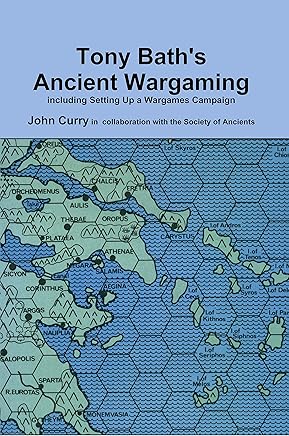
Tony Bath's Ancient Wargaming including Setting Up a Wargames Campaign:


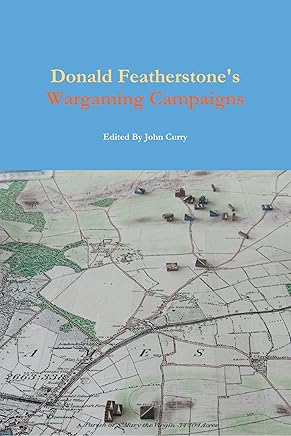
Donald Featherstone's Wargaming Campaings:


And, finally, Grant's Wargames Campaigns.

But I would especially emphasize Tony Bath's book.

Another big difference in the slow transformation from a small, wargames hobby to a large, consumer role-playing game product is the vibe of play, and what the goal of play is. And this is, in many ways, far more important for understanding the difference between "original" and later "editions" of D&D -- but that is for another post.

Before I write that post, my next post will be a kind of imaginary example of what D&D might have been worded like if it had more of the form of some of the above classical examples of wargames campaigns books.

To conclude this post, I will say, if you are involved, as a fellow hobby-ist, in a local medieval fantasy wargames campaign that, through play, has developed its own vibe, feel and corresponding house-rules, then you are playing Dungeons & Dragons, whatever other name you call it.

Fight on!

Monday, April 22, 2019

Ages of the Perilous Realms


I am more a rules-imaginer than a setting-imaginer. But I'm getting more into exploring my campaign setting than ever before.

There are multiple overlapping ages of rise and collapse of mighty civilizations that define the Perilous Realms and the kinds of ruins, underworlds, treasures, magic items and artifacts that may be found. Here is the myth, or legend of the various apocalypses and dark ages that led to the current state of the Perilous Realms, my campaign setting.

The Diamond Aeon

In this age, the archetypal powers were young and playful children of the Most High.
They knew their place, and, although childishly mischievous at times, obeyed the will of their Father.
They reigned over the cosmos like living stars.
In the end, the archetypal powers come of age, and conflict ensues.
They rebel against their Father and are thrown into the chaos of war.

In terms of the way we think of things now, we are talking about billions of years ago. Thus this loosely corresponds to “big bang” through cooling down of the universe. In Tolkienesque terms, this is like the Valaquenta. The key to this fall narrative is REBELLION. So whenever we see rebellion in the campaign setting it links somehow to the Powers.

The Golden Age

Law and chaos draw their lines for the first time.
The Celestials seek to establish the joy of the Diamond Aeon through Law, and often fall into rigid legalism.
The Chthonic powers seek to empower the unbridled joy of the Diamond Aeon through following the passions of the underworld and often fall into the cruelty and whim.
Many powers opt out and hide as spirits of nature and life ("neutral" elemental powers).
The war shapes much of the terrain of the Perilous Realms.
Ultimately, the Celestials drive the Chthonics under earth and imprison them there, only to serve for fertility and virility.
The Celestials establish a Golden Era of light and genius upon the earth — with unparalleled cyclopean edifices and artifacts!
At this time, the fay races are born into the wonder of direct contact with their fascinated rulers.
But the Celestials become too confident in their victory, and their watches fall into indiscipline.
In the end, the earth cannot contain the chaos that errupts.
The final war leads to total apocalypse and a dark age ensues.
 
In terms of the way we think of things now, we are talking about millions of years ago. Thus this loosely corresponds to a kind of smashing together of the mesozoic and its great meteoric (heavenly) and volcanic (chthonic) apocalypse together with the monolithic stone age. This nicely gives us cavemen with dinosaurs! This era gives a chance to engage the Lovecraft Mythos. The key to this fall narrative is COMPLACENCY.

Interlude: The Age of Darkness

The fell races are born and run free but unorganized.

The Silver Age

Out of the shadows of the Age of Darkness, the Fay races form an alliance, consulting what Powers still remain in their weakness and sorrow.
With the advice of their cosmic elders, the fay together stem the tide of the spawning hoard.
The elves rise to power over all other fay.
They establish a Silver Era under the light of their matron, Mother Moon.
They enslave the fell races, especially the orcs, to do their bidding — and on their backs they build mighty cities, towers, and palaces unrivaled by any save the powers themselves.
But the orcs and their fellow fell never forget their enslavement.
At this time, Men arrive, the fay know not from where — nor do the men! They are in awe of the elves.
But the elves in their assumption of opulence grow fatuous, weak, superficial, degenerate — and their civilizations fall into decadence.
Thus they become easy targets for fell rebellion — if they are not dragged down by their own petty divisions and meaningless wars of trumped up honor.
The collapse of the elves is a slow and painful decline, leading, ultimately, to a second dark age.

In terms of how we think now, we are talking about several millennia ago. Thus this roughly corresponds to the great pre-historic civilizations of myth. This era allows me to smash together Tolkien's and Anderson's elves. The key to this fall narrative is DECADENCE.

Interlude: The Second Dark Age

Pacts with the chthonic power, Necros render the first Undead. Alchemical and medicinal warfare fabricate the disease of lycanthropy. Monsters proliferate.

The Bronze Age

The bronze age is the first age of Men.
In the memory of the elven empires of old, and in devotion to, and under the patronage of what remains of the mighty Powers, men erect fabulous temples. Around these temples, cities grow up — Ur, Babel, Byblos, Shangri-La, Hamunaptra, Aqaba, Thebes, Indus, Eddo, Techlan, Cyprus.
These temple-cities become the center of mighty and diverse empires in trade with one another of both goods and philosophies.
At some point, men cannot remember how or why these great empires all suddenly (with decades of one another) fell into complete collapse.
It is not likely that the collapse came about either because of internal disputes or because of external wars, although these played a part, but from the evidence it seems the “gods” (Powers) no longer favored them and removed their blessings of abundance.
This is the great Bronze Age Collapse.
The human population was decimated and the survivors fled to hills and mountains to survive.
The “Ancients” left behind powerful ruins, tombs, sepulchers and crypts — of frightful aspect to the fragile humans who remained.

In terms of how we think now this represents several centuries ago. Thus this is a fantasy version of the actual Bronze Age Collapse. This allows us to engage classical mythology and legend. The key to this fall narrative is divine ABANDONMENT.

Now: The Age of Adventure

Now is the age of adventure!
Now law and chaos reenter their struggle for vast civilizations of lawful glory or unbridled passions and dominion.
Now mighty fighting-men and Amazons rise up to pit their thews against the dying of the light!
Now over-confident users of magics seek their own through initiations into the mysteries of the arcane.
Now the church proclaims a gospel of universal order under a king of heaven and sends out crusaders (“clerics”) to establish Law: by word or by fist.
Now fearless — or foolish — adventurers commit to mighty peregrinations into forgotten wildernesses and yawning openings of the mythic underworld.

In terms of how we think now, this represents about the last millennium. The Perilous Realms campaign begins in an imaginary year 990. In a sense, this is a Third Dark Age. It roughly corresponds to a mash up of the Iron Age and both the Western and Eastern Middle Ages. This age engages Leiber's universe of Nehwon. The key narrative here, is, of course, WAR and ADVENTURE.

All of these previous beings remain: powers, fay, fell, lycanthropes, undead of the bronze age— each slightly weaker than before. Each remembers and grieves the loss of their once great status. But now they are lost in wildernesses and trapped in nightmares of the underworld.

Adventurers may stumble upon all of these different layers of civilization, languages and artifacts:
Powers: celestials, elementals, chthonicoi and their physical manifestation as giants and sylvan monsters
Fay: elves, dwarves, gnomes, and, after a fashion, even the hobbits
Fell: kobolds, goblins, orcs, hobgoblins, gnolls; and
Ancient men: Aegyptian, Anatolian, Levantine, Etruscan, Mycenean, Assyrian, Hittite, Wotan, Indus, Nod, Jomon, and more.
Their stories give clues to one another and nest within one another.

Fight on!

Monday, March 4, 2019

More on the General Line-up


Alignment came from wargames. It was about knowing what side of the battlefield to place the troops. There were the good guys (law), the bad guys (chaos) and those who wanted to try to keep out (neutral).

What does this mean?

Here is how I understand it now.

Alignment is descriptive, not prescriptive. Alignment changes based upon behavior. Example: if a chaotic person does something to serve law once, she becomes neutral. If a neutral person does something to advance law she becomes lawful. And vice versa.

  1. Law = Human law is good for everyone
  2. Neutrality = Human law is good for human beings
  3. Chaos = Human law isn't any good for anyone
Law

Human law is good for everyone. It is good for every human settlement. It is good for elves and dwarves and hobbits too - whether they know it yet or not. It is good for fell creatures such as orcs - which usually means they are dead orcs.

This is because human law is consonant with the laws of heaven or the cosmos. Thus human law is universal and should be performed and judged the same across all geographic regions, with some wiggle room for local variation and culture.

In actual practice, there are many schools of law, all arguing with each other as to who has gotten it right, but still basically recognizing each other. So, for example, there are the philosophers of the Forbidden City who proclaim that the law of heaven and of men is the same and we must find its Way. Then there is the Church of Law who believe the King of Heaven has revealed the one true law. They alone have Crusaders (clerics) actively spreading universal human law as they understand it.

Neutrality

Human law is good for human beings. Every human settlement should have laws in place for the good of its people. It is not good for human beings to live lawlessly. Human laws, however, ought not to be expected to apply to creatures that are not human.

This is because human law is something that arises naturally from human beings through accumulated custom. Custom is unavoidable and ought to be respected for the life it brings to human groups. And although laws are natural and not entirely arbitrary, nevertheless they do not enjoy anything like a one-to-one correspondence with the laws of the cosmos.  So one ought not to expect different human groups to have similar customs and laws.

There are many local cults and philosophical schools who adhere to something like the above. They are not willing to fight for anything they perceive to be purely local and customary. They will fight for human life. Needless to say, there are no churches or crusaders for neutrality.

Chaos

Human law isn't any good for anybody. Human settlements must be liberated from such oppressive local customs and traditions. Elves and dwarves and hobbits - even fell races such as orcs - actually live closer to a truly liberated existence.

This is because human law is merely by convention and therefore purely arbitrary. Laws are imposed by the strong on the weak. Laws arise among human beings out of fear of living truly free like animals following their instincts, or fay or fell races following their intuitions. Basic moral sentiments such as loyalty, disgust, respect, affection, retribution and reward are all that are necessary to live a truly human life.

Most of the cults and philosophical schools who adhere to something like the above find that they must maintain relative secrecy for their own protection. They will fight for freedom of sentiment for themselves and on behalf of others when they perceive they have an overwhelming advantage - a real chance for success - for they know the wrath of Law that will rain down upon them should they fail. Among the multitudinous cults there are many who fashion themselves "churches." These sometimes recognize each other and are willing to work together for practical reasons. They all attempt to infiltrate the Church of Law to over throw its tyranny from within. These churches have anti-crusaders (anti-clerics), sometimes openly so, sometimes acting under-cover as Crusaders (clerics), actively spreading freedom of sentiment as they understand it.

How they understand each other

This of opposite alignments see the other as deluded and dangerous.
Neutral folks find Law and Chaos fanatical, over-worried and perhaps a bit hokey.
Chaos and Law find Neutral folks wishy-washy, noncommittal and perhaps obstructive.

Conclusion

I hope this is clearly different than the way that alignment is sometimes described. Please note that none of these folks are deliberately immoral, but all can fall into some form of immorality. Chaos can be moral simply freely following basic human sentiments and passions like affection, loyalty and disgust. Chaos can be immoral when any of those affections become extreme and cruel. Law can be moral by bringing safety and peace to free races. Law can be immoral when that law is imposed with fear, micromanagement and oppression. Neutrality can be moral by respecting both sentiment and local mores. Neutrality can be immoral through complacency, claiming they ought not to get involved so as not to meddle in, or impose upon others, merely local custom.

Saturday, October 13, 2018

OSR Questionnaire


When I first became aware of the OSR, I was excited about it and learned as much as I could. After discovering Dungeons & Dragons (original) and the communities that support it, I no loner feel like I am "a part of" the OSR in a straightforward way.

It seems at first the OSR was about a return to the original, wargame style of play at the time of the birth of D&D as a hobby. Part of this included a return to a more DIY approach, both in terms of setting (not relying upon someone else's published, professional, setting) and "rulings not rules" (realizing that the local referee, group and game play itself was more important for developing both the rules and the shared setting than strict adherence to a professionally developed set of rules and settings).

In other words, the OSR represented to me a return to D&D as a hobby, rather than a consumer product. The hobby approach empowers creativity. The consumer approach makes passive clients. As a hobby it comes with a hobbying community of idea-sharing and mutual support. The internet facilitates such a hobby community in a large and broad way.

Much of what I have seen the OSR become since I got back into gaming in 2013 is a proliferation of small-scale or semi-professional game-resource publication. There is a lot of really good stuff out there. But, just exactly because of my more hobby-based, localist approach, I do not find myself using other people's modules very often, however professionally slick or "old school."

However, much of the stuff published as "OSR" falls into the current cultural zeitgeist that "creative" indicates, or is equivalent to, being edgy, troubled, dark, or "morally ambiguous." A lot of talk out there is about how we need to eschew "tropes" of fantasy in order to be "truly creative." In some cases it seems that the goal is to be as edgy as possible while still playing in a new school, story-game style. "Mapping sucks." "Challenge people with a moral dilemma." Etc. I find none of this attractive.

The following questionnaire comes from a big OSR personality named Zak. I do not follow his work much, honestly. But I stumbled across the questionnaire from other folk's blog posts and google+ posts where they filled it in in interesting ways. That is a good gift to the community, so, thank you, Zak. So if you are still reading, here goes:

1. One article or blog entry that exemplifies the best of the Old School Renaissance for me:

Philotomy's Musings

2. My favorite piece of OSR wisdom/advice/snark:

My own pithy zen-like saying in the spirit of Matt Finch's "Primer":

Amateur hobby, not professional product.

Medieval fantasy wargames campaigning is a hobby, so dive in for amateur fun. Stop expecting "professional production quality," and go for the joy and creativity that comes from a community of amateurs sharing ideas and swapping stories -- hobbyists who do it for the fun of it, not for profit. Don't passively receive wargames campaigning as some product rendered to you as a mere consumer of what "experts" say you are supposed to like or agree upon as standard. Instead, Fight on!

3. Best OSR module/supplement:

Tomb of the Sea Kings

4. My favorite house rule (by someone else):

"Crits" & "Fumbles": "Natural 20" does full (not double) damage. Don't do fumbles. Fumbles punish everyone with unfun. Both rulings come from Philotomy (see above).

5. How I found out about the OSR:

In 2013 I was surfing the web and remembered D&D then I plunged into what was going on and found my way to the OSR and, through them, to the original rules for medieval fantasy wargames campaigns.

6. My favorite OSR online resource/toy:

Mr. Josh Bear's ODD Referee Tool. I use it every session.

7. Best place to talk to other OSR gamers:

Because of what I mean by "OSR," as a return to old school, war-gaming style of play, together with, but not limited to a DYI attitude:

Finarvyn's ODD74 proboard, and
The Knights & Knaves Alehouse forum.

These are old-school internet formats that actually encourage conversation and not disappearing content:
This is the weapon of a Jedi Knight. Not as clumsy or random as a blaster; an elegant weapon for a more civilized age.
8. Other places I might be found hanging out talking games:

My own blog (you are here). I just don't post very often or very consistently. Sorry about that. (I hope that it is due to the fact that most of my hobby energy goes to actually gaming weekly.)

I also hang out and talk about games with real-live people that I know. Once a year I get to go to the North Texas Role-playing Game Convention and I get to talk to even more real live people about the game.

I followed folks on google+ but just used it to share my blog posts. It is now going the way of the dodo. We will see what happens with the migration to MeWe.

9. My awesome, pithy OSR take nobody appreciates enough:

It is not my own, but Delta's Target 20 combat and save resolution, combined with my own house-ruled hit-dice approach for distinguishing classes from one another. This has recently been "historically justified" by none other than Jon Peterson himself!

10. My favorite non-OSR RPG:

Diplomacy.

11. Why I like OSR stuff:

The OSR stuff that I like, when I like it, is stuff that has come out of someone's loving, amateur DYI hobby that is full of archetypal fantasy, full of interesting puzzles to solve, and immediately usable at the table (= good, easily readable, well-keyed maps).

12. Two other cool OSR things you should know about that I haven’t named yet:

Wayne Rossi's The Original D&D Setting. Just so good.
Paul Gorman's Magic Swords.

13. If I could read but one other RPG blog but my own it would be:

Please, don't read mine if you are only going to read two RPG blogs! I don't have nearly enough content. So, I get to name two. Since I have already mentioned Delta's D&D Hotspot, Jon Peterson's Playing at the World blog, and Wayne Rossi's Semper Initiativus Unum blog, above, then I get two more:

Jeff's Game Blog.
Hack & Slash.

Dyson Logos' Dodecahedron should get an honorable mention. His mapping skill and artistry is only improving. Unfortunately, for me, the actual gameable content of the maps has become increasingly blah and unusable over time. Dig back into his earlier stuff. Less pretty (perhaps, I still think it is great), but far more usable for old school play: lots of overlapping rooms and corridors, secret hatches, passageways, doors, traps. Just more interesting and inspiring for my style of play.

Finally, Bryce Lynch's Ten Foot Pole should receive another honorable mention. I agree with his module criteria about 80%, and that is about as much as any mature adult can expect to agree with another mature adult if they are not members of a cult. My main points of disagreement are where he tends towards "realism" and "ecology," whereas I enjoy a more "funhouse" approach.

14. A game thing I made that I like quite a lot is:

My own cumulative setting and house rules. I mean not just The Perilous Realms supplement I published or the simplified version I have as a page on my blog, but all of the cumulative rulings I've tracked due to actual play in the campaign. I have it all compiled in a readable but loving imitation of the Judge's Guild Ready Ref Sheets. I call it "Campaign Aids and Inspirations." It is where I put all my generative charts, tables, and decision trees. I haven't shared that document and I may never. The point is for you to develop your own settings and rulings.

15. I'm currently running/playing:

The Perilous Realms, a medieval fantasy wargames campaign. I use my own campaign world based upon an anachronistic mash up of our own medieval and ancient past. Each particular wilderness is the Outdoor Survival board set in such a way that the river flows to the nearest major body of water. The particular wilderness right now I call the Hollow Lands. They lie underneath the Mazandarin Sea, the nearest major city being Hecatompylos along the Silk Route. I use my own house rules built upon Dungeons & Dragons (the original rules for fantastic medieval wargames campaigns).

16. I don't care whether you use ascending or descending AC because:

If I am at your table, I trust you will tell me if my attack was successful. If you are at my table, I will tell you if your attack was successful. Thank you, Dave Arneson.

17. The OSRest picture I could post on short notice:

Please see above.

Fight on!

Saturday, May 5, 2018

Character Record


The search or the ever elusive character record continues. Above is my current character record. Here is some brief rationale and commentary:

I want it too look old school, like something printed back in the day. Hence the boxes and the old school fonts. (I have an even smaller version, using a font that looks like a type-writer.)

I hate it when I find someone's character sheet and there is no player name on it. So I made that the first thing. I'm always bummed when people have no idea how long they've had a character (including me), so: problem solved.

By character description I really mean epithet(s) and extraction, not some "background." Hence the brevity of space.

I want this record to be usable by folks who have never played and by folks who have. I want it to be usable by players that roll their own dice and also to work well for situations where I play it really old-school and I roll all dice, for everyone, behind the screen. I love playing this way and it frees the players up to figure things out and role-play.

Thus "title" is more important than level. Titles are fun and interesting and aid role-play. The levels can be jotted down in parentheses for those interested.

Likewise knowing who's side you are on is easier to make sense of then "alignment." Also, when law vs. chaos is not much more than just "shirts vs. skins," we can avoid the unending philosophical contemplations of the nature of the "alignment system."

I play race as class in my 0e games, so I just list them in the same box with a slash mark.

The first five boxes can be read out pretty straightforwardly: John's Character is Jack the Fat-lipped of the Sundown Marches; he is a Veteran Lawful Fighting-Man.

Ability Scores, sum of 3d6, each, straight down the line, no funny-business. I use Delta's abbreviation of Charisma, "X," from the Greek Chi, thus distinguishing it from the "C," for constitution.

What the heck is "apotropy"? Okay, so I know you are mad at me about this. But remember the principle from above that I want this for new players and for folks who aren't even going to be rolling dice. Okay, I hear you say, now you've lost me. But hold on. Let's look at the other boxes and come back to this one.

Reading Philotomy's Musings on the nature of hit points got me trying to call them something else. I started calling them "luck points," you know: "you're down on your luck, man; your luck is running out!" Etc. I explained this to a group of folks that included three Ph.D.s in psychology. One of them said, "oh, I get it, it's resilience, isn't it?" "Yes," I said, "resilience points." And it just kind of stuck. But for those who know or want to work with the mechanics, there is "HP," right there, still listed to the side.

I use Delta's Target-20 method for both attack rolls and saving throws (see my house rules summary). Most new folks -- and all folks when I do all the rolling behind the screen -- only need to know what kind of weapons they have. If they tell me what weapon they are using and what they are trying to do with it, I can take it from there. But for those who want the old mechanic or demand to "roll their own," then the mechanic is right there next to it, "(HD)."

Likewise, players who don't want to have to fiddle with mechanics do like to know if they have armor on or not, and if so, what. And as long as they can read the handwriting and tell me what they've got, then I know their armor class anyway. Again, you can write the armor class right there next to it in parenthesis, as suggested by the "(AC)" immediately to the right of "Armor."

Every old-school character record needs to have a box for "languages." That is how you figure out what is going on behind that door you are "listening at"!

Gold. Well there you have it. I used to call this box "Treasure," and then list "Purse g.p.," and "Bank g.p." But then I would say, "Hey, how much gold do you have left." And they would say, "Gold? gold? Where is that on here?" So now, although the game is about Monsters and Treasure, the character record just boils it down to what we are all looking for: Gold (piece value). Because, well, gold is experience. And experience is everything.

Gold is next to Armor, above it. Because starting armor comes from starting gold. And Gold is next to Equipment (which is next to Supplies), below it. Because you buy equipment and supplies with gold. Nice, right?

That is something else I was going for with this record. I wanted things also to have a logical coherence. It is pretty good, but not perfect. So experience affects level, and thus title, which in turn affects hit die, which in turn affects hit points and even saves. So all those mechanical things are clustered together on the right side.

But I also did that on purpose. If you go straight down the right-most column you have everything that most players need most of the time. You already know your characters name (right?). So you can glance down the right side and see your character's: Title (Lvl.), Experience (XP), Resilience (HP), Armor (AC), and (most importantly), GOLD!

The first thing I suggest under "Notes," is that "Last Will & Testament," urged by Men & Magic.

All those supplies listed do not indicate that the character actually has them, yet, without purchase. Nor does it suggest that you must purchase those and only those. The idea is to help out the new players with some key suggestions. I always recommend that they place the amount they purchases in parentheses next to the item listed, and then use tally marks to count them down so that they know when they need to supply up again. So, for example, Torches (6), followed by tallies until all 6 are gone. Then, if you make it back alive, buy some more torches. Rope? I hear you ask. Yes, rope. Hemp romp gets 5 uses and silk rope gets 25. I'm just tough that way.

So how about that apotropy? Well, I thought you'd never ask. Now that I've convinced you that I've done a (pretty) good job of rendering mechanical things into handy nomenclature (Resilience, Weaponry, Armor, etc.), I can tell you that that is what I am trying to do with Apotropy. I had been calling it "Resistance," but it sounded to much like electrical engineering (or freedom fighting, or whatever). Apotropaic magic is magic that wards off magic and other unlucky things. These are like talismans, amulets and charms. So this is a place for folks to jot down apotropaic objects and spells they may have in place, like a ring of protection, or whatever -- and then remind me they have it so I can factor it in when I roll their saves behind the screen! Those who know, or want to know, what is going on still have "ST," for Saving Throw(s), listed there in parentheses immediately to the right. I use a single save, but other's could easily list all five if they wanted to. So, anyway, you may not be thrilled by my word choice, but, hopefully, you get what I was trying to do: give new folks and non-rollers a box that makes some sense that can double as a saving throw box for those who want it.

(If you like this and think you might want to use it, the full-sized photo is available for download on my Character Record page.)

Saturday, February 3, 2018

Perilous Realms Campaign World Map


Above is my campaign-world map for the Perilous Realms medieval fantasy wargames campaign.

The Perilous Realms are my name for my own amalgamation of what I, in my limited knowledge, can amalgamate of various civilizations abstracted and anachronistically represented at their various heights but frozen somewhere between about 500 and 1,000 A.D. So, there is Aegyptus, but also the Holy Empire (Byzantium). There is Parthia (Persian), the great Central Kingdom (China), the Empire of the Sun (Japan), Shangri-La, Wudang, Old Araby, the Paladin Duchies of Westernesse, Logres, Libya, Nubia, Nod, and various wildernesses - even the Land of the Lost.

I base the map on some of the old Mappe Mundi of the ancient world, such as the following.


These were more detailed and "realistic" versions of the more abstract and theological Mappe Mundi that represented the three known continents in geometric and cosmographic relationship to each other. Note that these maps are "oriented": east is at the top of the map, as it is where the Sun rises.


Fight on!

Friday, February 2, 2018

Rolling Characters On-The-Fly


Armor, FM:
d6+1

Weapons, FM: d6:
1 Magic Sword
2 Sword and Bow
3 Sword
4 Spear and Dagger
5 Club and Dagger
6 Club

Magic Sword on d6:
1 +3 Lightning
2-3 +2 Magic Missile
4-6 +1 Light

Armor, CL:
d6+3

Weapons, CL:
High: mace
Low: club

CL: healing potion; turn undead (reminder)

MU d3:
1 Sleep
2 Charm
3 Light

Gold: 3d6, straight-up

Note: I used the above to roll-up the middle-schooler's characters on the fly so that I could drop them straight into play. It worked. Lots of fun.

Saturday, September 23, 2017

House Rules Summary page


Hey, folks. I just put together a new "page" on my web log:

House Rules

Wherein I summarize my house rules for table play.

This house rules summary compresses into brief form the house rules I suggest in my Perilous Realms supplement.

NOTE: I freely utilize DELTA's "Target 20" approach. Thank you, Delta and your D&D Hot Spot!

I look forward to any comments.

Fight on!

Tuesday, April 11, 2017

A Dungeon a Day Challenge


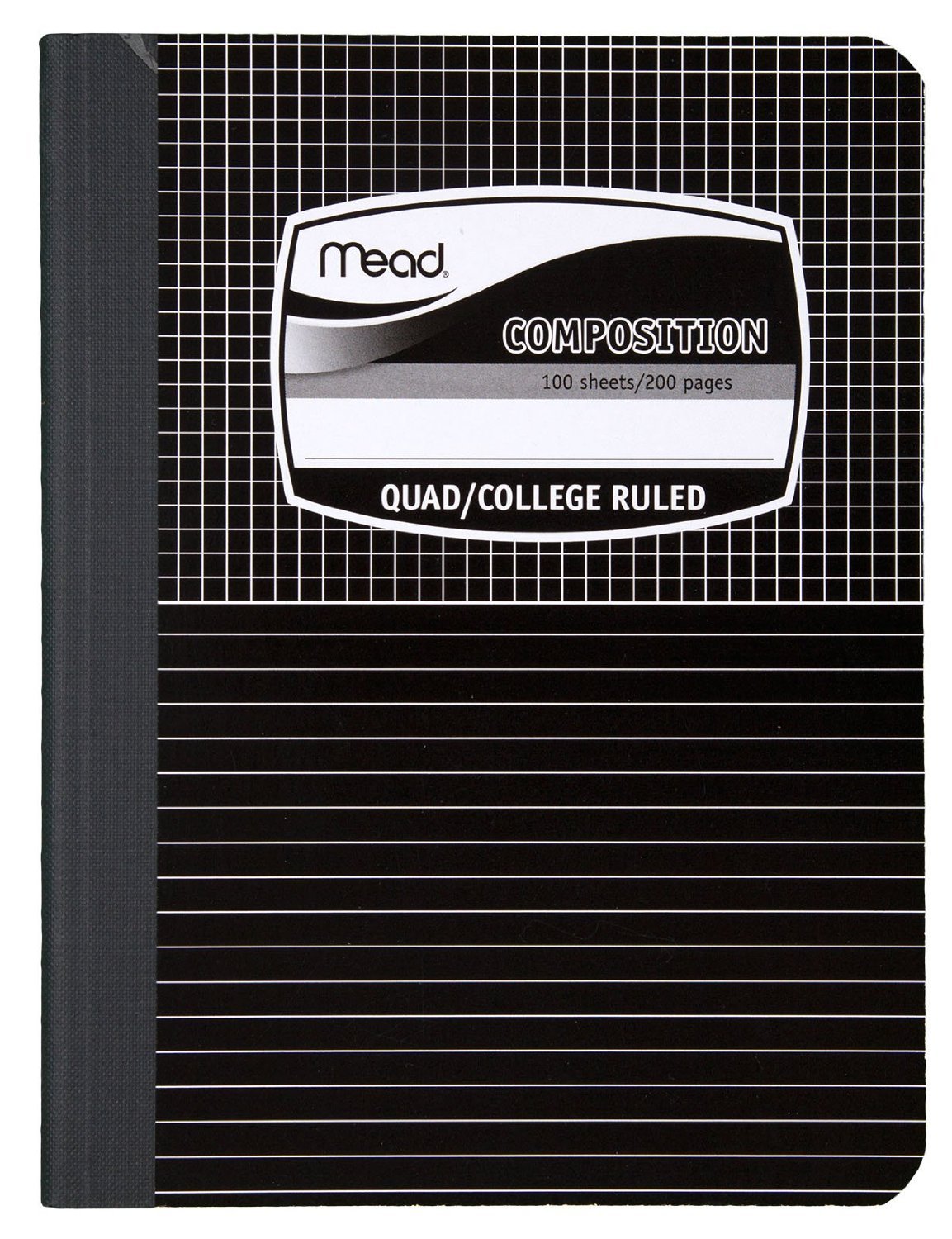
I found these great composition notebooks. They have graph paper on the top half of each page and lines on the bottom half. These beg to be used for dungeons, levels and lairs: map on top, key on bottom!


I've stalled out on my mini module project to do the paralysis that goes with perfectionism.

So I've decided to challenge myself. I am going to draw and key a dungeon (level or lair) a day! I already did yesterday and it was a lot of fun.

I really do not enjoy mapping (I do love keying, though!). So this is a challenge to build my chops and perhaps break through a barrier that is keeping me from enjoying something fairly essential to the game. Again, I think it is my perfectionism that keeps me from just doodling at maps. 200 sheets of paper in a cheap composition notebook should help!

I will share what I want to, when I want to, without any blog performance pressure! But I will update every now and then to let you know I am still going on this.

Perhaps this will get me closer to what I meant by the mini modules. And it may help me get back to that project.

Anyone care to join me?

Saturday, April 1, 2017

Questions for Generating a Dungeon of the Mythic Underworld


Inspired by Jeff's Gameblog's list of twenty quick questions for your campaign setting, here are some sets of questions for generating a dungeon of the mythic underworld. Should contribute to generating some find "funhouse" dungeons:

Questions for Generating a Dungeon of the Mythic Underworld

What is the treasure it hides? Is it named? Famous? Backstory? Will any of the above give the characters any clues as to how to find and recover it? How do the characters find out?

Why did chaos want to swallow the treasure in its mythic belly? How did chaos swallow it up? Was it done through chaos’ own occult magics, or were chaotic creatures or characters involved? Has law even become aware? Does neutrality find the capture to bring balance or imbalance to the state of things?

What tricks, monsters and traps did chaos manifest to hold its treasure tight? What wonders, magic-items or clues has law provided as an immune-response to chaos? Are there any pockets of neutral homeostasis, providing brief oases of respite for weary characters?

Is there a single main monster, type or kind? Do the monsters know or understand their role at all? Do they also want the treasure? Do they fear it and would love to rid themselves of it? How can the characters find out?

Is there a single trick or a series of related or random tricks? Are some random tricks simply kooky manifestation of chaos? Does the trick conceal, mislead, harm? Can it reveal, inform or aid if understood and used well? Is the trick a giddy or cruel irruption of chaos? Is the trick actually a miraculous manifestation of an immune-system response from law? Is the trick indifferent to characters, maintaining an odd but neutral balance? What kind of clues are there for the characters to figure these things out?

Are the traps ubiquitous or rare? Obvious or hidden with scattered clues? Have the monsters devised the traps? Or did chaos herself devise them from her own insanities? Has neutrality closed the loop, leaving behind the carnage of those who previously tripped the trap? Has law provided helpful clues and means to disarm the traps?

How many ways in are there? Are there ways in at different levels? How many connections are there between levels? How many open and closed loops of passage does a level have?


How do the characters find out?

Saturday, February 18, 2017

Questions for a Campaign


Somebody (sadly, I can't remember whom) pointed me back to Jeff's Gameblog's list of twenty quick questions for your campaign setting.

As with just about anything I run into, I can't take it as is -- I have to play with it and make it fit my way of thinking and my way of campaigning. So, inspired by Jeff, here are my questions.

Please note that they can work for every level of campaign scale: cosmic, setting, territory, settlement. (I think however, a different set of related questions are necessary for generating dungeons and the underworld. More on that to come.)

Questions for Campaigns at Each Level of Scale

What is the name of this place?
  • ·       Why
  • ·       Backstory
  • ·       Size
  • ·       Population
  • ·       Army and size

What race is in charge here? Really?

Do they speak common? Something else?

Is anything illegal?
  • ·       Weapons
  • ·       Magic
  • ·       Something odd or absurd?

Who is in charge? Really?

Secret societies? Cults?

Who is the wealthiest? Different from above? Really?

Stronghold?
  • ·       Motte & Baily
  • ·       Castle & Keep
  • ·       Curtain Walls
  • ·       Wood
  • ·       Stone
  • ·       Enchanted

What is the religion? Really?

Who is their cleric? Really?
  • ·       What are “clerics”?
  • ·       How do clerics “work” here?

Is this place for law, chaos or no-side?

Can we change alignment here?

Who is the most powerful?
  • ·       FM
  • ·       CL
  • ·       MU
  • ·       TH
  • ·       Dwarf
  • ·       Elf
  • ·       Hobbit

Who knows the most?
  • ·       Book knowledge
  • ·       Experience

Is there a _______ here?
  • ·       Tavern / inn
  • ·       Stable / livery
  • ·       Jail / Prison (Who is in it?)
  • ·       Church / Temple
  • ·       Bank
  • ·       Town / Guild Hall
  • ·       School

Can we buy?
  • ·       Supplies
  • ·       Equipment
  • ·       Weapons/armor
  • ·       Magic Items
  • ·       Transportation

Can we find?
  • ·       Healing / potions
  • ·       Antidote
  • ·       Cures
  • ·       Raise dead
  • ·       Curse / remove
  • ·       Lycanthropy cure

Can we hire hirelings? Retainers?

Where is the nearest treasure to recover?
  • ·       Is it legendary
  • ·       Will it make us famous
  • ·       Will it make us rich

Are there any problems around here?
  • ·       NPCs
  • ·       Monsters
  • ·       Will it make us famous
  • ·       Will it make us rich
  • ·       Will it make us landed

Is this place its own problem?
  • ·       Deception
  • ·       Intrigue
  • ·       Corruption

Does anyone need something done?
  • ·       Are they rich
  • ·       Powerful
  • ·       Will they pay:
  • ·       In kind
  • ·       In coin
  • ·       In land

Is this place at war?
  • ·       With whom
  • ·       How long
  • ·       Is it just
  • ·       Who is winning

Where is the nearest dragon? And hoard? Or any creature that:
  • ·       Petrifies
  • ·       Paralyzes
  • ·       Drains Energy
  • ·       Poisons
  • ·       Breathes a weapon
  • ·       Contagious condition
  • ·       Regenerates
  • ·       Enchants


How do PCs find out about these things? Rumors?

Enjoy!