Showing posts with label module. Show all posts

Saturday, June 19, 2021

Saving F'dech Fo's Tomb

I've never been a collector. But this year at the NTRPGCon, I got really exciting about the Judges Guild. I bought a bunch of modules from a booth based, in the main, solely upon one criteria: the cover looked cool, or, even better, "totally metal." One of these purchases was F'dech Fo's Tomb. Note how totally metal the cover is:


I failed to read the Wikipedia article which states clearly that it received only bad reviews:

Pulsipher commented that "Even at [a lower price], this booklet is a waste of money."

I am sad for this, because most Judges Guild stuff is great. Before I discovered this, based solely upon the bad ass and totally metal cover, I decided to use the town of Dantell as one of the towns on the Outdoor Survival board I am running as a wilderness campaign for a group of mine. When I carefully read the module (assuming, since it was JG, that it was going to be filled with awesomeness) I was sorely disappointed. Perhaps I had made a mistake.

But then I realized that what I was encountering was a series of missed opportunities. And that what the module offered me was an opportunity of my own: I could save F'dech Fo's Tomb.

First, missed opportunity: the map of the Tomb itself sucks. Think of Bryce Lynch's criteria for review. Now think of a dungeon map with none of those things. That is F'dech Fo's Tomb, as presented. (Sigh.) I had to draw a new map of the Tomb itself. The tomb as drawn is a completely linear set of five rooms with no traps, no tricks, no secret doors, nothing.

Here is my map of the Tomb:


Another missed opportunity: how did F'dech Fo wind up a lich. the module just says that about a hundred years ago, pissed of that his once wandering nomadic tribe decided to settle down for the village life, got pissed off, went up on a hill outside of town, lifted up his hand, and green lightning totally burned him to a crispy black skeleton. That's it.

So I made up that in his anger he called on the shadow side of his jaguar god to curse him as a lich so that he could take revenge on his tribe. His god's shadow side willingly obliged. Then a team of associated shamans managed to pray and sacrifice enough to the light side of the jaguar god to trap him while, nevertheless, giving him an honorable burial, for, as the module says, "the people still loved him."

Next major missed opportunity: clues that help the players figure out the bad things to come. For example, the lich's inner crypt is guarded by a kind of "force field" that keeps him from unleashing his evil on the village. There is no reason given for this. It is no part of the legend anywhere else presented in the module, no NPC is said to know about any of this, the legend does not mention it nor even hint at it. No one in town knows about it. There are no clues. If they pass through the vaguely purplish veil, it comes down and he wakens and starts wreaking havoc. End of story. So I had to fix this.

The ancient society of shamans prayed to their god to protect them from the lich's wrath with much sacrifice. Their answer was to provide this magical barrier. The current town shaman knows nothing of this, but I placed various nonverbal and even written clues as to the existence of a barrier and the danger in taking it down. For example, only offering incense in the shrine room will open the secret door to the inner crypt itself. When this happens, a voice will boom out, warning not to break the seal.

I did not need half the descriptions of all the NPCs in Dantell. But I did need the chief and the shaman. But what about this dude, Ninax the Watchman of the Water, who lives just outside of this unwelcoming primitive town? So I decided, he had taken them on as a special project out of some kind of love for their simplicity. So I had him come out and greet the party as they arrived first of all. Through a series of bad reaction rolls, the relationship did not start off on a good foot. But they were warned of the villages troubles and general unfriendliness to strangers.

The chief and shaman then greeted them as they neared the town. They were warned not to enter the town and to camp only on the outside. Then the shaman promised to meet them by night (in common, so his chief would not hear). That night, he related as much of the legend of F'dech Fo as he could remember.

Another lost opportunity: F'dech Fo's medallion, is only a "golden holy symbol." Seriously? After defeating a freaking lich? No. So I made it a medallion of control lycanthropes. This will help with the were jaguar.

Another lost opportunity: the module explicitly says that although the people think that their jaguar god of the jungle, Utigetcho, has recently become incarnate, he has NOT. It is only a were jaguar. But why is there a were jaguar at all? Seriously? Dumb. So sometimes I had to just do the exact opposite of the modules explicitly stated things. Of course Utigetcho is incarnate now! He IS the were jaguar. Duh. So unless they defeat the jaguar with F'dech Fo's medallion of control, any other "defeat" will result in the manifestation of Utigetcho himself! That should be fun.

I know all this seems like a loss. Why use such a poor module? Why use a module I had to do so much work on to "fix"? Easy. A good module is like a Rorschach test. It provides contour lines and symmetry -- sources of imagined patterns. This allows my mind to free associate with some material already presented to me so that I don't have to produce from scratch but in dialogue with something in front of me. So, in the end, this bad module has turned out pretty good.

Fight on!

Friday, June 12, 2020

Mike's Dungeons, a brief review


Brief Review:
Mike's Dungeons
Geoffrey McKinney

I ran this module twice for Table Top Events Convention of Champions. The players covered most of the first level and some of the second level. So please keep this limited exposure to running this module in mind as per this review.

This is a perfect dungeon module in terms of format. Each map is on one page and almost all the key fits on exactly one page opposite the map so that it can lay open on the table for the referee. Perfect. The room descriptions are short, curt, concise, and to the point, empowering straightforward fast-paced play.

It is important to note, however, that NPCs are referred to by level title, so, if you do not have level titles memorized, you will have to look up what level that NPC is. And no monsters have any stats or special descriptions. The module assumes grounded knowledge in the standard D&D monsters and that you have easy, ready access to monster descriptions in rule books.

I did not enjoy having to look up some levels based upon titles for NPCs. It seems to me easy enough to say, "2 Warriors (FM2)," or something like that. But I had no problem with missing stats. It cleaned up the key and enabled it to all fit on one page. I have refereed for some time, I have many standard monster stats memorized, or nearly so, and I can, in general, run most encounters on-the-fly with little to no look-ups. So this absence of presentation did not slow me down, much. Others may find this annoying, so, in order to run the module smoothly, you many need to write in monster stats, say, for three levels ahead of the players, before each session, to make sure you feel like you can keep things running at a good pace.

As McKinney urges, this is a module to be played, not studied, and I can confirm this from my own experience. What content there is, is rock solid. This is a "funhouse" style dungeon in the sense that there are very few rooms entirely empty of content and most of the content has no concern for so-called "ecology." This is, for me, a bonus to be commended. But if you like "ecology," be forewarned.

In the main what we have is monsters, some with treasure. There is very little treasure unguarded by monsters that might otherwise be hidden or trapped. There are no descriptions of motivations, little indication of how monsters will react to the characters (but some) and no description of the relationship between monsters. This is not a problem for me. In fact, I welcome this sparseness. I enjoy making those things up for myself. But, again, if you like "factions," and those kinds of things, you are going to have to make them up for yourself.

What I will say, however, is that, for me, I had to add content to make this feel right and provide a full "old school" session. There are virtually no tricks (wonderful things that require interaction and problem solving) or traps at the initial entry levels, and the treasure is very sparse. I have not studied beyond the ninth level (hey, it is for playing, not for studying, remember?), but this is the case for me through the ninth level. I added a pit or deadfall trap in a corridor per level. I added hidden and trapped treasures, especially in dead-ends. I added false doors, teleportation points, etc., also in dead-ends. I elaborated certain decoratively described rooms in order to turn them into tricks or wonders that gave players something to interact with and solve. I added clues to these traps and tricks. I added clues to the monsters and treasures that were already there. I elaborated on description. Etc.

Now, I loved doing this extra work. This is exactly the kind of module I love, because it leaves much room for me to fit it into my campaign setting and add my own creativity. It gives me boundaries within which to work, and empowers my own imagination. This extra work, however, may not be everyone's cup of tea, so just be aware that, for many, this module will need some work in order for it to play like the kind of old school dungeons we usually enjoy.

I had fun running this and I recommend it.

Fight on!

Saturday, October 13, 2018

OSR Questionnaire


When I first became aware of the OSR, I was excited about it and learned as much as I could. After discovering Dungeons & Dragons (original) and the communities that support it, I no loner feel like I am "a part of" the OSR in a straightforward way.

It seems at first the OSR was about a return to the original, wargame style of play at the time of the birth of D&D as a hobby. Part of this included a return to a more DIY approach, both in terms of setting (not relying upon someone else's published, professional, setting) and "rulings not rules" (realizing that the local referee, group and game play itself was more important for developing both the rules and the shared setting than strict adherence to a professionally developed set of rules and settings).

In other words, the OSR represented to me a return to D&D as a hobby, rather than a consumer product. The hobby approach empowers creativity. The consumer approach makes passive clients. As a hobby it comes with a hobbying community of idea-sharing and mutual support. The internet facilitates such a hobby community in a large and broad way.

Much of what I have seen the OSR become since I got back into gaming in 2013 is a proliferation of small-scale or semi-professional game-resource publication. There is a lot of really good stuff out there. But, just exactly because of my more hobby-based, localist approach, I do not find myself using other people's modules very often, however professionally slick or "old school."

However, much of the stuff published as "OSR" falls into the current cultural zeitgeist that "creative" indicates, or is equivalent to, being edgy, troubled, dark, or "morally ambiguous." A lot of talk out there is about how we need to eschew "tropes" of fantasy in order to be "truly creative." In some cases it seems that the goal is to be as edgy as possible while still playing in a new school, story-game style. "Mapping sucks." "Challenge people with a moral dilemma." Etc. I find none of this attractive.

The following questionnaire comes from a big OSR personality named Zak. I do not follow his work much, honestly. But I stumbled across the questionnaire from other folk's blog posts and google+ posts where they filled it in in interesting ways. That is a good gift to the community, so, thank you, Zak. So if you are still reading, here goes:

1. One article or blog entry that exemplifies the best of the Old School Renaissance for me:

Philotomy's Musings

2. My favorite piece of OSR wisdom/advice/snark:

My own pithy zen-like saying in the spirit of Matt Finch's "Primer":

Amateur hobby, not professional product.

Medieval fantasy wargames campaigning is a hobby, so dive in for amateur fun. Stop expecting "professional production quality," and go for the joy and creativity that comes from a community of amateurs sharing ideas and swapping stories -- hobbyists who do it for the fun of it, not for profit. Don't passively receive wargames campaigning as some product rendered to you as a mere consumer of what "experts" say you are supposed to like or agree upon as standard. Instead, Fight on!

3. Best OSR module/supplement:

Tomb of the Sea Kings

4. My favorite house rule (by someone else):

"Crits" & "Fumbles": "Natural 20" does full (not double) damage. Don't do fumbles. Fumbles punish everyone with unfun. Both rulings come from Philotomy (see above).

5. How I found out about the OSR:

In 2013 I was surfing the web and remembered D&D then I plunged into what was going on and found my way to the OSR and, through them, to the original rules for medieval fantasy wargames campaigns.

6. My favorite OSR online resource/toy:

Mr. Josh Bear's ODD Referee Tool. I use it every session.

7. Best place to talk to other OSR gamers:

Because of what I mean by "OSR," as a return to old school, war-gaming style of play, together with, but not limited to a DYI attitude:

Finarvyn's ODD74 proboard, and
The Knights & Knaves Alehouse forum.

These are old-school internet formats that actually encourage conversation and not disappearing content:
This is the weapon of a Jedi Knight. Not as clumsy or random as a blaster; an elegant weapon for a more civilized age.
8. Other places I might be found hanging out talking games:

My own blog (you are here). I just don't post very often or very consistently. Sorry about that. (I hope that it is due to the fact that most of my hobby energy goes to actually gaming weekly.)

I also hang out and talk about games with real-live people that I know. Once a year I get to go to the North Texas Role-playing Game Convention and I get to talk to even more real live people about the game.

I followed folks on google+ but just used it to share my blog posts. It is now going the way of the dodo. We will see what happens with the migration to MeWe.

9. My awesome, pithy OSR take nobody appreciates enough:

It is not my own, but Delta's Target 20 combat and save resolution, combined with my own house-ruled hit-dice approach for distinguishing classes from one another. This has recently been "historically justified" by none other than Jon Peterson himself!

10. My favorite non-OSR RPG:

Diplomacy.

11. Why I like OSR stuff:

The OSR stuff that I like, when I like it, is stuff that has come out of someone's loving, amateur DYI hobby that is full of archetypal fantasy, full of interesting puzzles to solve, and immediately usable at the table (= good, easily readable, well-keyed maps).

12. Two other cool OSR things you should know about that I haven’t named yet:

Wayne Rossi's The Original D&D Setting. Just so good.
Paul Gorman's Magic Swords.

13. If I could read but one other RPG blog but my own it would be:

Please, don't read mine if you are only going to read two RPG blogs! I don't have nearly enough content. So, I get to name two. Since I have already mentioned Delta's D&D Hotspot, Jon Peterson's Playing at the World blog, and Wayne Rossi's Semper Initiativus Unum blog, above, then I get two more:

Jeff's Game Blog.
Hack & Slash.

Dyson Logos' Dodecahedron should get an honorable mention. His mapping skill and artistry is only improving. Unfortunately, for me, the actual gameable content of the maps has become increasingly blah and unusable over time. Dig back into his earlier stuff. Less pretty (perhaps, I still think it is great), but far more usable for old school play: lots of overlapping rooms and corridors, secret hatches, passageways, doors, traps. Just more interesting and inspiring for my style of play.

Finally, Bryce Lynch's Ten Foot Pole should receive another honorable mention. I agree with his module criteria about 80%, and that is about as much as any mature adult can expect to agree with another mature adult if they are not members of a cult. My main points of disagreement are where he tends towards "realism" and "ecology," whereas I enjoy a more "funhouse" approach.

14. A game thing I made that I like quite a lot is:

My own cumulative setting and house rules. I mean not just The Perilous Realms supplement I published or the simplified version I have as a page on my blog, but all of the cumulative rulings I've tracked due to actual play in the campaign. I have it all compiled in a readable but loving imitation of the Judge's Guild Ready Ref Sheets. I call it "Campaign Aids and Inspirations." It is where I put all my generative charts, tables, and decision trees. I haven't shared that document and I may never. The point is for you to develop your own settings and rulings.

15. I'm currently running/playing:

The Perilous Realms, a medieval fantasy wargames campaign. I use my own campaign world based upon an anachronistic mash up of our own medieval and ancient past. Each particular wilderness is the Outdoor Survival board set in such a way that the river flows to the nearest major body of water. The particular wilderness right now I call the Hollow Lands. They lie underneath the Mazandarin Sea, the nearest major city being Hecatompylos along the Silk Route. I use my own house rules built upon Dungeons & Dragons (the original rules for fantastic medieval wargames campaigns).

16. I don't care whether you use ascending or descending AC because:

If I am at your table, I trust you will tell me if my attack was successful. If you are at my table, I will tell you if your attack was successful. Thank you, Dave Arneson.

17. The OSRest picture I could post on short notice:

Please see above.

Fight on!

Friday, February 2, 2018

Temple of Zaphron, Goddess of Frogs


Encounter Table d6
1-3    Kobolds      1d6
4-5    Skeletons    2d6
6       Merak

Merak the Unexpected
MU4 AC9 MV9
Sleep
Polymorph
Lightning
Phantasmal Forces

Kobolds
HD1/2 AC7 MV6
Formation: Shields, Spears, Darts

Skeletons
HD1/2 AC7 MV6
Shields, helmets, spears
Reassemble unless burned / crushed

1 Treasure Chamber

Pit trap, 10' immediately before the door

Treasury
Chest, Treasure, Small, poison-needle on latch
1,500gp steel ring with adamant stone; weight 100pcs
2 Medium Diamonds 100 each (200 total); 4 Small Diamonds 50 each (200 total); 6 Small Rubies 50 each (300 total); 2 Small Pearls 50 each (100 total); 4 Small Sapphires 50 each (200 total); 2 Small Opals 50 each (100 total); gems total value 1Kgp; weight 200pcs
300gp; 400sp; total pcs value 500gp; weight 700pcs
Total value: 3Kgp
Total weight: 1Kpcs

Armory
Shield +1
Chainmail +1
Helmet +1
Sword +1: Windbiter (Common)
    Lawful
    Int: 8 Ego: 3, Empathy
    Detect Magic
    Detect Metal & What Kind
Dagger +1
Bow +1
Potion of Heroism
Potion of Invisibility
Scroll Protection Undead

2 Trick Exit Room

Two levers to left of large locked double doors
Lever Left Up: Green
Lever Right Up: Blue
Left  Down / Right Up: Green Lightning bolt
Left up / Right Down: Door open + Green Lightning bolt
Left Down / Right Down: Door open (no lightning)

3 Hidden Treasure Vault

Bucket, Acid, above secret door: avoidable if look up before entry

Chest, Treasure, Locked, Large
5K Brass Urn Studded with Tiger’s Eyes; weight 100pcs
Large Emerald 500gp; 4 Medium Diamonds 100each (400gp total); 2 Medium Topaz 50each (100gp total); total gems value: 1Kgp; weight 70pcs
1Kgp; 2Ksp; 4Kcp; total pcs value: 3Kgp; weight 7Kpcs
Total value: 9Kgp
Total weight: 7,170pcs

4 Connection

Empty: straw, mud
Merak flees through this room, gone by the time PCs unstick the door.

5 Tapestry Hall

Tapestry of Frog God Zaphron shooting green lightning bolts.
Unknown language says poem about Zaphron.

6 Merak’s Study

Merak (see above) attacks (if party noisy, Protection, from scroll, before arrival):
Sleep; Polymorph; Lightning; Phantasmal Forces
Leaves immediately upon taking damage: skips to phantasmal force as distraction; door stuck behind him.

Desk, chair, chez lounge, ash tray with cigar, side table with brandy snifter and glass; on Desk:

Parchment, ink-well, quill
lvl1 spell book, complete
Scroll Protection Magic
Scroll, Arcane: Detect Evil, Wizard Lock, Dispell Magic
Books, 3: Astrologous Minor, Herbiary Infernum, Amphibicon
Map to treasure: 3. Hidden Vault

7 Sanctuary of Zaphron

Door behind idol, stuck

Idol of hollow clay painted gold with two emerald eyes:
1K; 1K “The Eyes of Zaphron;” Magnetically attracted to one another; weight 100pcs each, 200pcs total

Pedestal triggers successive portcullises if treasure disturbed

Treasure chest with giant emerald latch serves as contribution basin
1K emerald latch (part of cask)
3K Frog Crown: Green Gold with Aquamarines; weight 100pcs
300gp; 300sp; 300cp; total pcs value: 525gp; weight 900pcs
Total value: 6,525gp
Total weight: 1,200pcs

Brazier of green fire
Doors, double, stuck

Portcullises left and right, two
Top left: empty; Bottom left: kobolds; Top right: skeletons; bottom right: empty

Note:

Just ran this for a middle school D&D club. I started them off in the main sanctuary, having already triggered the trap with kobolds bearing down. Instant combat. Had their attention! We rolled character information as we needed it! (I'll post how I did that in next post.) Next session: they explored and found the treasures / tricks. Final session: extraction with encumbrance issues (lucky kids had no random encounters!) Then we discussed character creation.

So, I went "backwards," and now they are hooked!

Next up: referees Workshop: Part I. Presenting; Part II. Preparing.

Fight on!

Tuesday, April 11, 2017

A Dungeon a Day Challenge


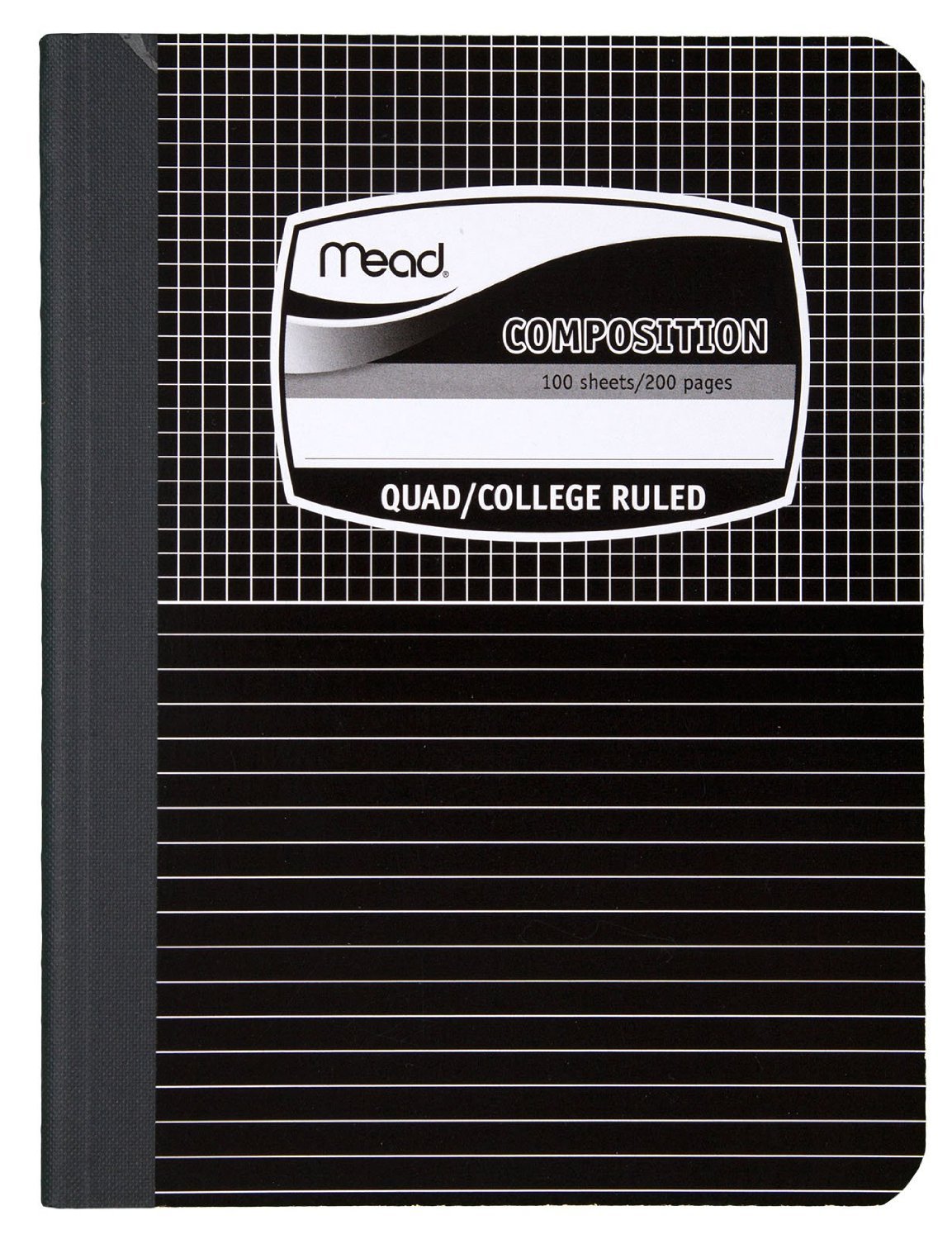
I found these great composition notebooks. They have graph paper on the top half of each page and lines on the bottom half. These beg to be used for dungeons, levels and lairs: map on top, key on bottom!


I've stalled out on my mini module project to do the paralysis that goes with perfectionism.

So I've decided to challenge myself. I am going to draw and key a dungeon (level or lair) a day! I already did yesterday and it was a lot of fun.

I really do not enjoy mapping (I do love keying, though!). So this is a challenge to build my chops and perhaps break through a barrier that is keeping me from enjoying something fairly essential to the game. Again, I think it is my perfectionism that keeps me from just doodling at maps. 200 sheets of paper in a cheap composition notebook should help!

I will share what I want to, when I want to, without any blog performance pressure! But I will update every now and then to let you know I am still going on this.

Perhaps this will get me closer to what I meant by the mini modules. And it may help me get back to that project.

Anyone care to join me?

Saturday, September 10, 2016

Skeletons In The Closet


MM01 
A Haunted House Mini-Module for Normal Characters (Levels 1-3)

Introduction

Use this mini-module for character levels 1-3; in conjunction with other mini-modules use to represent dungeon levels 1-4. For use with higher-level characters, see end notes.

Background

A powerful Lady, forlorn of her true love fell prey to a trickster medium. She became a Wight through repeated attempts to contact her dead lover. The medium traps the Wight of the Lady in her abandoned house.

Referee Notes

  • Describe features and furnishings as a typical victorian mansion
  • Characters looking through windows see a grey-blue twilight world of forlorn ghosts and shades (see "exit," below)
  • Determine level-based treasure according to relative level of use

All Closets:
2d6 Skeletons: burn or pulverize to prevent magical reassembly in 3 rounds; silver coin in each mouth
AC7 MV6 HD1/2

Underneath all beds hide
Hobgoblin:
AC5 MV9 HD1+1

Link to Campaign NPC

The Wight is ancestor to a powerful Lord who keeps it secret. If PCs inform others, the powerful Lord will prosecute them and ban them from his territories. If PCs put the wight to rest, keep the secret and inform the Lord, he will reward them accordingly.

Rumor Table

  1. T Lord Campaign NPC Name don't want nobody knowing about that old place
  2. F Nothing in there but rats and roaches
  3. T There's a crazy old witch (medium) what lives in there
  4. F If you go in there, you'll turn into a ghost yourself!
  5. T Legend has it if you put to rest the old lady's Wight you'll get a share in her inheritance!
  6. F All the treasure belongs to wicked hobgoblins

Unique Monster

Haunted Rocking Chair
Rocks incessantly of its own; voices of crying baby and lullaby-singing mother
Attacks upon touch; folds in on itself if sat upon (2d6 damage)
All touched: Save vs. "Fear"
AC7 MV3 HD2

Unique Magic Item

Ouija Board of Speak with Dead: Chaotic in alignment: harms characters as per magic swords with each use. Use up to three times per day to ask single question of deceased familiar or for ESP

Entry

Characters who enter through either front or back porch areas see only a dilapidated house full of decaying furniture and cob-webs. Characters who enter from another mini-module enter directly through the chimney or to the stairwell of the second floor if going down to this mini-module from above, or into the fruit cellar beneath the kitchen if going up to this mini-module from below.

Time Element

If characters do not engage Medium in seance, wight appears above table to search for characters 1 turn from their departure from the chamber

Exit

Characters who exit through windows or doors find that the grey-blue twilight realm disappears and that they are in the setting where the referee has placed the house. Referee allows hatch in cellar and attic door when stacking further mini-modules above or below this mini module. Ignore otherwise.

Map

Ground Floor


Second Floor


Key

Ground Floor

Dining

Large dining table set with silver platters and candelabras; dining chairs move of their own
Blow out or snuff candles: save vs. curse
Clues: Guest book on stand has a reminder to the butler "it is rude to have unlighted candles at table;" mural on the wall depicts angels holding candles and demons with snuffers; snuffer on the table cannot be picked up until candles extinguished by other means
Treasure: 12 dining sets of silver and 2 silver candelabras: level treasure in value

Kitchen

2d6 Zombies preparing and serving "meal" of dust and ashes between kitchen and dining
Will eat brains of fallen victims, rendering them zombies
AC8 MV6 HD1

Morning

Room filled with flowers, wreaths and sprays of Lady's funeral: Touch turns to ash

Bathroom

Chanting "Bloody Mary" staring at the mirror in the dark will conjure the Wight through mirror
If Wight already dispatched, wraith appears

Utility

Sinks with ashen and charred remains of previously blasphemous seances

Parlor

Chimney may be used to move between stories; also between mini-modules at referee's discretion
Portrait of Lady above mantle; behind portrait: safe:
Treasure: per level + magic sword
Clues: Portrait slightly crooked; Lady pictured with jewels in her lap; folded note on mantle reads "true riches hide behind mere representations"
Monster: Haunted Rocking Chair (See Unique Monster, above)

Stairwell Up

Trap: Stairs turn to slide (d6: 1-2) per ascending character; may be stopped by jamming something between stairs
Clues: sign in magic above stairwell entry reads "some may not ascend;" marbles on floor in front of stairs; painting to the side depicting children on a slide

Hall

Gas lamps light hall with cool eerie blue: If characters address house, lamps answer yes/no questions dimming once or twice; also alphabet or morse code per referee ability
Skeletons in Hall Closet defend huge sapphire (1Kgp): rings like crystal glass upon touch

Second Floor

Bedroom Top Left

The Lady's Bedchamber: canopy bed
Vanity with chair and mirror flanked by candles that never burn out until removed
Lady appears in mirror when character sits in chair
Jewelry box, save vs. poison gas (clue: poison symbol on lid), inside:
Treasure: per level & 3 gems (large agate 500gp, medium diamond, 500gp and medium pearl 500gp)
One item of Jewelry: The Lady's Elegant Hairpin: (7Kgp) Solid gold with large agate that glows on touch; save vs. geas: character must wear hairpin and seek the admiration of others

Bathroom Top Middle

As per "bathroom," above
Also medicine cabinet contains 1d6 poisons and 1d3 potions, all unlabeled

Bedroom Top Right

The Lost Lord's Bedchamber
Portrait of Lady's lost love: Eyes follow characters movement
Skeletons in closet defend magic armor

Hall

As per "hall" on ground floor, above

Stairwell Down

Trick: Stairwell actually leads up (d6: 1-2) per descending character: Grants access to next mini-module upwards when used in connection with others; Otherwise leads to widow's peak surveying haunted lands
Clues: sign in magic above stairwell entry reads "sometimes you've got to get down to get up;" Picture in hallway of widow's peak above house; bird feathers on the floor

"Bedroom" Bottom Left: NOT BEDROOM but: Seance Chamber

Chimney may be used to move between stories
Round table in area shaped as partial octagon
Ouija Board of Speak with Dead (see Unique Magic Item, above) in middle of table
Chandelier above
Medium sits at table; greets characters; invites to seance
Seance conjures wight over table; Wight attacks
Medium charms characters who resist
If characters dispel or, upon defeat, pray the Wight to Rest in Peace: Wight disappears in exhausted sigh, full level treasure + magic weapon issues from chandalier onto seance table, covered in ectoplasm
Medium MU Lvl 1; Silver Dagger; Spell: Charm
AC9 MV12 HD1
Wight: impervious to normal range-fire: successful attack = 1 life-energy drain; renders killed victim wight
AC5 MV9 HD3

Bathroom Bottom Right

As per "bathroom," above. Also treasure:
Shiny Golden Toilet Seat (500gp) attached to wire triggering guillotine trap from ceiling

NOT DEPICTED

Large fruit cellar accessible through hatch in kitchen and down ladder
Used in connection with other mini-modules, characters find hatch to next level under treasure
Treasure by level
Monster: 1d6 Ghouls emerge from earthen floor
AC6 MV9 HD2

Tiny attic door with ladder above second floor hall grants access to next mini-module when used in connection with others

Modifications for Heroic Characters (Levels 4-7)

Haunted Rocking Chair: HD6 2d6 normal dmg., 3d6 folding bite
3d6 Skeletons in closets wield rusty shields (AC6)
1d6 Hobgoblins under beds
Zombies become ghouls
Ghouls become Wights
Wight becomes 1d3 Wraiths (sisters, perhaps?)
Medium becomes Witch (Warlock, Lvl 8)
Adjust all treasures per relative dungeon level

Modifications for Super-heroic Characters (Levels 8+)

Haunted Rocking Chair: HD12 2 attacks, 3d6 dmg., folding bite poisonous
4d6 Skeletons in closest wear rusty armor (AC3)
Troll under beds
Zombies become Wights
Ghouls become Wraiths
Wight becomes Spectre
Medium becomes Necromancer (Lvl 10)
Adjust all treasures per relative dungeon level

FIGHT ON!

Monday, September 5, 2016

Mini Module Project


This began as a thread over on The Perilous Dreamer's Ruins of Murkhill forum.

An Idea

My idea of a "mini modules" project is linked to my desires to link the mythic underworld with demon haunted lands in the Perilous Realms. I love how TSR called them "modules," not "adventures." Use of the term "Adventures" seems like what I am getting is going to be self-contained and goal, if not narrative oriented. "Module," sounds, to my ears, well, modular. And here I mean not only something that could be dropped into a sandbox setting (their original implication, I think) but droppable in relationship to each other in terms of a multi-layered dungeon.

When the OSR came on-line, the word "megadungeon" entered our vocabulary. But I feel constricted by mega-dungeons in a different way. The idea that everything that adventurer's would need for an entire campaign is under one castle seems to constricting and too much like I'm playing Q*bert, or Pac-Man rather than exploring a real perilous realm.

Each mini module would be 1 to 3 levels (preferably 1) and the mini module would have stairs up and down, thus making the mini modules compatible with each other. If used as a "one off," the ref would ignore the stairs, teleports, etc., to other levels. If used in conjunction with other mini modules, those connecting points would be used.

But here is my other idea. What if each map was keyed three times: once for normal leveled characters, then for heroic and finally for super heroic and beyond. So, for example, a kobold lair for normals, a hobgoblin for heroic and a troll for super-heroic. Thus many birds are killed with one stone. Or, again, a wight borrow for normals, a mummy's tomb for heroes, a vampire's undercroft for super-heroes.

The mini modules would be fairly "vanilla" so that they could fit in anybody's setting with just minor tweaking. Next, there would be just enough standardization that the modules would be "modular," that is to say, mutually compatible.

Standards

Here could be some standard "design" elements, kind of like a template in a wiki:

Introduction
Background
Note(s) for the Referee
Unique Monster
Unique Magic Item (or Treasure)
Map(s)
Key(s)
*Link to Campaign NPCs 
*Rumor Table
*Start (or Entry) 
*Time Element
*End (or Exist, or Conclusion) 
*Wandering Monster Table

So, again, the name is "Mini-Module," so we are going for minimalism and assuming a referee with familiarity with 0e or similar rules. We are going for the kind of sketch we actually make for ourselves, rather than some poetic full-description plush product. So, some general rules (of thumb?) might be:

  • No more than three sentences per the above headings (excepting the key(s), of course), preferably one.
  • And, as implicit, only one unique monster and one unique magic item or treasure per mini-module. NOTE: word choice is "unique," not "new." The idea being these are one-off freaks, not stuff to gather up in a "Monster Manual."
  • Give basic stats for each monster.
  • No more than a noun phrase description, or, at most, sentence for a room, and then only if truly necessary.
  • Give rest of main treasure and other treasure by level or type only: assume the referee can use the books or a compatible on-line generator -- even at table if necessary.
  • Preferable one map and one key.
General composition rules (of thumb):
  • Focus is on retrieval of main focal treasure.
  • Trick or wonder likely hides/guards/ or directs to this treasure, otherwise guarded by thematic BBEG or trapped.
  • Trick or wonder has at least 3 clues.
  • Main monster and theme of lair linked thematically to main treasure.
  • Half rooms/spaces empty.
  • Of the other half,  rooms/spaces treasure ½ guarded, rest ½ hidden, ½ trapped.
  • Traps have 3 to 5 clues.
  • 1/6 remaining rooms have monster(s).
  • ½ thematically related to theme monster, the rest "random."
  • If presented as print-ready, map and key lay flat side-by-side with one another.
The asterisked items are optional:

  • The "Link to Campaign NPCs" would be a suggestion for how to hook the module not just to other modules or the campaign setting, but to major movers in the campaign world with a quick suggestion as to how the clearing of the lair would affect this NPC and, thereby, the PC party. How to do this generically? And in one sentence? Something like this: "An important Lord/Wizard/Patriarch (does not) want(s) the party to X the lair, if they succeed, NPC will Y."
  • "Rumor Table" is always fun: d6 or at most d10, with T/F marked and at least half F.
  • "Start/End," again, only if truly necessary.
  • "Time element" allows for time pressure to enter. Keep to a one sentence description: "Once PCs do/perform/take/ cross/enter X, NPC NAME / MONSTER will Y in N turns."
  • "Wandering Monster Table," only if both a.) deemed truly necessary and b.) a simple (d6, d10?) table.
Finally, if we go with the idea of keying each mini-module so that it could be compatible with different character level tiers, each mini-module would conclude with two of the following three headings, depending upon the original target level:
Modifications for Normal Characters (Levels 1-3)
Modifications for Heroic Characters (Levels 4-7) 
Modifications for Super-heroic Characters (Levels 8+)

Constraints Aid Creativity

And here is a nice article about how constraints actually aid creativity:


Mini Module Title Ideas

Here is a list of possible "mini-module" titles based upon the monster list and some magic items. Namely, those monsters that clearly constitute the mythic underworld (vs. wilderness) in my loose estimation and the misc. magic items (some, not all of them):

The Monsters:
The Bandit’s Lair
The Brigand’s Redoubt
Berserker’s Mountain
Revenge of the Mad Dervishes
Nomads of Wasteland
Pirate’s Cove
Buccaneer’s Bounty
Cavern’s of the Lost Cavemen
Mermen’s Hidden Mere
Tucker’s Kobolds
Night at Goblin Mound
The Minions of Orcus
The Gnoll Knoll
The Ogre’s Horrid Banquet
Cairn of the Troll Lord
Rebirth of the Nephalim
Jotunheim’s Anvil
Cloud Castle of the Giant King
Temple of the Titans
Cave of the Cyclopes
Skeletons in the Closet
Escape from Zombie Plantation
Graveyard of Ghouls
Barrow of Wights
Tomb of Wraiths
Curse of the Mummy King
The Spectre’s Haunted Mansion
The Vampire’s Undercroft
Lair of the White Wyrm
Black Dragon Swamp
Glade of the Green Dragon
Blue Dragon Dunes
The Red Dragon’s Deepest Delves
The Search for the Golden Dragon
The Halls of Hell (Demon / Balrog)
The Werewolf’s Dire Den
The Hidden Weretiger of the Mountain Monastery
The Ratcatcher’s Nightmare (Wererat)
Feast of the Boar’s Head (Wereboar)
The Skin-changer’s Longhouse (Werebear)
The Minotaur’s Labyrinth
Search for the Unicorn Maiden
The Nixies Netherkingdom
The Craggy Peaks of The Roc Eyrie
The Gate to the City of Brass
The Salamander’s Sea of Lava
Ruins of the Living Idol
The Golem’s Gold
The Android’s Secret Program
The Treasures: 
The Search/Quest/Hunt for:
The Scrying Ball
The Medallion that Makes Minds Known
The Amulet of Mental Protection
The Scarab that Spells the Pagan Priests’ Repulsion
The Bottomless Bag
The Censer of Elemental Air
The Stone of Elemental Earth
The Brazier of Elemental Fire
The Bowl of Elemental Water
The Efreeti’s Bottle Chamber
The Djinni’s Lamp
The Elven Cloak of Old
The Boots of Speed / Levitation / Leaping
The Witch’s Flying Broom
The Flying Carpet of Old Araby
The Beating Drums of Panic
The Horn of Blasting
The Ogre’s Mighty Gauntlets
The Giant’s Strong Girdle
The Mirror that Traps Souls
The Teleportation Machine
The Crown, Orb and Scepter of the Ancient Kings / Priests / Magi
The Stone Crystallization Projector

I just went through the lists and tried to give a fun, youthful, pulpy adventurous title based upon each. So, a mini module on each classic monster. Or each classic treasure. And, come to think of it, starting with the treasures (the real "goal" of the game in 0e) may actually be best, linking the key treasures to key monster-types.

So, e.g., if orcs subsume elven ruins, then the elven cloak and boots may be hidden away in the lair of the Minions of Orcus! Then we would get: the Search for the Elven Cloak and Boots in the Lair of the Minions of Orcus! Now that sounds fun to me!

Background

I love B1 and B2, but I kind of just wish they had made a module for each major monster. Likewise I love the Judges' Guild Wilderlands, but, for me in our current one session a month gaming style, I need something that fits a bit more nicely into a single session. Hence my "mini module" idea.

I think another thing that I love about 0e is that it is prior to the feed-back loop of D&D world-generation separate from the main western tradition. I play 0e because I want a set of simple rules in order to walk into (pre 1974) the fantasy land of our classical, western legendaria. Beholders and Liches are fine, I suppose, but, for me, as one-off unique monsters. I still want my plane jane vanilla standby monsters.

Here is another way to put it. If I were a Napoleonic war gamer, I would want my knowledge of actual Napoleonic warfare to contribute to my success at a given scenario.

Likewise, as a player of 0e, I want, for myself and for my players, to find reward in knowing the classical and romantic legends of our heritage.

Here is an example: I was thinking the other day of a high-level NPC vampire in one of my campaigns. I had decided he was going to surprise attack a PC at night in his own castle -- I mean, he has gaseous form and can be a bat and all that. But then I remembered: vampires cannot enter where they have not been invited. My knowledge of the monster, as our collective inheritance, guided my decision -- regardless of the fact that this is not in the description of vampires in the rules. Instead, I had the good count meet a high lvl CL just outside his camp pavilion one night. "Are you going to be rude, or are you going to invite me in?" The player knew to say "no"! So he was rewarded. His tent was a safety zone.

So, for example, the description of Ogres in 0e is pretty scant. You need to know that they are small giants who delight in eating human infants! Thus I named that mini-module "The Ogres Horrid Banquet." In it, I would try to imagine some way in which knowledge of the classic archetype of an ogre would be rewarding to the player's exploration and discovery. Etc.
Possibly a Shared Project

Now let's make it even crazier: What if we made a free, "share-ware" on-line resource for people by building a "setting" through multiple "mini-" modules. Perhaps a "wiki" would be better for this, I don't know. But I would love to hear ideas from folks who find this interesting or inspiring.