Showing posts with label house rules. Show all posts

Monday, July 19, 2021

Alignment and Lawful Clerics

This is the third in a series of web log posts where I describe what “alignment” must mean in the Perilous Realms, based upon our group’s tone and play-style, and its cumulative rulings so far.


Lawful Clerics and Alignment

Lawful Clerics are members of the Church of Law who have made vows and joined some order of religious (which is to say, monastic) knights. Regular, everyday priests and prelates are not “Clerics,” in this sense. Should a Lawful Cleric willingly break any of the Laws of Noe his or her clerical powers would be removed until repentance and restitution are made. That said, those who become knights of religious orders (the so-called “Clerics” of the game) have additional rules they must follow as a part of the vows that set them apart and grant them their authority to call on miraculous powers. Willingly breaking these vows also result in the removal of their special authority until repentance and restitution is made. These are the Seven Vows of the Crusade of the Orders of Religious Knights (Clerics):

The Vows of Crusade

1. Worship the Most High alone

2. Observe Sabbat, fasting, alms, and prayers

3. No shedding of blood

4. Show honor

5. Show mercy

6. Shun falsehood

7. Shun vanity

The first vow, monotheism, sets Clerics apart from their coreligionists. Other Lawful men may “worship” many gods, angels, and saints, including the offering of sacrifices and oblations, so long as these Powers are recognized members of the Council of the Most High and the rituals themselves do not involve the worship of idols. Clerics, on the other hand, may only engage in the ritual worship of the Most High, alone. That said, Clerical powers are mediated by saints and angels whom the Cleric adopts as a patron. But the Cleric does not worship such patrons.

The second vow commits the Cleric to certain religious and ascetical disciplines. These include a day of rest every week – Saturn’s Day, or the Day of Kronos. Kronos is closely associated with the Most High. (But there is debate as to whether or not Kronos is the Most High!) Weekly rest and daily prayers are necessary for the restoration of miraculous authority, Clerical “spells.” If a Cleric does not rest to pray once a day, and rest entirely once a week, Clerical spells are temporarily unavailable. In cases of evasion in the wilderness, this may prove dangerous to a party.

The third vow, no shedding of blood, is where we get the Clerical prohibition on the use of sharps as weapons. The blood is the life of the animal and belongs to the Most High. This means that Clerics are “vegetarians,” in the sense that they do not eat the flesh of mammals. Other animals and milk are not off limits. But won’t, you might ask, a mace “shed blood”? Well, yes. But here is where a little beautiful casuistry enters (and how could a game be “medieval,” without a little casuistry?). The shedding of blood by means of blunts is not necessary and is often a deleterious but unintended consequence of their use. But by fighting with sharps the means of subduing or killing an opponent depends upon cutting, and therefore the shedding of blood is inherent to their use. So: “no sharps,” but not “no killing,” see the commentary on the Fourth Law.

The fourth vow, honor, is directly related to obedience, something inherent to any form of monasticism or membership in a religious order. But it also includes the encouragement of subordinates and things such as respect for the dead by putting them to rest, etc. Clerics rarely tolerate the abuse of a corpse and must never participate. The Clerical war against the Undead is not that of corpse mutilation, but all attempts must be made to free the corpse from this unholy abuse and restore the body to rest through proper committal to the elements. This includes burial, proper, in the earth, but also burial at sea and cremation on pyres. When Clerics gain the authority to dispel the curse of Undeath, this does not cause the undead victim to disappear or disintegrate. It rather immediately restores the corpse to a state of rest, laid and in a position ready for committal to the elements.

The fifth vow, that of mercy, means that all Clerics are expected to do whatever they can to defend and, if necessary, provide for widows, orphans, pilgrims, the oppressed, etc. They are expected always to grant subdued foes the chance to convert to Law, repent and be saved. Fell races and Chaotic monsters are incapable of conversion and repentance, so mercy does not extend to them.

The sixth vow, the prohibition of falsehood, means more than simply not lying. It also demands that a cleric use no disguise, nor engage in any “sting operations” or subterfuge. Nevertheless, a Cleric may tolerate other party members who do so, they simply may not directly participate. If directly questioned in such situations, Clerics may, however, tell the truth in a “creative” way.

The seventh vow, the rejection of vanity, means avoiding the pomp of the world. As a virtue, this includes not coveting the wealth, title, or power of others. As a practice, it includes the requirement to tithe any wealth obtained through adventuring. This corresponds to the traditional monastic vow of “poverty.” It also includes the monastic vow of “chastity.” Remember, this is a medieval fantasy, so marriage in the medieval world was often a means of glory, the making of alliances, and the maintenance of worldly society. Think “trophy wife,” and you will get the picture. Although marriage is lawful and to be esteemed for those not involved in the religious life, for a Cleric, all spouses would be merely worldly “trophies,” for those who have answered the high call of Crusade.

Next: Alignment and Evil Clerics


Sunday, July 4, 2021

Chaos in the Perilous Realms

This is the second in a series of web log posts where I describe what “alignment” must mean in the Perilous Realms, based upon our group’s tone and play-style, and its cumulative rulings so far. The first was on the Law of the Perilous Realms.


Chaos in the Perilous Realms

Okay, so a character is on the side of CHAOS. But what does that mean?

It means you defend moral sentiment and basic instincts as all that is necessary to guide behavior. It means you believe that human culture, customs, and traditions often subvert basic human sentiment and instinct and should thus be shunned and overturned.

The above sounds rather noble. And the highest philosophers of Chaos indeed hold the above in very high esteem and may wax rhapsodic about it from time to time. But mainly folks who choose Chaos just choose it because they don’t want to obey law, or perhaps just anyone at all, so Chaos suites them just fine, whatever its philosophers may or may not say. What are the basic sentiments?

The Seven Sentiments of Chaos

1. Honor

2. Loyalty

3. Reciprocity

4. Affection

5. Purity

6. Pity

7. Liberty

Honor may well be honorable, but it can also turn into a shame-based culture and an almost gang-like vibe of constantly worrying about and accusing others that they have “dissed” them. Think gangsters or the 47 Ronan story.

Loyalty can be honorable, but it can also turn to cruelty when the demands of the superior are not fair to the inferior, but the threat of accusations of disloyalty forces obedience.

NOTE: the combination of honor and loyalty means that, in the main, Chaotic parties, and even Chaotic members of a mixed party, may, generally, be expected to be helpful rather than harmful to the party. In other words, having your character behave poorly towards other members of the party because the player claims to be playing “in character,” as someone on the side of Chaos simply will not fly. So, no Trolls, no Griefers, no doing it “Just for the Evulz.” In the main, this includes even non-player characters, at least towards their own companions.

Reciprocity means fairness and justice, but it can just as well turn into a zero-sum game of retribution. Seeking one’s self-interest can always be justified as demanding justice in the form of mere retribution in the style of a moral “tit for tat.”

So, obsessive concern for the above can turn to their opposite. A sensitivity to dishonor and betrayal, together with a strong commitment to the demands of reciprocity (render as rendered) may lead to retribution and vengeance. This is especially intense as Chaos shuns courts of law as a merely human custom that gets in the way between two parties having the “freedom,” to “resolve” the dispute on their “own terms.” So, duels, feuds, assassination, and lynching are de rigueur for Chaos.

Affection can be a beautiful thing, like a mother’s love of a child or two fast friends. It can also be the affection a master has towards his slave, or, in turn, the “Stockholm Syndrome” generated in the hearts of the kidnapped towards their captives.

Purity is an honorable sentiment, leading to the shunning of things that might degrade human dignity. It can also lead to self-righteousness, a sense of superiority, sexism, racism, bigotry –looking at another member of a free race – or even a free race as a whole – as if they were less-then. Cruelty can always be justified as simply following the human sentiment of “moral disgust” towards the “inferior,” or “vermin.”

Pity can lead to mercy, kindness and even defense of the helpless. Pity can also be condescending and humiliating. Pity is not necessarily compassion or empathy. Conan often shows pity and provides kindness and defense. He would not even know what “compassion” means, and “empathy,” would simply be meaningless to him.

Liberty cannot stand that free races should suffer any compulsion, but it can also just be a freewheeling, “don’t fence me in,” “get of my lawn,” attitude that justifies flouting any law that seems inconvenient in the moment. Liberty is often cited by the chaotic as the very reason why universal Law must be rejected. Universal Law is seen by the chaotic as a trick by which the “weak,” have figured out a way to limit the power of the strong and worthy (think Nietzsche here). (Lawful, on the other hand, sees the Law as the means to freedom. Lawlessness is dangerous and oppressive, not only to the weak but the strong as well. Law guides creativity and reasonable action, and thus true freedom.)

A note about the relationship of Chaos to being a “good” character:

You can certainly have a fundamentally “good” Chaotic character. But there are simply more evil Chaotic characters because evil folks will almost always choose Chaos as it can easily be manipulated to justify their lawless behavior.

Up next: Lawful Clerics and Alignment.


Saturday, June 26, 2021

Law in the Perilous Realms

This is the first in a series of web log posts where I describe what “alignment” must mean in the Perilous Realms, based upon our group’s tone and play-style, and its cumulative rulings so far. I am coming to realize how essential to the game alignment is. It defines so many things: the cosmos, the setting, the characters, the classes, especially clerics, monsters who are intelligent, and whether they are free, language, and whatever counts as “religion” in a given setting. This shouldn’t be surprising, I suppose. It is a wargame, after all. And wars have sides.


The Law in the Perilous Realms

So, a character is on the side of LAW. What is the Law? Well, since you asked, they are the Seven Laws of the Prophet Noe, revealed from heaven, through the great prophet who survived the cataclysmic ancient flood of Tiamat.

The Seven Laws of The Prophet Noe

1. Thou shalt not worship idols

2. Thou shalt not curse the Most High

3. Thou shalt establish and hold courts of justice

4. Thou shalt not murder

5. Thou shalt not dishonor the wedding vow

6. Thou shalt not steal

7. Thou shalt not show cruelty

The first law, no worship of idols, rules out a lot of behavior common to a lot of people and free races in a low fantasy setting. This limitation really stands out as something that distinguishes the Lawful from the crowd. The second law, no cursing the Most High, represents a kind of vague blasphemy prohibition that can be interpreted and enforced more or less leniently or strictly depending upon the local community, Church or otherwise Lawful leadership.

The third law, due process, is important and, in many ways, defines Lawfulness, setting Law in stark contrast to Chaos. Due process is essential to the Law. It is the key to establishing safety, order, and civilization. It forms an absolute prohibition against lynching, feuds, unlawful duels, revenge killings, and the like. Punishment may still be “cruel and unusual,” by modern standards. But they must at least seem to fit the crime. Duels may be authorized by the court as an appropriate means of settling a suit. But it must be court decreed.

An exception that is often, but not always honored by courts of Law (that is to say, by this referee) is that of “Wilderness Law.” In cases where adventurers find themselves far away from Lawful civilization, Lawful characters may declare “Wilderness Law,” and, well, let us say, “exact justice,” as the Lawful party understands it. In this case, the Lawful party (or the subgroup of Lawful members thereof) becomes a kind of de facto court of Law, likely to be recognized by the Church or a lawful civilization. So, for example, if it is dangerous to haul a captured Evil High Priest all the way back to a settlement with established Lawful courts, the party may just decide to “try, condemn, and execute” the “obvious offender,” right then and there. As the referee, I would usually uphold this if the reason were obvious and not simply a sham for making things easier on the party.

The fourth law, the prohibition of murder, may seem a little tough to uphold in a fantasy wargame. But note that what is prohibited is murder, not killing. Killing in defense of the defenseless and even in self-defense is not murder.

Capital punishment after due process is not murder. It is the removal of an individual from a corporate body, by that corporate body, through its authorized and Lawful leadership, to maintain safety and order for the whole. The court may just as well choose exile or gulag instead.

War, when declared just by the appropriate authorities, and conducted in a holy and chivalrous fashion, is about two people groups (or a people group against another free race) fighting one another. The death of individuals is a necessary and unfortunate by-product, not its goal. Thus, war does not technically count as murder.

Furthermore, you can only murder members of the free races: men, elves, dwarves, halflings, and intelligent lawful beings. Monsters, especially Chaotic monsters and fell races are not murdered, they are exterminated. Fell “races” count as monsters in the Perilous Realms. Remember, this is just a game – a medieval fantasy game based on the philosophy of Alchemy. Fell beings arise by abiogenesis. So, they don’t have spouses or children to worry about. Monsters are archetypes of our nightmares, ulterior motives, vices, passions, skeletons in the closet, etc. Try not to over think it or “deconstruct” it.

The fourth law, honoring the vows of marriage, establishes the basic unit of human order, the family, and thus ensures the safety and rearing of the next generation. This would include most traditional mores around such things, as understood by most traditional human societies. But it also includes things like the defense of widows and orphans, etc.

The sixth law, prohibiting theft, ensures the basic property rights necessary to maintain a free and orderly (medieval fantasy) society. This is an imaginary world before the industrial revolution so there is no “Capitalism.” And if wealth is not defined as the means of production, then we don’t yet need some medieval fantasy version of Marxism informing us that “property is theft”!

Finally, the seventh law, prohibiting acts of cruelty, maintains the humaneness of Law. Although there are plenty of Lawful characters who rule with an iron fist, if they cross a certain line, they may no longer be regarded as truly Lawful. The prohibition on cruelty includes not only the usual things associated with cruelty but also a wider gamut of behaviors such as: no corpse abuse, no animal cruelty (the actual prohibition of the seventh law of Noah, In Real Life) and no eating meat without humane slaughter and thanksgiving rendered to the Most High for the animal’s life.

A note about the relationship of the Law to being a “Good,” character:

You can imagine an “evil” Lawful character, one who hides behind the law in cowardice, for false motives, or who imposes the Law on others with forced conversions and an iron fist. But, in general it is “good” folks who will choose law, because they can see its obvious benefits to the oppressed and also its general benefits due to its role in the development of human civilization.

Up next: Chaos in the Perilous Realms

Sunday, July 5, 2020

Rules and Dungeons & Dragons


This is my third post in a series of posts where I look at the subtitle of Dungeons & Dragons as a way to allow the rules to provide a launch point for one's own wargames campaigning.

The last post was on Medieval Fantasy and Dungeons & Dragons. This post will be on what "Rules" mean in the context of the original publication.

Free Kriegsspiel and referees


One significant tradition within wargaming goes back to the use of wargaming as actual training for young officers in 18th and 19th century Europe. This tradition was called, "Kriegsspiel," which is German for wargame.


One particular branch of Kriegsspiel that developed early-on and that influenced all subsequent hobby wargaming, was called, "Free Kriegsspiel." Free Kriegsspiel recognized that the circumstances of war cannot be covered exhaustively by written rules because reality is complicated, difficult to know, and the human mind is finite. You can't possibly map every thing that would go into a possible battle into a perfect rule-set. So in Free Kriegsspiel you would get somebody who had been in so many actual, real world battles, that they knew what combat was like and what warfare was like, such as some old officer who had seen many battles.


Then you would get these young officers in a room, and you'd have a map, and you'd have pieces of the map to represent different forces. And then they would divide up into two different sides and the two different sides would issue their orders to their soldiers, and then this seasoned officer, that was acting as a referee, would judge who he thought would be the successful party in this particular battle based on his actual lived experiential knowledge of how warfare worked. So in the Free Kriegsspiel tradition you trusted a veteraned officer to make a judgment call as to whether your orders were good. And then that old seasoned officer could coach you and say, "in future don't make that decision because you'd be flanked, or you'd be outnumbered, or you'd be outrun. Etc.”


In this way, Free Kriegsspiel provided excellent training and mentorship for future officers. This in turn influenced the wargaming hobby where, even though you might have some rules, such as dice mechanics, to give the feel of randomness and probability, nonetheless, in some cases, you would want to have a referee. The referee would be somebody who was so familiar with war that he could make judgment calls based upon described actions. The referee might roll the dice if he or she felt like he or she needed more information than just orders.


The person that you'd appoint to be the referee over your game would be somebody who had real expertise in the history of war, into historical wargaming, and had accounts of so many battles and so many different types of warfare that you trusted his or her judgment call in a game. The role of referee in wargaming depends upon real knowledge of warfare.


One obvious example of where you would need a referee in wargaming would be when you have too many for the players alone to manage all the information and play well at the same time. Or, trying to agree to the meaning of certain actions and rules may take so long to judge that play gets bogged down, and something that is supposed to be entertaining is turned into a bore. Or, you might need to have a situation where certain information is secret to other players to simulate the unknowns of war, such as espionage or scouting. So there's practical gaming reasons why you'd want to have a referee. The tradition of referees in Free Kriegsspiel gives the advantage of less rules to know and interpret together with a faster-paced game.


Referees and "Dungeon Masters"


The tradition of Free Kriegspiel referees lives on in Dungeons & Dragons. Later publications by the same name would introduce the term "Dungeon Master." But the original Little Brown Books knew no such phrase. The person to facilitate the session was a referee, just as in Free Kriegspiel. And just as in Free Kriegspiel, that person was expected to be expert in all the relevant areas of knowledge necessary to make the game "realistic," or, in the case of fantasy, as true to the sources, the literature of Sword and Sorcery. In the case of the wargame hobby, this "expertise," is amateur, not professional in nature. This goes back to the original sense of the word "amateur," as someone who just does it for the love of it. There are many cases where an amateur can know more than, or have much more facility with a topic than a so called professional. And that is the kind of expertise we are looking for in this hobby.


Rulings, not rules


The "rules" of Dungeons & Dragons follow this tradition of Free Kriegsspiel. Playing Dungeons & Dragons requires a referee. The booklets themselves encourage referees and groups to interpret the rules in different directions. Referees are encouraged to build their own rules. The building of local, hobby wargaming group includes the assumption that each hobby group, just as with the wargaming hobby in general, will wind up having its own peculiar, local rule set that works for them and that reflects the campaign they have developed on their own.


In his Quick Primer for Old School Gaming, Matt Finch has coined the phrase, "Rulings, not rules," in order to try to catch, in a single pithy, easily memorable phrase, the pith of this approach. The point is that the referee is trusted to make good calls for each unique situation that arises, due to his or her expertise in medieval warfare, medieval fantasy literature, dice probabilities, traditional wargame mechanics, and the like. Over time, these rulings would become a unique set of rules for each wargame club.


For contemporary ears to hear the subtitle of this game correctly, then, it should almost be changed to "Guidines," or "Ideas," or "Suggestions," "a Framework," or "Examples," "for Medieval Fantasy Wargames Campaigns."


Next in the series: "Campaigns"


Sunday, June 7, 2020

Wishes


Okay, here is my first pass at some rules around wishes for my Perilous Realms campaign. These are inspired by the Judges Guild Ready Ref Sheets.

Wishes

First, note level of granter:

Granter
  1. Object
  2. Well/Fountain
  3. Rainbow
  4. Moon, full, midnight
  5. Star, first seen
  6. Spirit
  7. Djinn/Efreet
  8. Power
  9. Spell
  10. Item
Objects include but are not limited to:
  • Wishstone
  • Wishbone
  • Found single copper piece
  • White horse, first sight
  • Talisman
  • Statue
Major gems are special objects with their own granter value.

Grant-level:Gem-value
1:5,000
2:10,000
3:25,000
4:50,000
5:100,000
6:500,000
7:1,000,000+

Well/fountain, in general, any given character gets one wish per instance.

Spirits are elemental and otherwise neutral powers, especially, e.g., elementals themselves, and also sometimes sylvan beings of the classical variety, such as dryads or centaurs, or of the gothic variety such as pixies and unicorns.

Powers are cosmic spirits of either lawful or chaotic alignment such as gods and goddesses, angels, demons, and the like.

The Wish spell is a 7th level arcane spell that can only be found through research.

Items are magic items with wishes like rings and swords.

Next, discern level of intent:

Intent:
2 Trivial
3 Selfless
4 Altruistic
5 Mutual
6 Greedy
8 Selfish
9 Malicious
10 Give/take life

Trivial indicates that no one directly benefits and there is no possible harm.

Selfless indicates the wisher benefits from the wish in no way.

Altruistic indicates that one or more parties benefit from the wish but the wisher benefit only indirectly.

Mutual indicates mutually beneficial to wisher and one or more other parties.

Greedy indicates the wish is only for material gain, and / or that there may be one or more other parties that benefit, but only indirectly.

Selfish indicates that the wish is only beneficial to the wisher.

Malicious indicates harmful intent.

Give/take life indicates wishes to kill or restore life, including restoration from flesh turned to stone.

Next, determine likelihood of granting, together with likelihood of repercussion upon wisher and splash on any beneficiaries. Divide Granter by Intent for percent chance granted. Subtract percent chance granted from 100 for percent chance of repercussion for the wish. Roll for repercussion whether wish is granted or not. If granted, halve the chance for repercussion for percent chance of splash on others who benefit from the wish, if any.

d100:Repercusion
99+:Death
97-98:Insane
94-96:Blind
90-93:Reverse
85-89:Geas
75-84:Quest
60-74:Disease
45-59:Curse
25-44:Charm
00-24:Sleep

Roll d100 for repercussion. Roll d50 for splash back. For both repercussion and splash, add 10 for malicious or murderous intent, subtract 10 for selfless or life-granting intent. Less than zero indicates no repercussion or splash.

Charm indicates wisher or beneficiary charmed by person place or thing related to the context of the wish and/or the situation of the granting. Referee determines.

Fight on!

Sunday, December 29, 2019

Sacrifice in the Perilous Realms


Characters sacrifice consumable goods to gods and demons. Characters specify a particular recipient of sacrifice. Characters must find a suitable altar - usually at the temple of the given entity, duly offered by recognized priests consecrated to the entity. Best to sacrifice on an auspicious occasion.

Consumable goods include vegetable (resin, incense, oil, wine, grain), animal, monster and sentient beings.

Sentient beings:
Fell beings equal XP earned in a kill.
Fay beings and lawful monsters equal 1K XP per HD.
Human beings equal 2K XP per HD.
Double the above for each of the following conditions:
  • Young
  • Female
  • Innocent
  • Willing
Multiple creatures can be sacrificed over the course of the same festival.

Most auspicious: cross-quarters +2
  • Candlemas/Imbolc, February 2
  • May-Day/Beltane, May 1
  • Lammas, August 2
  • Samhain, November 1
Auspicious: quarters +1
  • Yule, December 22
  • Liberalia/Hilaria, March 22
  • Midsummer/Litha, June 22
  • Harvest-Home/Mabon, September 22
Least auspicious: full (night of the 14th) and new moons (day of the 1st)
Inauspicious: all other times -1

Entity finds sacrifice acceptable on a reaction check. Apply modifiers based upon how auspicious the occasion is (above). Apply suppliant’s charisma modifiers. Offerings particularly abominable or favorable to the entity may modify as well. Table:

2-3    Curse
4-5    Enmity (-1 to future sacrifices)
6-8    No answer
9-10    Acceptance
11+    Favor (+1 to future sacrifices)

Sacrifice grants XP = value of sacrifice in gp.
  • Instead of XP, sacrifice may grant:
  • Magic item
  • Knowledge (divination)
  • Ethereal servant
  • Undead servant
  • Monster servant
Magic item equivalent to gp value of XP. Only grants items within entity’s realm of authority.
Divination like “commune.” Clerics receive additional questions: 9-10: 1, 11+: 2.
Servants have 1HD per 1Kgp value of sacrifice, not to exceed 16HD. Servants obey for a year and a day.

Sacrificing to an entity moves a character one alignment closer to that of the entity per sacrifice. So, a lawful character who sacrifices to a chaotic entity becomes neutral. A second such sacrifice would make that neutral character chaotic. Etc.
Any blood sacrifice on the part of a baptized member of the church of law makes that character chaotic, regardless of whether or not the entity is lawful.
Any blood sacrifice on the part of a lawful cleric renders the character chaotic and the character looses clerical powers until restored by repentance through the fulfillment of a quest or until received by a chaotic order.

______

These rules explain how certain magic users and clerics gain in life-energy without much adventure. It also explains the source of many magic items and magical powers where magic-users are not present.

The above is inspired by Courtney Campbell's On Down Time & Demesnes. Thank you, Courtney!

Friday, August 9, 2019

Few have the inclination or patience to fight under rules they did not compile


. . . little attempt has been made in this book to lay down rules for specific periods of military history, assuming that the wargammer will have obtained or formulated rules for the type of warfare in which he is most interested. To this must be added the well-established and acknowledged fact that few wargamers have the inclination or patience to fight under rules that they did not compile themselves.
--Donald Featherstone, Solo Wargaming (emphasis mine)

This really incapsulates what differentiates the (original) Dungeons & Dragons category of play from the larger category, "old school," in which if falls.

Are you playing a wargames campaign that happens to be set in sword and sorcery? Or are you playing a role-playing game and following its published rules.

Fight on!

Friday, July 5, 2019

Setting-up a Medieval Fantasy Wargames Campaign


In a previous post, I made the point that Dungeons & Dragons (original) is an approach to setting up medieval fantasy wargames campaigns. Back in the day, folks within the miniature war-gaming hobby would share their rules for how to resolve individual combats. In addition to that, they would also sometimes share rules for how to string together a series of table sessions into a coherent war campaign. In these documents, they would not focus on rules for the wargames themselves -- they assumed they were writing to wargamers who already knew such rules and probably already had their own house rules as a local, hobby, gaming group. Instead, the focus was on how to make the games link to each other, reasonably, in order to game a "realistic" war campaign, and not just individual, disparate battles.

As I thought about these things while writing that post, I began to imagine what their pamphlets might have read like if Gygax and Arneson had written them in a more colloquial style that showed very clearly that they were talking to other wargamers about what had worked for them, what they had found to be fun. Because that was in fact what they were doing. It is just that it can be lost on many of us when we come backwards to the pamphlets from complete-rules-style RPG books rather than forward from their actual wargame hobby context. I offer my imaginings, below. The actual work would be a bit more detailed, but still short enough. I leave a lot that would be fleshed out as parenthetical summaries of what I imagine they would include in the actual text. Who knows, maybe someday I'll write this whole thought experiment up?

________

Dungeons & Dragons, or
How to Set-up a Medieval Fantasy Wargames Campaign

These booklets are a set of ideas for how to turn an ordinary wargames campaign into a Sword and Sorcery wargames campaign! As with any suggestions for setting up a wargames campaign, these brief booklets give some ideas and descriptions of what has worked for us in our own campaigns. Experiment with it and have fun. Always make it work for your local group.

As with any wargames campaign, you will need to assign sides. In simple fantasy, it is usually good enough just to have "good guys" and "bad guys." But, following Anderson and Moorcock, and hints at such in Tolkien, we have named our major sides "Law" and "Chaos." Monsters, fantasy figures and characters in general fall along such lines. Of course, brute beasts don't fall along any particular line and characters may choose to "opt out" and remain neutral. (Here would follow the list of fantasy creatures by line up, or what would come to be called "alignment.")

Choose rules for resolving combat and figure out a way to factor in the fantastic. We recommend Chainmail, especially with its fantasy supplement and man-to-man rules. We tried to make combat rules and fantasy creatures match up by having monsters and characters act equivalent to a certain number of figures in a typical wargame battle. We talk in terms of "hit dice," to make sense of this. Since we assume that you are already an experienced wargammer (since you are interested in reading pamphlets about setting up an entire campaign), we trust that you are familiar with this way of thinking of these things, so you get the point. But, real quick, here is an Alternative Combat resolution to consider (here they present the "Target-20" method they introduce by means of the "Alternative Combat" tables and the concept of "Armor Class" borrowed from naval wargaming).

Okay, now here is a fun new idea: what if players not only played as "generals" over armies, but actually played individual characters within the game-world? Characters can fall into different "classes," much like then different classes of troops in a typical wargame. Make sure they are different from each other, with clear cooperative properties, so that they can work well together as a Sword and Sorcery style adventuring party.

Here are some ideas for character classes: Start with the proverbial fighting-man. Next would be magic-users. Gygax doesn't much like the idea of magic-users being playing characters, since they are usually the bad-guy in Sword and Sorcery. However, some players may want to play chaos. And you could have "good" magic-users in your campaign. So you may want them to be a character class as well. Also, we had someone who wanted to play a "Van Helsing" type character, so we introduced the "cleric." They are kind of like a crusader. They can force undead to check morale (usually, as they are "undead," they would not check morale). We call this "turning." Clerics also have some of their own kind of spells that are a bit more religiously miraculous, like healing.

Don't forget standard fantasy races such as elves, dwarves and hobbits. Give them descriptions that match what you like from fantasy you have read and that you would like to incorporate into your campaign. Here is what we've done. (Here would follow race descriptions.)

Here is another cool idea: when you play as a general of armies, you usually start with a point-buy system for hiring your starting armies. Then, through play, you can gain more points to buy more troops, thus increasing your army, etc. Well, we thought of a cool way to make this work with players playing characters at a one-to-one scale. We call it "experience" and we measure it in "experience points." Just as armies have tactical goals, Sword and Sorcery characters have the goal of treasure extraction and "looting." So we have developed a way of matching the value of a treasure safely extracted by a character to a character's "experience points." Successful victories also grant some experience. These experience points then accumulate and grant the character advancement in the game-world. We use the term "level" to describe this game-world advancement. Each time a character gains a level they gain in the respective capacities and advantages of their particular class, just like armies growing more powerful in a regular wargames campaign. Here are some ideas. (Here would follow the tables for advancement, XP, HD, spells, etc.)

Now here are some ideas about how to incorporate magic-users and their spell-casting abilities into a wargame context that keeps things fair but still "wonderful." You will find your own way to work this stuff out for your campaign. (Here is where spell lists and descriptions would go.)

Oh, and to make sense of non-combat related eventualities, Arneson borrowed from Naval Wargaming the mechanic of "saving throws." Much like determining how much hull-damage a ship has taken from, say, an underwater mine, you can use saving throws for resolving how much damage a character takes from, say, falling down, drinking poison, or being hit by a magic-user's fireball! We have also found it useful for determining if a character or creature has been affected by a spell or not. As characters advance in level, eventually their chance to save increases as well.

Another thing that we discovered to be really fun is what came to be an emphasis on the more exploratory aspect of the game. Since we have allowed a 1:1 correspondence between player and in-game character, we can set up scenarios where characters explore an unknown, usually interior and often underworld environment. Think of this in terms of Stratego or Battleship, but even more complex and fascinating as the players will need to map a potentially elaborate underworld setting. This could be maze-like or labyrinthine. Or you could have secret spaces only discovered when they have circumnavigated it.

There are a lot of possibilities here. You can set up standard things from Sword and Sorcery that often fall outside the purview of standard wargames. For example, you can have tricks and traps and puzzles that the players can solve by means of their characters interacting with the environment. Really the sky is the limit here.

We have found that the combination of the 1:1 scale and an emphasis on underworld exploration has been absolutely amazing in giving our campaigns a real Sword and Sorcery feel!

Here are some ideas for monsters. We take advantage of the use of Hit Dice to represent relative fighting power and ferocity. Other natural and magical capacities can then be factored in. We describe below what we have developed for ourselves. Again, look at our examples and then work out what would work best for you in your campaign. (Here would follow the monster list and descriptions.)

Here are some ideas for treasure. Look to our examples and work out things for your campaign. (Here would be the tables for deterring treasure, magic items and their descriptions.)

Many wargames campaigns are "map campaigns," and that is what we suggest here. The scope of the game is infinite, but just for starting out we recommend a map of a local area with several opportunities for treasure hunting in dangerous and "underworld" environs, perhaps with one big dungeon nearby. This dungeon would comprise many subterranean levels that the players can easily begin exploring before branching out into the wider world.

Start with at least three levels to this main dungeon (in case they decide to go pretty deep from the start). As they explore, you can continue to add more levels to the dungeon and expand your map to include wider kingdoms and wildernesses -- even a whole fantasy world, eventually, if you want to.

Oh, and if you find your players suddenly want to strike out into the wilderness for an off-hand adventure, Arneson has found it really fun and easy to use the Outdoor Survival board (Avalon Hill). Here are some ideas for random encounters and what to do with some of the symbols on the board in order to render them a bit more like exploring in a medieval fantasy wilderness. (Here follows the suggestions for castles, random encounters, jousting, etc.)

Be sure to keep things fresh. This is fantasy so go crazy! For example, players might think that they have "cleared" an area only to see that a bunch of orcs or goblins have made their home there -- perhaps, very thankful for their newly cleared-out digs!

Most importantly, keep it fun and make it your own. Let us know what you come up with! We always improve as referees by hearing about what other referees are doing with their local clubs.

Fight on!
_________

If you have a medieval fantasy wargames campaign that sounds like something inspired by the above -- no matter what mechanics you are using for resolving encounters -- you are playing "original" Dungeons & Dragons. So, again, I will say:

Fight on!

Thursday, July 4, 2019

Understanding Original Dungeons & Dragons


I've seen some posts on reddit and other fora asking questions like: what counts as (original) D&D, how do we know that it isn't (original) D&D anymore? What are the advantages of D&D to later editions using that name? Etc.

Here is my answer: (original) D&D is an approach, not a set of rules. It is an approach to a hobby, called "wargaming." It is an approach to a particular interest of that hobby: the wargames campaign. It is an approach to giving that hobby-interest a "Sword and Sorcery" feel.

It is not a product designed to be consumed. Repeat: not a product made by experts to be consumed by an unprofessional public. It is a set of suggestions for fellow hobby-ists, who have a rich amateur knowledge and interest in their avocation. And those suggestions were sold at a price to make the effort worth it for the fellow-hobby-ists who did the work to put it out there for you.

So, don't get me wrong, obviously, in one sense, it was a product -- Gygax and Arneson did publish and sell it. But what we need to remember is that back in that day the market for such pamphlets was small and highly specialized and understood to be a way to get ideas out and shared with some minimum compensation -- no one got into publishing about miniature wargaming so that they could quit their day job! (This is something so easily do-able because of the internet and part of the DIY vibe of some of the best "OSR" stuff that is out there. We can share today in a way that the hobby-ists of 1974 couldn't have dreamed.)

Later "editions" move more and more towards "product identity" and changing the very semantics of the name "Dungeons & Dragons" from referring to three little pamphlets that suggested how to set up a medieval fantasy wargames campaign, itself intended for an audience of other wargamers, towards more of a product making money for a particular company from a non-expert set of consumers.

Thus these companies become increasingly concerned about their rights over this "product" -- and taking ownership for its development out of the hands of the consumers. This really changed the nature and vibe of things. Remember, for quite some time Gygax simply could not understand why any fellow-hobby-ist would want to by a "Dungeon Masters Kit," or "module." Why borrow someone else's creativity? The point is to have an outlet for your own! (Then he saw the cash available in it! I do not blame him for this. It was a smart, and, probably, the right business and even hobby-supporting move. I'm just giving this as an example for the subtle shift in things.)

Why do I keep putting "original" in parentheses? Just exactly because of the above. The three little brown books are not an edition. They are suggestions from hobby-ists, to fellow hobby-ists about a particular area of interest: wargames campaigning in a medieval fantasy setting. This is not an "edition," of a "game," with a unified mechanic and defined setting.

To many of us who play (original) Dungeons & Dragons, the other "editions" of Role Playing Game rules with the title "Dungeons & Dragons" look to us like many various house-rule variants of these suggestions for medieval wargames campaigns. (But, in this case, it often feels like someone else is telling us that their house rules are now the RULES, period.)

So AD&D is Gygax' tournament house rules made official.
3.5, 4, and 5 are Wizards of the Coasts house rules made official.
All the retro-clones are cool house rule variants, shared for the rest of us.

And good for them! In fact, thanks for sharing! They are all, also, D&D! But we don't have to use their house rules, we can make up our own. And we certainly don't have to view them as "official."

So, Dungeons & Dragons (original) is an approach to setting up medieval fantasy wargames campaigns. Back in the day, giants of the miniature war-gaming hobby would share their rules for how to resolve individual combats. But sometimes they would share rules for how to string together a series of combats into a coherent war campaign. In these documents, they would not focus on rules for the wargames themselves -- they assumed they were writing to wargamers who already knew such rules and probably already had their own house rules as a local, hobby, gaming group.

So, for example, they were in no way interested in a "unified mechanic." They wanted mechanics that made sense for the type of thing they were trying to resolve, at the appropriate level of scale. (Not everything scales up and down well, like, say, a fractal. More like the cube law, sometimes things need to change to work well.) This alone explains a lot of misconception about what the original little brown books were trying to do and to offer. Folks would do better, and understand original D&D far more, if they compared the three little brown books to other books on setting up wargames campaigns, rather than to later books that came to be called "role playing games."

Here are the three I would suggest anyone interested in understanding (original) Dungeons & Dragons:

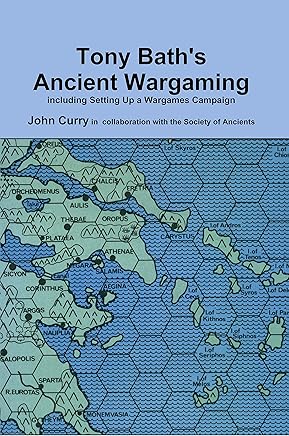
Tony Bath's Ancient Wargaming including Setting Up a Wargames Campaign:


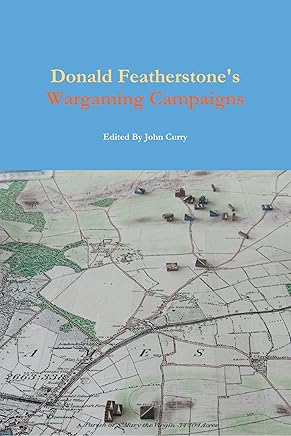
Donald Featherstone's Wargaming Campaings:


And, finally, Grant's Wargames Campaigns.

But I would especially emphasize Tony Bath's book.

Another big difference in the slow transformation from a small, wargames hobby to a large, consumer role-playing game product is the vibe of play, and what the goal of play is. And this is, in many ways, far more important for understanding the difference between "original" and later "editions" of D&D -- but that is for another post.

Before I write that post, my next post will be a kind of imaginary example of what D&D might have been worded like if it had more of the form of some of the above classical examples of wargames campaigns books.

To conclude this post, I will say, if you are involved, as a fellow hobby-ist, in a local medieval fantasy wargames campaign that, through play, has developed its own vibe, feel and corresponding house-rules, then you are playing Dungeons & Dragons, whatever other name you call it.

Fight on!

Monday, March 4, 2019

More on the General Line-up


Alignment came from wargames. It was about knowing what side of the battlefield to place the troops. There were the good guys (law), the bad guys (chaos) and those who wanted to try to keep out (neutral).

What does this mean?

Here is how I understand it now.

Alignment is descriptive, not prescriptive. Alignment changes based upon behavior. Example: if a chaotic person does something to serve law once, she becomes neutral. If a neutral person does something to advance law she becomes lawful. And vice versa.

  1. Law = Human law is good for everyone
  2. Neutrality = Human law is good for human beings
  3. Chaos = Human law isn't any good for anyone
Law

Human law is good for everyone. It is good for every human settlement. It is good for elves and dwarves and hobbits too - whether they know it yet or not. It is good for fell creatures such as orcs - which usually means they are dead orcs.

This is because human law is consonant with the laws of heaven or the cosmos. Thus human law is universal and should be performed and judged the same across all geographic regions, with some wiggle room for local variation and culture.

In actual practice, there are many schools of law, all arguing with each other as to who has gotten it right, but still basically recognizing each other. So, for example, there are the philosophers of the Forbidden City who proclaim that the law of heaven and of men is the same and we must find its Way. Then there is the Church of Law who believe the King of Heaven has revealed the one true law. They alone have Crusaders (clerics) actively spreading universal human law as they understand it.

Neutrality

Human law is good for human beings. Every human settlement should have laws in place for the good of its people. It is not good for human beings to live lawlessly. Human laws, however, ought not to be expected to apply to creatures that are not human.

This is because human law is something that arises naturally from human beings through accumulated custom. Custom is unavoidable and ought to be respected for the life it brings to human groups. And although laws are natural and not entirely arbitrary, nevertheless they do not enjoy anything like a one-to-one correspondence with the laws of the cosmos.  So one ought not to expect different human groups to have similar customs and laws.

There are many local cults and philosophical schools who adhere to something like the above. They are not willing to fight for anything they perceive to be purely local and customary. They will fight for human life. Needless to say, there are no churches or crusaders for neutrality.

Chaos

Human law isn't any good for anybody. Human settlements must be liberated from such oppressive local customs and traditions. Elves and dwarves and hobbits - even fell races such as orcs - actually live closer to a truly liberated existence.

This is because human law is merely by convention and therefore purely arbitrary. Laws are imposed by the strong on the weak. Laws arise among human beings out of fear of living truly free like animals following their instincts, or fay or fell races following their intuitions. Basic moral sentiments such as loyalty, disgust, respect, affection, retribution and reward are all that are necessary to live a truly human life.

Most of the cults and philosophical schools who adhere to something like the above find that they must maintain relative secrecy for their own protection. They will fight for freedom of sentiment for themselves and on behalf of others when they perceive they have an overwhelming advantage - a real chance for success - for they know the wrath of Law that will rain down upon them should they fail. Among the multitudinous cults there are many who fashion themselves "churches." These sometimes recognize each other and are willing to work together for practical reasons. They all attempt to infiltrate the Church of Law to over throw its tyranny from within. These churches have anti-crusaders (anti-clerics), sometimes openly so, sometimes acting under-cover as Crusaders (clerics), actively spreading freedom of sentiment as they understand it.

How they understand each other

This of opposite alignments see the other as deluded and dangerous.
Neutral folks find Law and Chaos fanatical, over-worried and perhaps a bit hokey.
Chaos and Law find Neutral folks wishy-washy, noncommittal and perhaps obstructive.

Conclusion

I hope this is clearly different than the way that alignment is sometimes described. Please note that none of these folks are deliberately immoral, but all can fall into some form of immorality. Chaos can be moral simply freely following basic human sentiments and passions like affection, loyalty and disgust. Chaos can be immoral when any of those affections become extreme and cruel. Law can be moral by bringing safety and peace to free races. Law can be immoral when that law is imposed with fear, micromanagement and oppression. Neutrality can be moral by respecting both sentiment and local mores. Neutrality can be immoral through complacency, claiming they ought not to get involved so as not to meddle in, or impose upon others, merely local custom.

Saturday, October 13, 2018

OSR Questionnaire


When I first became aware of the OSR, I was excited about it and learned as much as I could. After discovering Dungeons & Dragons (original) and the communities that support it, I no loner feel like I am "a part of" the OSR in a straightforward way.

It seems at first the OSR was about a return to the original, wargame style of play at the time of the birth of D&D as a hobby. Part of this included a return to a more DIY approach, both in terms of setting (not relying upon someone else's published, professional, setting) and "rulings not rules" (realizing that the local referee, group and game play itself was more important for developing both the rules and the shared setting than strict adherence to a professionally developed set of rules and settings).

In other words, the OSR represented to me a return to D&D as a hobby, rather than a consumer product. The hobby approach empowers creativity. The consumer approach makes passive clients. As a hobby it comes with a hobbying community of idea-sharing and mutual support. The internet facilitates such a hobby community in a large and broad way.

Much of what I have seen the OSR become since I got back into gaming in 2013 is a proliferation of small-scale or semi-professional game-resource publication. There is a lot of really good stuff out there. But, just exactly because of my more hobby-based, localist approach, I do not find myself using other people's modules very often, however professionally slick or "old school."

However, much of the stuff published as "OSR" falls into the current cultural zeitgeist that "creative" indicates, or is equivalent to, being edgy, troubled, dark, or "morally ambiguous." A lot of talk out there is about how we need to eschew "tropes" of fantasy in order to be "truly creative." In some cases it seems that the goal is to be as edgy as possible while still playing in a new school, story-game style. "Mapping sucks." "Challenge people with a moral dilemma." Etc. I find none of this attractive.

The following questionnaire comes from a big OSR personality named Zak. I do not follow his work much, honestly. But I stumbled across the questionnaire from other folk's blog posts and google+ posts where they filled it in in interesting ways. That is a good gift to the community, so, thank you, Zak. So if you are still reading, here goes:

1. One article or blog entry that exemplifies the best of the Old School Renaissance for me:

Philotomy's Musings

2. My favorite piece of OSR wisdom/advice/snark:

My own pithy zen-like saying in the spirit of Matt Finch's "Primer":

Amateur hobby, not professional product.

Medieval fantasy wargames campaigning is a hobby, so dive in for amateur fun. Stop expecting "professional production quality," and go for the joy and creativity that comes from a community of amateurs sharing ideas and swapping stories -- hobbyists who do it for the fun of it, not for profit. Don't passively receive wargames campaigning as some product rendered to you as a mere consumer of what "experts" say you are supposed to like or agree upon as standard. Instead, Fight on!

3. Best OSR module/supplement:

Tomb of the Sea Kings

4. My favorite house rule (by someone else):

"Crits" & "Fumbles": "Natural 20" does full (not double) damage. Don't do fumbles. Fumbles punish everyone with unfun. Both rulings come from Philotomy (see above).

5. How I found out about the OSR:

In 2013 I was surfing the web and remembered D&D then I plunged into what was going on and found my way to the OSR and, through them, to the original rules for medieval fantasy wargames campaigns.

6. My favorite OSR online resource/toy:

Mr. Josh Bear's ODD Referee Tool. I use it every session.

7. Best place to talk to other OSR gamers:

Because of what I mean by "OSR," as a return to old school, war-gaming style of play, together with, but not limited to a DYI attitude:

Finarvyn's ODD74 proboard, and
The Knights & Knaves Alehouse forum.

These are old-school internet formats that actually encourage conversation and not disappearing content:
This is the weapon of a Jedi Knight. Not as clumsy or random as a blaster; an elegant weapon for a more civilized age.
8. Other places I might be found hanging out talking games:

My own blog (you are here). I just don't post very often or very consistently. Sorry about that. (I hope that it is due to the fact that most of my hobby energy goes to actually gaming weekly.)

I also hang out and talk about games with real-live people that I know. Once a year I get to go to the North Texas Role-playing Game Convention and I get to talk to even more real live people about the game.

I followed folks on google+ but just used it to share my blog posts. It is now going the way of the dodo. We will see what happens with the migration to MeWe.

9. My awesome, pithy OSR take nobody appreciates enough:

It is not my own, but Delta's Target 20 combat and save resolution, combined with my own house-ruled hit-dice approach for distinguishing classes from one another. This has recently been "historically justified" by none other than Jon Peterson himself!

10. My favorite non-OSR RPG:

Diplomacy.

11. Why I like OSR stuff:

The OSR stuff that I like, when I like it, is stuff that has come out of someone's loving, amateur DYI hobby that is full of archetypal fantasy, full of interesting puzzles to solve, and immediately usable at the table (= good, easily readable, well-keyed maps).

12. Two other cool OSR things you should know about that I haven’t named yet:

Wayne Rossi's The Original D&D Setting. Just so good.
Paul Gorman's Magic Swords.

13. If I could read but one other RPG blog but my own it would be:

Please, don't read mine if you are only going to read two RPG blogs! I don't have nearly enough content. So, I get to name two. Since I have already mentioned Delta's D&D Hotspot, Jon Peterson's Playing at the World blog, and Wayne Rossi's Semper Initiativus Unum blog, above, then I get two more:

Jeff's Game Blog.
Hack & Slash.

Dyson Logos' Dodecahedron should get an honorable mention. His mapping skill and artistry is only improving. Unfortunately, for me, the actual gameable content of the maps has become increasingly blah and unusable over time. Dig back into his earlier stuff. Less pretty (perhaps, I still think it is great), but far more usable for old school play: lots of overlapping rooms and corridors, secret hatches, passageways, doors, traps. Just more interesting and inspiring for my style of play.

Finally, Bryce Lynch's Ten Foot Pole should receive another honorable mention. I agree with his module criteria about 80%, and that is about as much as any mature adult can expect to agree with another mature adult if they are not members of a cult. My main points of disagreement are where he tends towards "realism" and "ecology," whereas I enjoy a more "funhouse" approach.

14. A game thing I made that I like quite a lot is:

My own cumulative setting and house rules. I mean not just The Perilous Realms supplement I published or the simplified version I have as a page on my blog, but all of the cumulative rulings I've tracked due to actual play in the campaign. I have it all compiled in a readable but loving imitation of the Judge's Guild Ready Ref Sheets. I call it "Campaign Aids and Inspirations." It is where I put all my generative charts, tables, and decision trees. I haven't shared that document and I may never. The point is for you to develop your own settings and rulings.

15. I'm currently running/playing:

The Perilous Realms, a medieval fantasy wargames campaign. I use my own campaign world based upon an anachronistic mash up of our own medieval and ancient past. Each particular wilderness is the Outdoor Survival board set in such a way that the river flows to the nearest major body of water. The particular wilderness right now I call the Hollow Lands. They lie underneath the Mazandarin Sea, the nearest major city being Hecatompylos along the Silk Route. I use my own house rules built upon Dungeons & Dragons (the original rules for fantastic medieval wargames campaigns).

16. I don't care whether you use ascending or descending AC because:

If I am at your table, I trust you will tell me if my attack was successful. If you are at my table, I will tell you if your attack was successful. Thank you, Dave Arneson.

17. The OSRest picture I could post on short notice:

Please see above.

Fight on!

Saturday, September 1, 2018

Armor Class, Movement, and fiddling with the archetypes


Why would I buy a two-handed sword if it still just does 1d6 damage?

Because, although you cannot wield a shield with it, it acts as a shield itself.


Why would I wear anything less than full armor class 2 as a fighting-man?

Because decreasing armor class increases encumbrance and thus slows movement.

AC, Encumbrance, MV table
AC
Limit
Move
9
900p
12”
8
800p
12”
7
700p
12”
6
600p
9”
5
500p
9”
4
400p
9”
3
300p
6”
2
200p
6”

We use the four M's for our combat round cycle:
Missle
Magic
Mêlée
Move

If your MV rate is better than that of an opponent, you might get an extra attack during the movement phase of the round.

Formula: difference greater than 3 = success. Difference 3, opposing check on 1d6, +1 to the party with the higher rate. Equal rates, opposing check on 1d6.


But I'll throw in a bonus side affect for you: you get to be a fighting-man that looks like Conan the Barbarian.

Recall that I allow both shields and helmets to decrease AC by 1. They just can't do so cumulatively such that you would go below your class limit.

I'll even throw in something extra for you: ring mail costs and functions the same as leather. So you can wear a big ring-mail shirt, a horned helmet and wield a two-handed sword and function at armor class 5. (Or look like the above picture: no helmet but shield and regular sword. Whatever. You get the point.) You get the benefit of attack during movement phase. You are welcome.


Why can't elves wear regular armor?

Recall that, because of the nails the crucified the King of Heaven, all iron is hallowed, stopping all (non-clerical) magic.

But elves can wear bronze armor, it costs and functions the same as chainmail. Most magical armor is ancient, thus already made of bronze.


Then why couldn't magic-users wear, say, at least leather armor?

Silly. Don't you remember that, in order to cast spells, magic-users must utter the words of power and engage the somatic gestures that resonate the spell across planes? Armor would weigh down and block the somatic resonance. Everybody knows that.

Fight on!