Showing posts with label adventure. Show all posts

Tuesday, July 28, 2020

Scale, Role-play, and Dungeons & Dragons


I recently published a four post series reflecting on the subtitle of Dungeons & Dragons to help make sense of the original publication. Here are those links:


Wargames and Dungeons & Dragons

Medieval Fantasy and Dungeons & Dragons

Rules and Dungeons & Dragons

Campaigns and Dungeons & Dragons


With those reflections in place, I can now move on to reflect on the development of the supertitle itself: "Dungeons & Dragons"! In doing so I hope to empower hobbyists to start their own medieval fantasy wargames campaigns.


This will be the first post in a short two-part series of posts. This post will be on level of scale and how the move to one-to-one scale empowered things such as the abstraction of hit-points and the ability to role-play.


Scale


Wargaming allows for play at different levels of scale. So on a given war gaming table, an inch might represent 10 feet, 10 yards, 100 yards, etc. One miniature soldier might represent as many as, say, 10 soldiers, 20 soldiers, 100 soldiers, depending on the level of scale that you'd set up in the beginning. For most historical miniature wargaming, the level of scale is what is called tactical. So tactical warfare is one given battle between two armies where two generals or colonels can direct the activity fairly obviously over the course of about one battle day.


This makes a lot of sense in, say, Napoleonic warfare, which is again, one of the reasons why Napoleonic warfare is so attractive to historical wargamers. But there are other levels of scale. If you jump up to a higher level of scale, you can have strategic wargaming. This is where you might start getting into what you call hex and counter wargaming, where you've got a map divided into many different hexagons, and those hexes might represent 5 miles, 6 miles, 25 miles of distance across. Instead of miniatures representing soldiers, or 10 soldiers, or 100 soldiers, you have a more abstract piece that represents an entire legion, battalion, or perhaps even an entire army.


At the highest level of abstraction you have board games like Axis and Allies, or Risk. Some miniature wargamers question whether those should count as wargames, because they're at such a high level of abstraction that they're not very far away from a game like chess or checkers. But the typical scale of war gaming for miniature wargamers is tactical. You can abstract it to a higher level like strategic. But you can also move down to a tighter level of scale.


Skirmish


You can go down to a level of scale called skirmish warfare. This is where you're really talking about individual soldiers, head to head with each other. In this case, each one of your miniature figures actually represents one soldier. So the ratio or the scale becomes one to one. Every miniature figure is exactly one soldier.


Chainmail, for example, has a section dedicated to skirmish or man to man combat for the resolution of this level of medieval wargaming. So its fantasy supplement had to address this level of scale as well: how would fantastical creatures and armies match up in not just tactical, but also skirmish level warfare.


Hit points as abstract


One-to-one level of scale helps make sense of the roots of some of Dungeons & Dragons core mechanics, such as, for example, Hit Points. The rules of combat resolution have to be different at such a tight level of scale. The statistics, the way that you match results of combat up to dice, the things that a referee would need to judge all change when you get to that smaller, tighter level of scale.


In a tactical level wargame, when two enemy troops come in contact with each other, generally, if one side is successful and the other fails, the side that fails is removed. If you have those rules exactly at a skirmish level, playing only one character, then every time you went into combat, your character might die the first time he or she was hit. This hit-equals-removal way of playing that works at a tactical level doesn’t directly map to a skirmish, one-character-per-player level of scale. So instead Gygax and Arneson developed hit points. Hit points are the number of points your character can take from successful hits before the character is finally removed. Hit points are an abstraction for the relative resilience of your character and so, in general, as your character increases in level, your character is going to increase in this resilience, represented by hit points.


Role-play


One-to-one level of scale also helps us make sense of what the original players understood "role play" to be. Role-play existed before Dungeons and Dragons. Role playing is something that's done for example, at professional development training sessions, in training for therapists and counselors, or in other contexts where a mentor is trying to teach a student. A concrete situation with a client, or a patient, or even a more dangerous scenario, where you would say, "here is the situation. We're going to pretend that this situation is real, and we want you to role play what you think you would do in this situation."


One of the chief examples of role-play in wargaming would be the famous game, Diplomacy. Diplomacy is a wargame at the highest possible level of abstraction that could still really count as a wargame. You have a map of Europe, right on the edge of World War I, and you represent one of the major European powers at that time, such as Italy, Germany, Great Britain, Russia and the like. You are going to play the military forces of this particular national power. And in each turn, you can move your armies or navies, and you can attempt to take over other regions. But the most important part of this game is in its very name itself, which is Diplomacy. In Diplomacy, in every game turn, there's a phase at which you are allowed to enter into diplomatic negotiations and form diplomatic relationships with other players. You might form alliances against other players such that it is almost impossible to win the game of Diplomacy if you are not talking to other players, forming alliances, breaking alliances, and the like.


In Diplomacy, you as the player would ask yourself, “given this situation, and given the capacities that this nation has to achieve victory in this war game, how would I, as its leader or ambassador act? I want to play out what I would do to survive and achieve victory in this role within this situation.” Thoughtful role-play becomes a way to invest in the success of the game. Role-play in Diplomacy is a skillful means of engaging the game.


Role-play can work at any level of wargames scale, but it seems to draw-out at the more extreme levels of scale: strategic on the one end, with games like Diplomacy, and skirmish at the other end, with what is going to become Dungeons and Dragons. When you're playing a skirmish scale wargame, and where, instead of playing an officer over a squad you are playing only one figure on a wargames table, then you have an opportunity to role play that figure.


Understanding the wargaming roots of Dungeons & Dragons helps to make sense of the kind of confusion about what is going on in play between what is sometimes called "old school" styles of play and more recent Role-playing Games that emphasize the building of a story. What is clear is that role-play meant discerning what you would do in a given wargames situation if you were actually in this war and you actually had the capacities granted you by the game. Role-play meant playing the role of a leader in a war campaign. It did not, at the time, mean something like playing a part in a play or story - although plenty of players loved to ham it up, even from the beginning, if what I have heard is correct.


Next in this short series: Dungeon, exploration, and the title: "Dungeons & Dragons"!

Friday, June 12, 2020

Mike's Dungeons, a brief review


Brief Review:
Mike's Dungeons
Geoffrey McKinney

I ran this module twice for Table Top Events Convention of Champions. The players covered most of the first level and some of the second level. So please keep this limited exposure to running this module in mind as per this review.

This is a perfect dungeon module in terms of format. Each map is on one page and almost all the key fits on exactly one page opposite the map so that it can lay open on the table for the referee. Perfect. The room descriptions are short, curt, concise, and to the point, empowering straightforward fast-paced play.

It is important to note, however, that NPCs are referred to by level title, so, if you do not have level titles memorized, you will have to look up what level that NPC is. And no monsters have any stats or special descriptions. The module assumes grounded knowledge in the standard D&D monsters and that you have easy, ready access to monster descriptions in rule books.

I did not enjoy having to look up some levels based upon titles for NPCs. It seems to me easy enough to say, "2 Warriors (FM2)," or something like that. But I had no problem with missing stats. It cleaned up the key and enabled it to all fit on one page. I have refereed for some time, I have many standard monster stats memorized, or nearly so, and I can, in general, run most encounters on-the-fly with little to no look-ups. So this absence of presentation did not slow me down, much. Others may find this annoying, so, in order to run the module smoothly, you many need to write in monster stats, say, for three levels ahead of the players, before each session, to make sure you feel like you can keep things running at a good pace.

As McKinney urges, this is a module to be played, not studied, and I can confirm this from my own experience. What content there is, is rock solid. This is a "funhouse" style dungeon in the sense that there are very few rooms entirely empty of content and most of the content has no concern for so-called "ecology." This is, for me, a bonus to be commended. But if you like "ecology," be forewarned.

In the main what we have is monsters, some with treasure. There is very little treasure unguarded by monsters that might otherwise be hidden or trapped. There are no descriptions of motivations, little indication of how monsters will react to the characters (but some) and no description of the relationship between monsters. This is not a problem for me. In fact, I welcome this sparseness. I enjoy making those things up for myself. But, again, if you like "factions," and those kinds of things, you are going to have to make them up for yourself.

What I will say, however, is that, for me, I had to add content to make this feel right and provide a full "old school" session. There are virtually no tricks (wonderful things that require interaction and problem solving) or traps at the initial entry levels, and the treasure is very sparse. I have not studied beyond the ninth level (hey, it is for playing, not for studying, remember?), but this is the case for me through the ninth level. I added a pit or deadfall trap in a corridor per level. I added hidden and trapped treasures, especially in dead-ends. I added false doors, teleportation points, etc., also in dead-ends. I elaborated certain decoratively described rooms in order to turn them into tricks or wonders that gave players something to interact with and solve. I added clues to these traps and tricks. I added clues to the monsters and treasures that were already there. I elaborated on description. Etc.

Now, I loved doing this extra work. This is exactly the kind of module I love, because it leaves much room for me to fit it into my campaign setting and add my own creativity. It gives me boundaries within which to work, and empowers my own imagination. This extra work, however, may not be everyone's cup of tea, so just be aware that, for many, this module will need some work in order for it to play like the kind of old school dungeons we usually enjoy.

I had fun running this and I recommend it.

Fight on!

Tuesday, November 5, 2019

Pig Languages for Zany Fantasy Settings


I devised the following Pig Fantasy Languages for my Wildlands of Yawon Con Campaign I am developing. (Ran it at our Camp Allen Mini Con and will run it again at the NTRPGCon.)

In this sub-setting of the Perilous Realms there is common plus 8 other languages.

1. Ancient (human)
2. Barbarian (human)
3. Elvish
4. Dwarfish
5. Fell (orcs, goblins, etc.)
6. Chthonic
7. Elemental
8. Celestial

No “Alignment languages.” I've replaced them with Chthonic, Elemental and Celestial, respectively.

With regards to some of the instructions below, note that sometimes I move entire first syllables, and not just first letters, to the end, to make the word sound more like a real language or to avoid every word starting with a vowel.

I found Pig Elvish, first, with a google search. Can’t tell who first came up with it so I can’t give proper credit. Sorry! From Pig Elvish and good old Pig Latin I have imagined the rest.
Enjoy!

Pig Ancient (Human)
Igpay Atinlay

Pig Barbarian
Drop articles
Drop pronouns
No auxiliary verbs
Reduplicate first syllables of nouns
1 syllable words and verbs: append “um”
Orthography: ALL CAPS

Pig Elvish
1st letter to the end
3 letters or view: append “en”
4 letters or more: append random vowel
Change all Ks to Cs
Add umlauts to end and accent at will

Pig Dwarfish
1st letter to the end
3 letters or fewer: append “(z)ad”
4 letters or more: append “(‘)ka”
Change all Cs to Kh
Add apostrophes at will

Pig Orcish
As Pig Barbarian, above, and
appending and prefixing "(n)ash,” “(g)osh,” or “(g)ash” at will
Change all Cs to Ch, all Gs to Gh, Ks to Kh
Add apostrophes to separate excessive consonants

Pig Chthonic
1st letter to end
3 letters or fewer: prefix “(n)az”
4 letters or more: infix “(gh)ül”
Cs to Ch; Ks to Kh, Gs to Gh
Umlauts at will
Add apostrophes wherever necessary or fun

Pig Elemental
As Chthonic but
Prefix “(bo)ra”
Infix “rüm”
No other letter changes

Pig Celestial
As Chthonic but:
Prefix “La”
Infix “oo,” or “ü”
Use apostrophes to separate excessive vowels

Fight on!

(Image from link to: http://www.incidentalcomics.com/2012/08/pig-latin.html)

Monday, April 22, 2019

Ages of the Perilous Realms


I am more a rules-imaginer than a setting-imaginer. But I'm getting more into exploring my campaign setting than ever before.

There are multiple overlapping ages of rise and collapse of mighty civilizations that define the Perilous Realms and the kinds of ruins, underworlds, treasures, magic items and artifacts that may be found. Here is the myth, or legend of the various apocalypses and dark ages that led to the current state of the Perilous Realms, my campaign setting.

The Diamond Aeon

In this age, the archetypal powers were young and playful children of the Most High.
They knew their place, and, although childishly mischievous at times, obeyed the will of their Father.
They reigned over the cosmos like living stars.
In the end, the archetypal powers come of age, and conflict ensues.
They rebel against their Father and are thrown into the chaos of war.

In terms of the way we think of things now, we are talking about billions of years ago. Thus this loosely corresponds to “big bang” through cooling down of the universe. In Tolkienesque terms, this is like the Valaquenta. The key to this fall narrative is REBELLION. So whenever we see rebellion in the campaign setting it links somehow to the Powers.

The Golden Age

Law and chaos draw their lines for the first time.
The Celestials seek to establish the joy of the Diamond Aeon through Law, and often fall into rigid legalism.
The Chthonic powers seek to empower the unbridled joy of the Diamond Aeon through following the passions of the underworld and often fall into the cruelty and whim.
Many powers opt out and hide as spirits of nature and life ("neutral" elemental powers).
The war shapes much of the terrain of the Perilous Realms.
Ultimately, the Celestials drive the Chthonics under earth and imprison them there, only to serve for fertility and virility.
The Celestials establish a Golden Era of light and genius upon the earth — with unparalleled cyclopean edifices and artifacts!
At this time, the fay races are born into the wonder of direct contact with their fascinated rulers.
But the Celestials become too confident in their victory, and their watches fall into indiscipline.
In the end, the earth cannot contain the chaos that errupts.
The final war leads to total apocalypse and a dark age ensues.
 
In terms of the way we think of things now, we are talking about millions of years ago. Thus this loosely corresponds to a kind of smashing together of the mesozoic and its great meteoric (heavenly) and volcanic (chthonic) apocalypse together with the monolithic stone age. This nicely gives us cavemen with dinosaurs! This era gives a chance to engage the Lovecraft Mythos. The key to this fall narrative is COMPLACENCY.

Interlude: The Age of Darkness

The fell races are born and run free but unorganized.

The Silver Age

Out of the shadows of the Age of Darkness, the Fay races form an alliance, consulting what Powers still remain in their weakness and sorrow.
With the advice of their cosmic elders, the fay together stem the tide of the spawning hoard.
The elves rise to power over all other fay.
They establish a Silver Era under the light of their matron, Mother Moon.
They enslave the fell races, especially the orcs, to do their bidding — and on their backs they build mighty cities, towers, and palaces unrivaled by any save the powers themselves.
But the orcs and their fellow fell never forget their enslavement.
At this time, Men arrive, the fay know not from where — nor do the men! They are in awe of the elves.
But the elves in their assumption of opulence grow fatuous, weak, superficial, degenerate — and their civilizations fall into decadence.
Thus they become easy targets for fell rebellion — if they are not dragged down by their own petty divisions and meaningless wars of trumped up honor.
The collapse of the elves is a slow and painful decline, leading, ultimately, to a second dark age.

In terms of how we think now, we are talking about several millennia ago. Thus this roughly corresponds to the great pre-historic civilizations of myth. This era allows me to smash together Tolkien's and Anderson's elves. The key to this fall narrative is DECADENCE.

Interlude: The Second Dark Age

Pacts with the chthonic power, Necros render the first Undead. Alchemical and medicinal warfare fabricate the disease of lycanthropy. Monsters proliferate.

The Bronze Age

The bronze age is the first age of Men.
In the memory of the elven empires of old, and in devotion to, and under the patronage of what remains of the mighty Powers, men erect fabulous temples. Around these temples, cities grow up — Ur, Babel, Byblos, Shangri-La, Hamunaptra, Aqaba, Thebes, Indus, Eddo, Techlan, Cyprus.
These temple-cities become the center of mighty and diverse empires in trade with one another of both goods and philosophies.
At some point, men cannot remember how or why these great empires all suddenly (with decades of one another) fell into complete collapse.
It is not likely that the collapse came about either because of internal disputes or because of external wars, although these played a part, but from the evidence it seems the “gods” (Powers) no longer favored them and removed their blessings of abundance.
This is the great Bronze Age Collapse.
The human population was decimated and the survivors fled to hills and mountains to survive.
The “Ancients” left behind powerful ruins, tombs, sepulchers and crypts — of frightful aspect to the fragile humans who remained.

In terms of how we think now this represents several centuries ago. Thus this is a fantasy version of the actual Bronze Age Collapse. This allows us to engage classical mythology and legend. The key to this fall narrative is divine ABANDONMENT.

Now: The Age of Adventure

Now is the age of adventure!
Now law and chaos reenter their struggle for vast civilizations of lawful glory or unbridled passions and dominion.
Now mighty fighting-men and Amazons rise up to pit their thews against the dying of the light!
Now over-confident users of magics seek their own through initiations into the mysteries of the arcane.
Now the church proclaims a gospel of universal order under a king of heaven and sends out crusaders (“clerics”) to establish Law: by word or by fist.
Now fearless — or foolish — adventurers commit to mighty peregrinations into forgotten wildernesses and yawning openings of the mythic underworld.

In terms of how we think now, this represents about the last millennium. The Perilous Realms campaign begins in an imaginary year 990. In a sense, this is a Third Dark Age. It roughly corresponds to a mash up of the Iron Age and both the Western and Eastern Middle Ages. This age engages Leiber's universe of Nehwon. The key narrative here, is, of course, WAR and ADVENTURE.

All of these previous beings remain: powers, fay, fell, lycanthropes, undead of the bronze age— each slightly weaker than before. Each remembers and grieves the loss of their once great status. But now they are lost in wildernesses and trapped in nightmares of the underworld.

Adventurers may stumble upon all of these different layers of civilization, languages and artifacts:
Powers: celestials, elementals, chthonicoi and their physical manifestation as giants and sylvan monsters
Fay: elves, dwarves, gnomes, and, after a fashion, even the hobbits
Fell: kobolds, goblins, orcs, hobgoblins, gnolls; and
Ancient men: Aegyptian, Anatolian, Levantine, Etruscan, Mycenean, Assyrian, Hittite, Wotan, Indus, Nod, Jomon, and more.
Their stories give clues to one another and nest within one another.

Fight on!

Friday, February 2, 2018

Temple of Zaphron, Goddess of Frogs


Encounter Table d6
1-3    Kobolds      1d6
4-5    Skeletons    2d6
6       Merak

Merak the Unexpected
MU4 AC9 MV9
Sleep
Polymorph
Lightning
Phantasmal Forces

Kobolds
HD1/2 AC7 MV6
Formation: Shields, Spears, Darts

Skeletons
HD1/2 AC7 MV6
Shields, helmets, spears
Reassemble unless burned / crushed

1 Treasure Chamber

Pit trap, 10' immediately before the door

Treasury
Chest, Treasure, Small, poison-needle on latch
1,500gp steel ring with adamant stone; weight 100pcs
2 Medium Diamonds 100 each (200 total); 4 Small Diamonds 50 each (200 total); 6 Small Rubies 50 each (300 total); 2 Small Pearls 50 each (100 total); 4 Small Sapphires 50 each (200 total); 2 Small Opals 50 each (100 total); gems total value 1Kgp; weight 200pcs
300gp; 400sp; total pcs value 500gp; weight 700pcs
Total value: 3Kgp
Total weight: 1Kpcs

Armory
Shield +1
Chainmail +1
Helmet +1
Sword +1: Windbiter (Common)
    Lawful
    Int: 8 Ego: 3, Empathy
    Detect Magic
    Detect Metal & What Kind
Dagger +1
Bow +1
Potion of Heroism
Potion of Invisibility
Scroll Protection Undead

2 Trick Exit Room

Two levers to left of large locked double doors
Lever Left Up: Green
Lever Right Up: Blue
Left  Down / Right Up: Green Lightning bolt
Left up / Right Down: Door open + Green Lightning bolt
Left Down / Right Down: Door open (no lightning)

3 Hidden Treasure Vault

Bucket, Acid, above secret door: avoidable if look up before entry

Chest, Treasure, Locked, Large
5K Brass Urn Studded with Tiger’s Eyes; weight 100pcs
Large Emerald 500gp; 4 Medium Diamonds 100each (400gp total); 2 Medium Topaz 50each (100gp total); total gems value: 1Kgp; weight 70pcs
1Kgp; 2Ksp; 4Kcp; total pcs value: 3Kgp; weight 7Kpcs
Total value: 9Kgp
Total weight: 7,170pcs

4 Connection

Empty: straw, mud
Merak flees through this room, gone by the time PCs unstick the door.

5 Tapestry Hall

Tapestry of Frog God Zaphron shooting green lightning bolts.
Unknown language says poem about Zaphron.

6 Merak’s Study

Merak (see above) attacks (if party noisy, Protection, from scroll, before arrival):
Sleep; Polymorph; Lightning; Phantasmal Forces
Leaves immediately upon taking damage: skips to phantasmal force as distraction; door stuck behind him.

Desk, chair, chez lounge, ash tray with cigar, side table with brandy snifter and glass; on Desk:

Parchment, ink-well, quill
lvl1 spell book, complete
Scroll Protection Magic
Scroll, Arcane: Detect Evil, Wizard Lock, Dispell Magic
Books, 3: Astrologous Minor, Herbiary Infernum, Amphibicon
Map to treasure: 3. Hidden Vault

7 Sanctuary of Zaphron

Door behind idol, stuck

Idol of hollow clay painted gold with two emerald eyes:
1K; 1K “The Eyes of Zaphron;” Magnetically attracted to one another; weight 100pcs each, 200pcs total

Pedestal triggers successive portcullises if treasure disturbed

Treasure chest with giant emerald latch serves as contribution basin
1K emerald latch (part of cask)
3K Frog Crown: Green Gold with Aquamarines; weight 100pcs
300gp; 300sp; 300cp; total pcs value: 525gp; weight 900pcs
Total value: 6,525gp
Total weight: 1,200pcs

Brazier of green fire
Doors, double, stuck

Portcullises left and right, two
Top left: empty; Bottom left: kobolds; Top right: skeletons; bottom right: empty

Note:

Just ran this for a middle school D&D club. I started them off in the main sanctuary, having already triggered the trap with kobolds bearing down. Instant combat. Had their attention! We rolled character information as we needed it! (I'll post how I did that in next post.) Next session: they explored and found the treasures / tricks. Final session: extraction with encumbrance issues (lucky kids had no random encounters!) Then we discussed character creation.

So, I went "backwards," and now they are hooked!

Next up: referees Workshop: Part I. Presenting; Part II. Preparing.

Fight on!

Tuesday, April 11, 2017

A Dungeon a Day Challenge


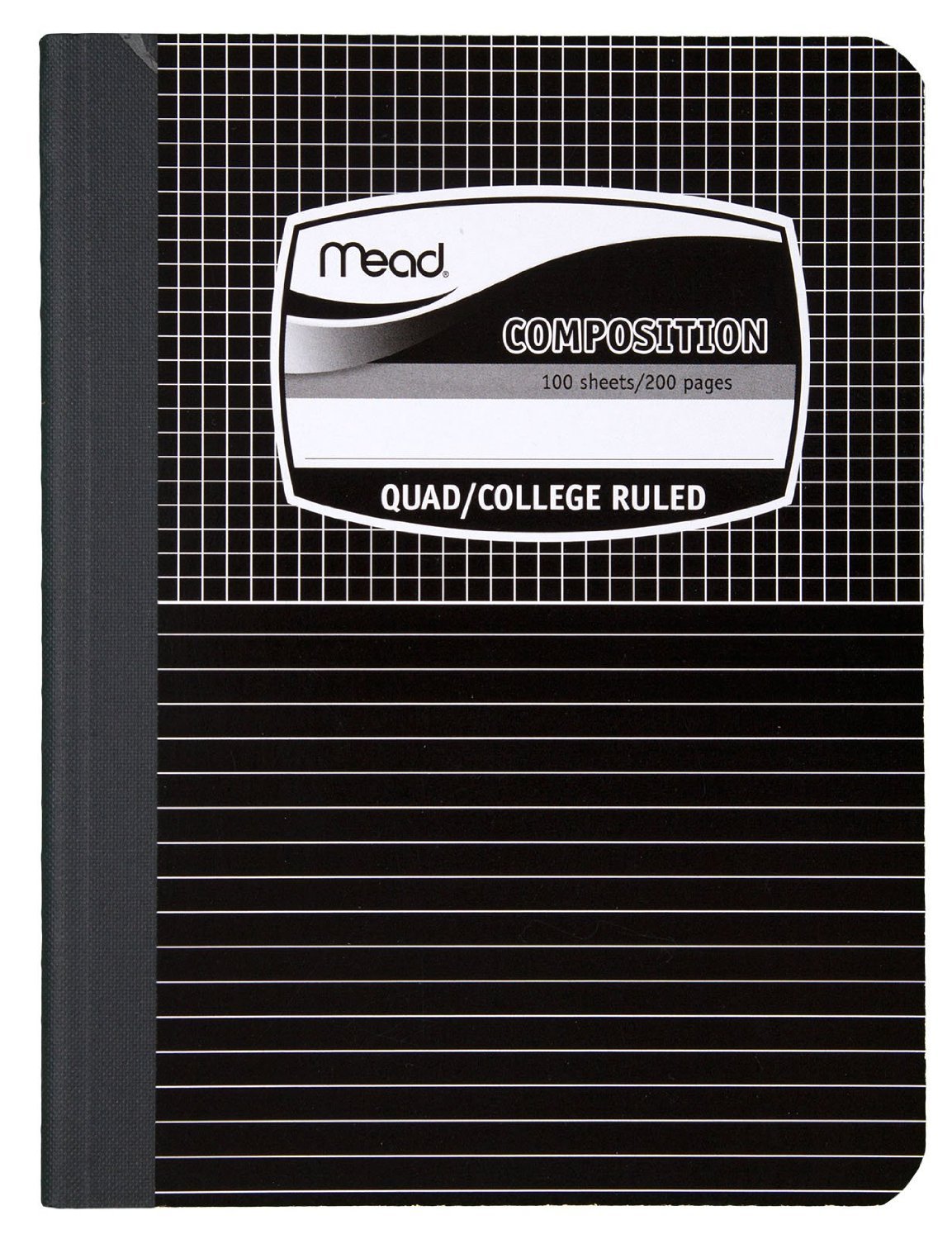
I found these great composition notebooks. They have graph paper on the top half of each page and lines on the bottom half. These beg to be used for dungeons, levels and lairs: map on top, key on bottom!


I've stalled out on my mini module project to do the paralysis that goes with perfectionism.

So I've decided to challenge myself. I am going to draw and key a dungeon (level or lair) a day! I already did yesterday and it was a lot of fun.

I really do not enjoy mapping (I do love keying, though!). So this is a challenge to build my chops and perhaps break through a barrier that is keeping me from enjoying something fairly essential to the game. Again, I think it is my perfectionism that keeps me from just doodling at maps. 200 sheets of paper in a cheap composition notebook should help!

I will share what I want to, when I want to, without any blog performance pressure! But I will update every now and then to let you know I am still going on this.

Perhaps this will get me closer to what I meant by the mini modules. And it may help me get back to that project.

Anyone care to join me?

Saturday, April 1, 2017

Questions for Generating a Dungeon of the Mythic Underworld


Inspired by Jeff's Gameblog's list of twenty quick questions for your campaign setting, here are some sets of questions for generating a dungeon of the mythic underworld. Should contribute to generating some find "funhouse" dungeons:

Questions for Generating a Dungeon of the Mythic Underworld

What is the treasure it hides? Is it named? Famous? Backstory? Will any of the above give the characters any clues as to how to find and recover it? How do the characters find out?

Why did chaos want to swallow the treasure in its mythic belly? How did chaos swallow it up? Was it done through chaos’ own occult magics, or were chaotic creatures or characters involved? Has law even become aware? Does neutrality find the capture to bring balance or imbalance to the state of things?

What tricks, monsters and traps did chaos manifest to hold its treasure tight? What wonders, magic-items or clues has law provided as an immune-response to chaos? Are there any pockets of neutral homeostasis, providing brief oases of respite for weary characters?

Is there a single main monster, type or kind? Do the monsters know or understand their role at all? Do they also want the treasure? Do they fear it and would love to rid themselves of it? How can the characters find out?

Is there a single trick or a series of related or random tricks? Are some random tricks simply kooky manifestation of chaos? Does the trick conceal, mislead, harm? Can it reveal, inform or aid if understood and used well? Is the trick a giddy or cruel irruption of chaos? Is the trick actually a miraculous manifestation of an immune-system response from law? Is the trick indifferent to characters, maintaining an odd but neutral balance? What kind of clues are there for the characters to figure these things out?

Are the traps ubiquitous or rare? Obvious or hidden with scattered clues? Have the monsters devised the traps? Or did chaos herself devise them from her own insanities? Has neutrality closed the loop, leaving behind the carnage of those who previously tripped the trap? Has law provided helpful clues and means to disarm the traps?

How many ways in are there? Are there ways in at different levels? How many connections are there between levels? How many open and closed loops of passage does a level have?


How do the characters find out?

Saturday, February 18, 2017

Questions for a Campaign


Somebody (sadly, I can't remember whom) pointed me back to Jeff's Gameblog's list of twenty quick questions for your campaign setting.

As with just about anything I run into, I can't take it as is -- I have to play with it and make it fit my way of thinking and my way of campaigning. So, inspired by Jeff, here are my questions.

Please note that they can work for every level of campaign scale: cosmic, setting, territory, settlement. (I think however, a different set of related questions are necessary for generating dungeons and the underworld. More on that to come.)

Questions for Campaigns at Each Level of Scale

What is the name of this place?
  • ·       Why
  • ·       Backstory
  • ·       Size
  • ·       Population
  • ·       Army and size

What race is in charge here? Really?

Do they speak common? Something else?

Is anything illegal?
  • ·       Weapons
  • ·       Magic
  • ·       Something odd or absurd?

Who is in charge? Really?

Secret societies? Cults?

Who is the wealthiest? Different from above? Really?

Stronghold?
  • ·       Motte & Baily
  • ·       Castle & Keep
  • ·       Curtain Walls
  • ·       Wood
  • ·       Stone
  • ·       Enchanted

What is the religion? Really?

Who is their cleric? Really?
  • ·       What are “clerics”?
  • ·       How do clerics “work” here?

Is this place for law, chaos or no-side?

Can we change alignment here?

Who is the most powerful?
  • ·       FM
  • ·       CL
  • ·       MU
  • ·       TH
  • ·       Dwarf
  • ·       Elf
  • ·       Hobbit

Who knows the most?
  • ·       Book knowledge
  • ·       Experience

Is there a _______ here?
  • ·       Tavern / inn
  • ·       Stable / livery
  • ·       Jail / Prison (Who is in it?)
  • ·       Church / Temple
  • ·       Bank
  • ·       Town / Guild Hall
  • ·       School

Can we buy?
  • ·       Supplies
  • ·       Equipment
  • ·       Weapons/armor
  • ·       Magic Items
  • ·       Transportation

Can we find?
  • ·       Healing / potions
  • ·       Antidote
  • ·       Cures
  • ·       Raise dead
  • ·       Curse / remove
  • ·       Lycanthropy cure

Can we hire hirelings? Retainers?

Where is the nearest treasure to recover?
  • ·       Is it legendary
  • ·       Will it make us famous
  • ·       Will it make us rich

Are there any problems around here?
  • ·       NPCs
  • ·       Monsters
  • ·       Will it make us famous
  • ·       Will it make us rich
  • ·       Will it make us landed

Is this place its own problem?
  • ·       Deception
  • ·       Intrigue
  • ·       Corruption

Does anyone need something done?
  • ·       Are they rich
  • ·       Powerful
  • ·       Will they pay:
  • ·       In kind
  • ·       In coin
  • ·       In land

Is this place at war?
  • ·       With whom
  • ·       How long
  • ·       Is it just
  • ·       Who is winning

Where is the nearest dragon? And hoard? Or any creature that:
  • ·       Petrifies
  • ·       Paralyzes
  • ·       Drains Energy
  • ·       Poisons
  • ·       Breathes a weapon
  • ·       Contagious condition
  • ·       Regenerates
  • ·       Enchants


How do PCs find out about these things? Rumors?

Enjoy!

Saturday, September 10, 2016

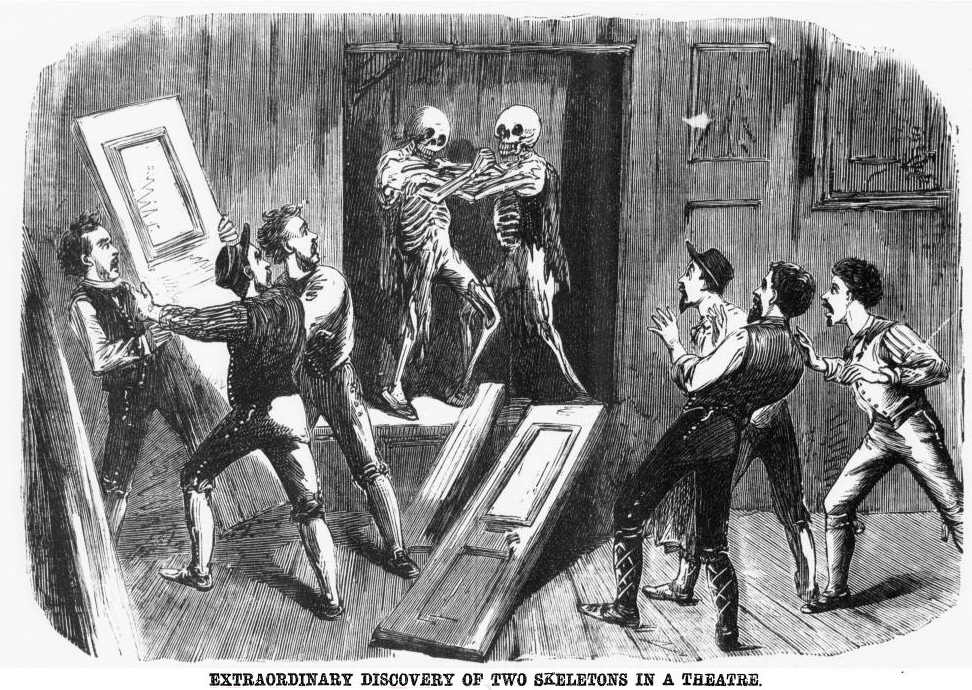
Skeletons In The Closet


MM01 
A Haunted House Mini-Module for Normal Characters (Levels 1-3)

Introduction

Use this mini-module for character levels 1-3; in conjunction with other mini-modules use to represent dungeon levels 1-4. For use with higher-level characters, see end notes.

Background

A powerful Lady, forlorn of her true love fell prey to a trickster medium. She became a Wight through repeated attempts to contact her dead lover. The medium traps the Wight of the Lady in her abandoned house.

Referee Notes

  • Describe features and furnishings as a typical victorian mansion
  • Characters looking through windows see a grey-blue twilight world of forlorn ghosts and shades (see "exit," below)
  • Determine level-based treasure according to relative level of use

All Closets:
2d6 Skeletons: burn or pulverize to prevent magical reassembly in 3 rounds; silver coin in each mouth
AC7 MV6 HD1/2

Underneath all beds hide
Hobgoblin:
AC5 MV9 HD1+1

Link to Campaign NPC

The Wight is ancestor to a powerful Lord who keeps it secret. If PCs inform others, the powerful Lord will prosecute them and ban them from his territories. If PCs put the wight to rest, keep the secret and inform the Lord, he will reward them accordingly.

Rumor Table

  1. T Lord Campaign NPC Name don't want nobody knowing about that old place
  2. F Nothing in there but rats and roaches
  3. T There's a crazy old witch (medium) what lives in there
  4. F If you go in there, you'll turn into a ghost yourself!
  5. T Legend has it if you put to rest the old lady's Wight you'll get a share in her inheritance!
  6. F All the treasure belongs to wicked hobgoblins

Unique Monster

Haunted Rocking Chair
Rocks incessantly of its own; voices of crying baby and lullaby-singing mother
Attacks upon touch; folds in on itself if sat upon (2d6 damage)
All touched: Save vs. "Fear"
AC7 MV3 HD2

Unique Magic Item

Ouija Board of Speak with Dead: Chaotic in alignment: harms characters as per magic swords with each use. Use up to three times per day to ask single question of deceased familiar or for ESP

Entry

Characters who enter through either front or back porch areas see only a dilapidated house full of decaying furniture and cob-webs. Characters who enter from another mini-module enter directly through the chimney or to the stairwell of the second floor if going down to this mini-module from above, or into the fruit cellar beneath the kitchen if going up to this mini-module from below.

Time Element

If characters do not engage Medium in seance, wight appears above table to search for characters 1 turn from their departure from the chamber

Exit

Characters who exit through windows or doors find that the grey-blue twilight realm disappears and that they are in the setting where the referee has placed the house. Referee allows hatch in cellar and attic door when stacking further mini-modules above or below this mini module. Ignore otherwise.

Map

Ground Floor


Second Floor


Key

Ground Floor

Dining

Large dining table set with silver platters and candelabras; dining chairs move of their own
Blow out or snuff candles: save vs. curse
Clues: Guest book on stand has a reminder to the butler "it is rude to have unlighted candles at table;" mural on the wall depicts angels holding candles and demons with snuffers; snuffer on the table cannot be picked up until candles extinguished by other means
Treasure: 12 dining sets of silver and 2 silver candelabras: level treasure in value

Kitchen

2d6 Zombies preparing and serving "meal" of dust and ashes between kitchen and dining
Will eat brains of fallen victims, rendering them zombies
AC8 MV6 HD1

Morning

Room filled with flowers, wreaths and sprays of Lady's funeral: Touch turns to ash

Bathroom

Chanting "Bloody Mary" staring at the mirror in the dark will conjure the Wight through mirror
If Wight already dispatched, wraith appears

Utility

Sinks with ashen and charred remains of previously blasphemous seances

Parlor

Chimney may be used to move between stories; also between mini-modules at referee's discretion
Portrait of Lady above mantle; behind portrait: safe:
Treasure: per level + magic sword
Clues: Portrait slightly crooked; Lady pictured with jewels in her lap; folded note on mantle reads "true riches hide behind mere representations"
Monster: Haunted Rocking Chair (See Unique Monster, above)

Stairwell Up

Trap: Stairs turn to slide (d6: 1-2) per ascending character; may be stopped by jamming something between stairs
Clues: sign in magic above stairwell entry reads "some may not ascend;" marbles on floor in front of stairs; painting to the side depicting children on a slide

Hall

Gas lamps light hall with cool eerie blue: If characters address house, lamps answer yes/no questions dimming once or twice; also alphabet or morse code per referee ability
Skeletons in Hall Closet defend huge sapphire (1Kgp): rings like crystal glass upon touch

Second Floor

Bedroom Top Left

The Lady's Bedchamber: canopy bed
Vanity with chair and mirror flanked by candles that never burn out until removed
Lady appears in mirror when character sits in chair
Jewelry box, save vs. poison gas (clue: poison symbol on lid), inside:
Treasure: per level & 3 gems (large agate 500gp, medium diamond, 500gp and medium pearl 500gp)
One item of Jewelry: The Lady's Elegant Hairpin: (7Kgp) Solid gold with large agate that glows on touch; save vs. geas: character must wear hairpin and seek the admiration of others

Bathroom Top Middle

As per "bathroom," above
Also medicine cabinet contains 1d6 poisons and 1d3 potions, all unlabeled

Bedroom Top Right

The Lost Lord's Bedchamber
Portrait of Lady's lost love: Eyes follow characters movement
Skeletons in closet defend magic armor

Hall

As per "hall" on ground floor, above

Stairwell Down

Trick: Stairwell actually leads up (d6: 1-2) per descending character: Grants access to next mini-module upwards when used in connection with others; Otherwise leads to widow's peak surveying haunted lands
Clues: sign in magic above stairwell entry reads "sometimes you've got to get down to get up;" Picture in hallway of widow's peak above house; bird feathers on the floor

"Bedroom" Bottom Left: NOT BEDROOM but: Seance Chamber

Chimney may be used to move between stories
Round table in area shaped as partial octagon
Ouija Board of Speak with Dead (see Unique Magic Item, above) in middle of table
Chandelier above
Medium sits at table; greets characters; invites to seance
Seance conjures wight over table; Wight attacks
Medium charms characters who resist
If characters dispel or, upon defeat, pray the Wight to Rest in Peace: Wight disappears in exhausted sigh, full level treasure + magic weapon issues from chandalier onto seance table, covered in ectoplasm
Medium MU Lvl 1; Silver Dagger; Spell: Charm
AC9 MV12 HD1
Wight: impervious to normal range-fire: successful attack = 1 life-energy drain; renders killed victim wight
AC5 MV9 HD3

Bathroom Bottom Right

As per "bathroom," above. Also treasure:
Shiny Golden Toilet Seat (500gp) attached to wire triggering guillotine trap from ceiling

NOT DEPICTED

Large fruit cellar accessible through hatch in kitchen and down ladder
Used in connection with other mini-modules, characters find hatch to next level under treasure
Treasure by level
Monster: 1d6 Ghouls emerge from earthen floor
AC6 MV9 HD2

Tiny attic door with ladder above second floor hall grants access to next mini-module when used in connection with others

Modifications for Heroic Characters (Levels 4-7)

Haunted Rocking Chair: HD6 2d6 normal dmg., 3d6 folding bite
3d6 Skeletons in closets wield rusty shields (AC6)
1d6 Hobgoblins under beds
Zombies become ghouls
Ghouls become Wights
Wight becomes 1d3 Wraiths (sisters, perhaps?)
Medium becomes Witch (Warlock, Lvl 8)
Adjust all treasures per relative dungeon level

Modifications for Super-heroic Characters (Levels 8+)

Haunted Rocking Chair: HD12 2 attacks, 3d6 dmg., folding bite poisonous
4d6 Skeletons in closest wear rusty armor (AC3)
Troll under beds
Zombies become Wights
Ghouls become Wraiths
Wight becomes Spectre
Medium becomes Necromancer (Lvl 10)
Adjust all treasures per relative dungeon level

FIGHT ON!